


Ask the Agent
A class period with nobody running the room, and the clock moving it: everyone asks their own agent how to work with it well and writes down its three best pieces of advice, then in three short rounds with someone new each time, merges them into one list the class arrives at together, set beside what the agent told me in August. The agent's answer shown is one it gave in rehearsal to an invented student.
What You're Looking At
This is a rehearsal, not a class. The students are invented: they're the personas we use to test this course on itself. Wherever an agent or a companion speaks, its words were generated by gpt-5.6-luna, the model the course ran on until September 24, recorded once and replayed since so the run comes out the same every time. Everything else is the software students use: the real pages, the real proxy, the real timer, the real companion.
Three kinds of substitution are made for publication, and only these three. Where a screen would show the rehearsal rig's own 127.0.0.1 address or its scratch folder, it reads as the real one instead. A setup token is shortened, because a token should never be shown whole even when it's a throwaway from a test database. And where a film needs a website that isn't anybody's, a student's own site or one a student went and found, it is an invented page served by the rig, shown under an address ending in .example. Nothing else on any screen is altered.
The brief the students actually read is the activity page.
Step by Step
Friday, 12:30. I'm away, and the class meets without me. The box at the top of the activity page runs the day: what's on, how long is left, what to do and where. Every laptop says the same thing at the same moment.
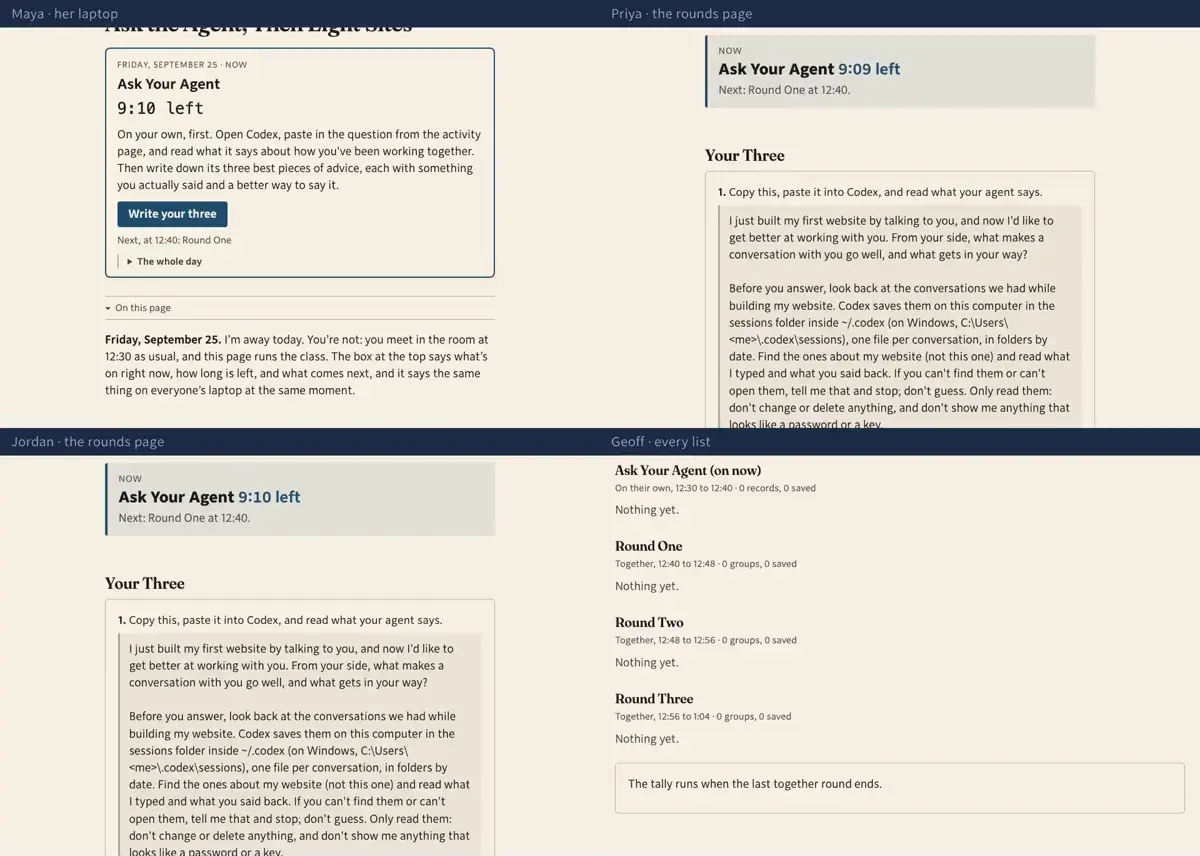
First, on your own. The button takes you to the rounds page, which has the question to ask your agent and a button to copy it.
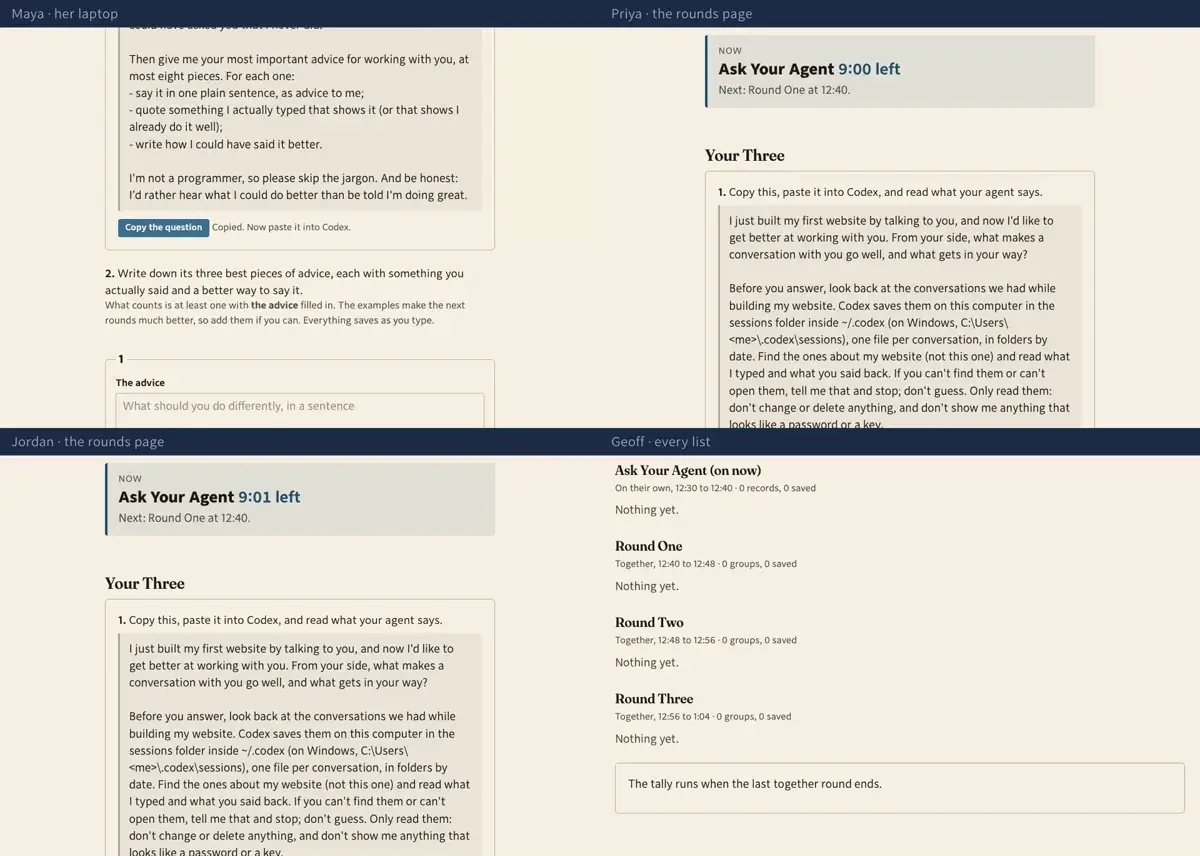
Paste it into Codex, in your website's folder. The question asks your agent to read back through the conversations you had building your site, and to tell you what made them go well and what got in its way.
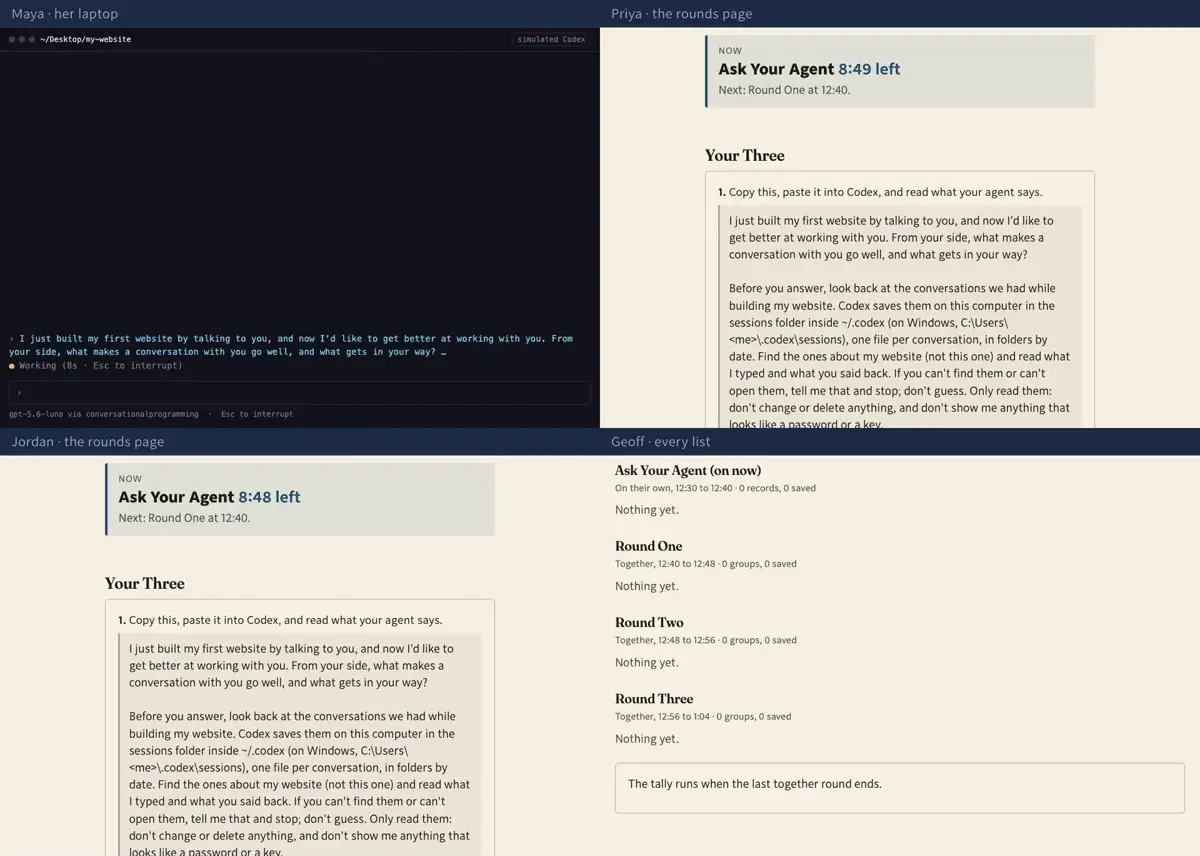
It takes a minute to read them. This answer is one the course's model gave in rehearsal, to an invented student's conversations; yours will be about yours. Some of it will sting a little. That's the useful part.
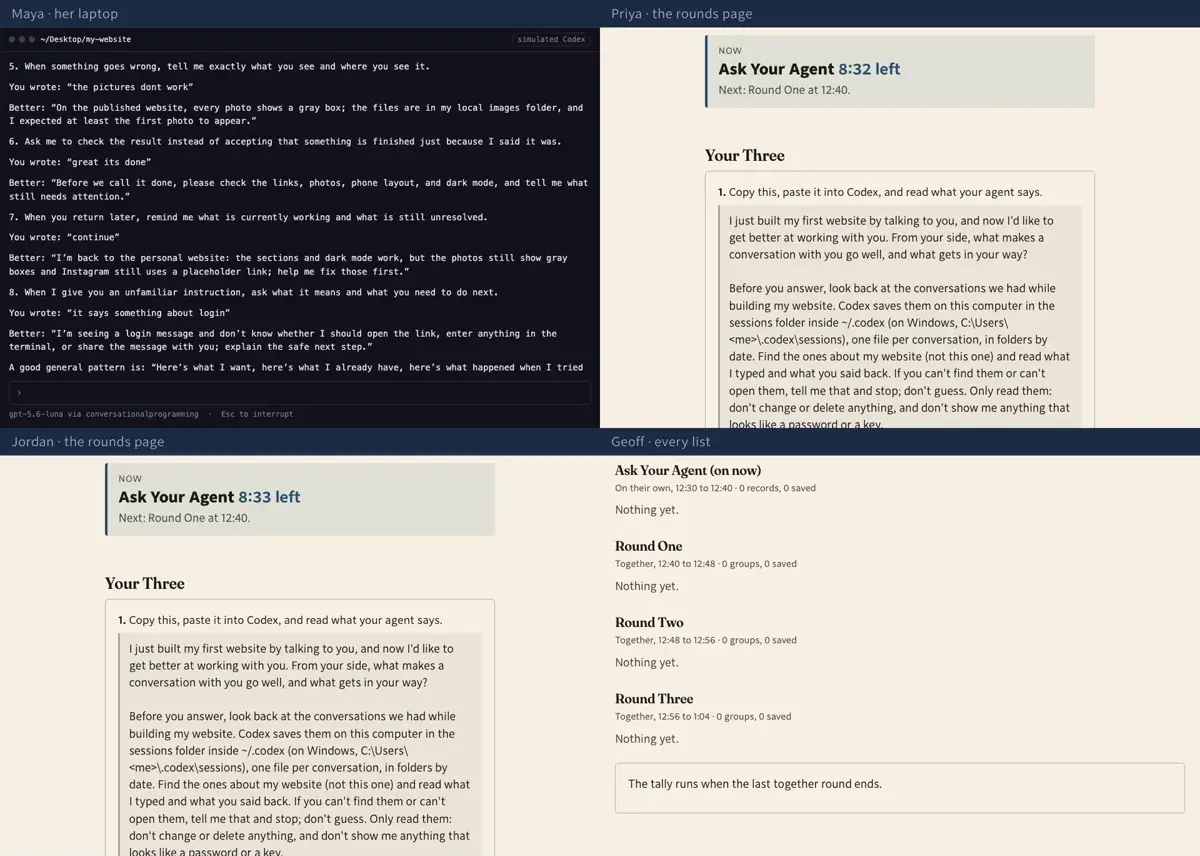
Then back to the rounds page, and write down the three that matter most to you. Each with something you actually typed, and a better way to say it: that pair is what makes advice about you rather than about everyone.
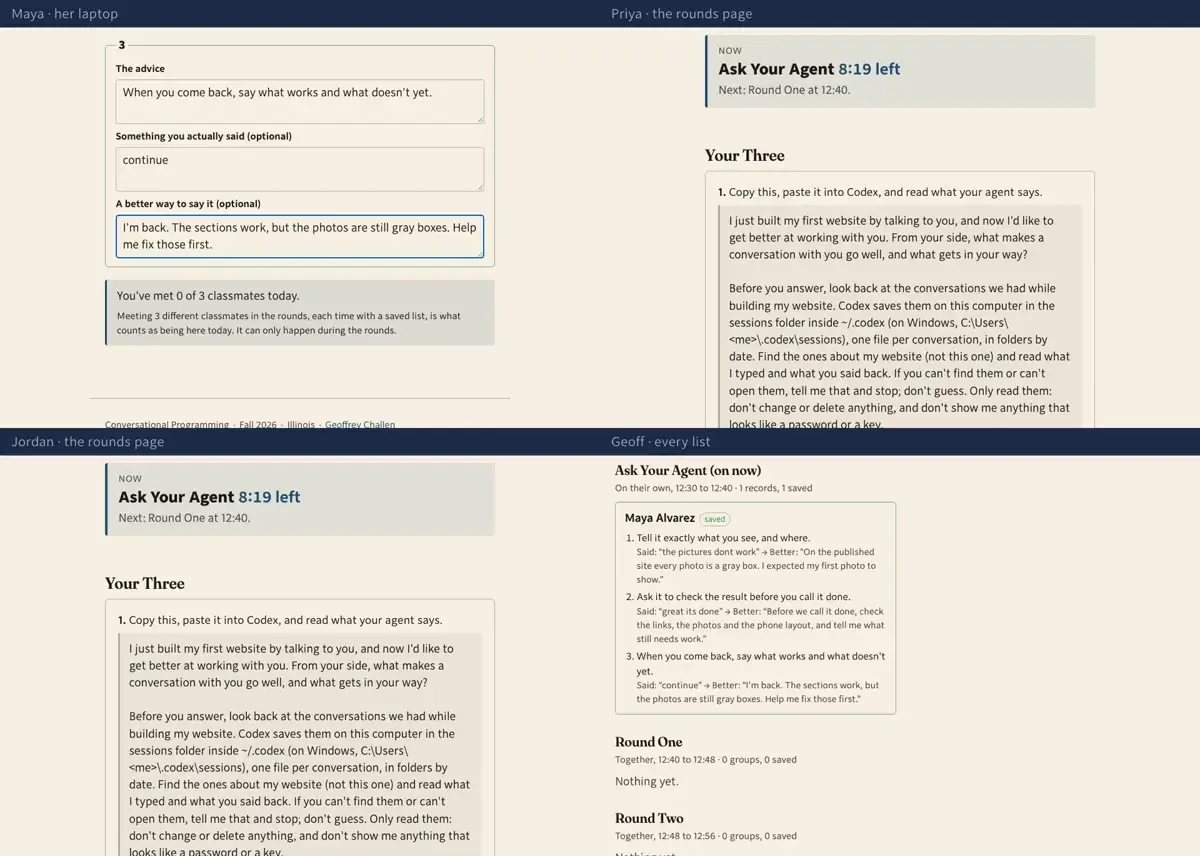
Everyone else is doing the same. It saves as you type, and one piece of advice is enough for this part to count, but the examples make the next half hour much better.
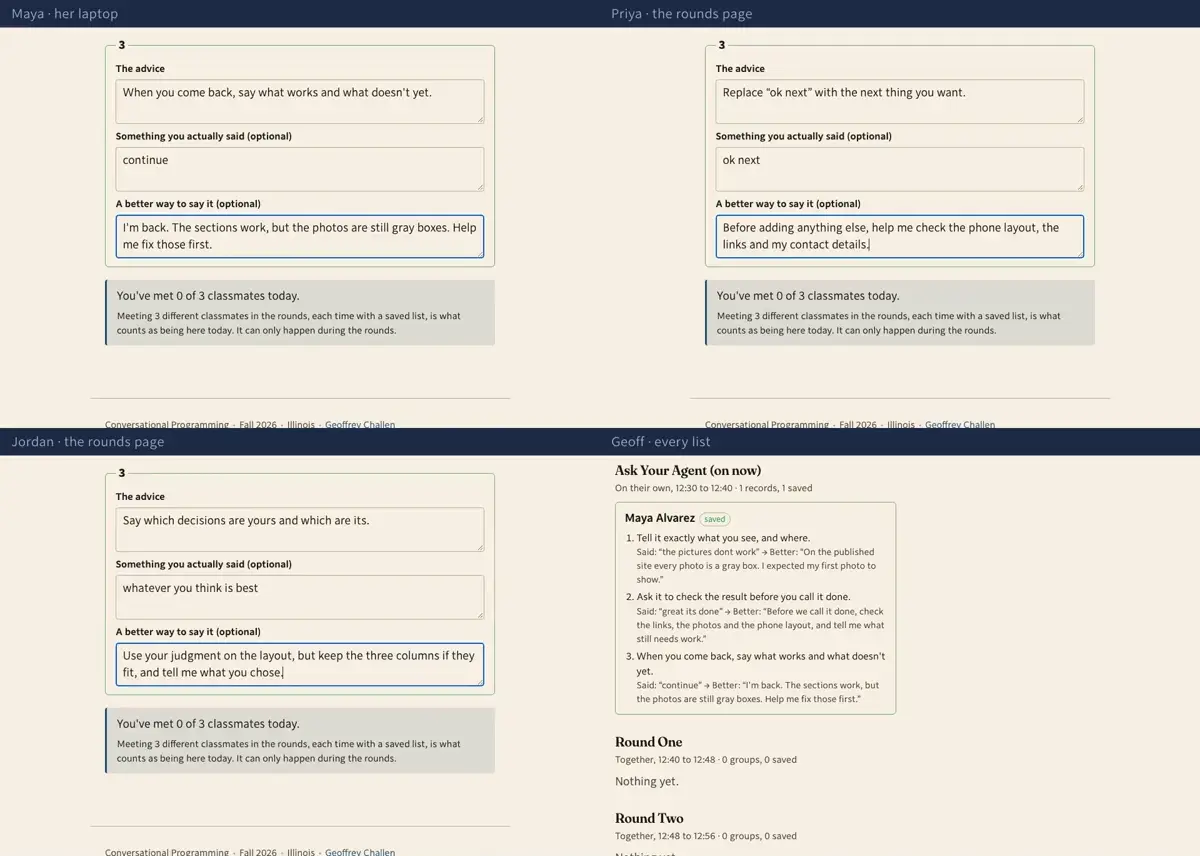
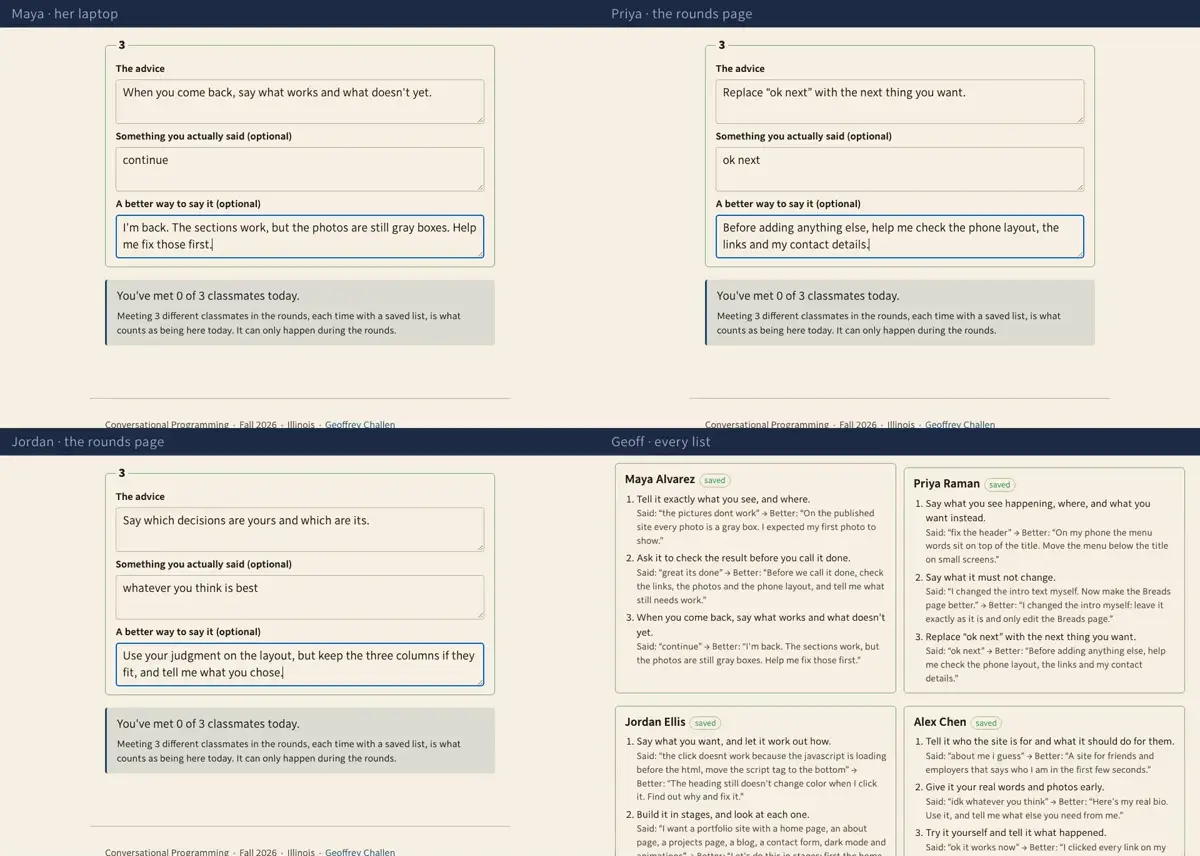
And this is what I see: everyone's three, as they're written. I can look, but not take part. The rounds are yours.
12:40, and every page changes by itself. Round One: find someone near you. Each of you has a code, big, and one of you types the other's.
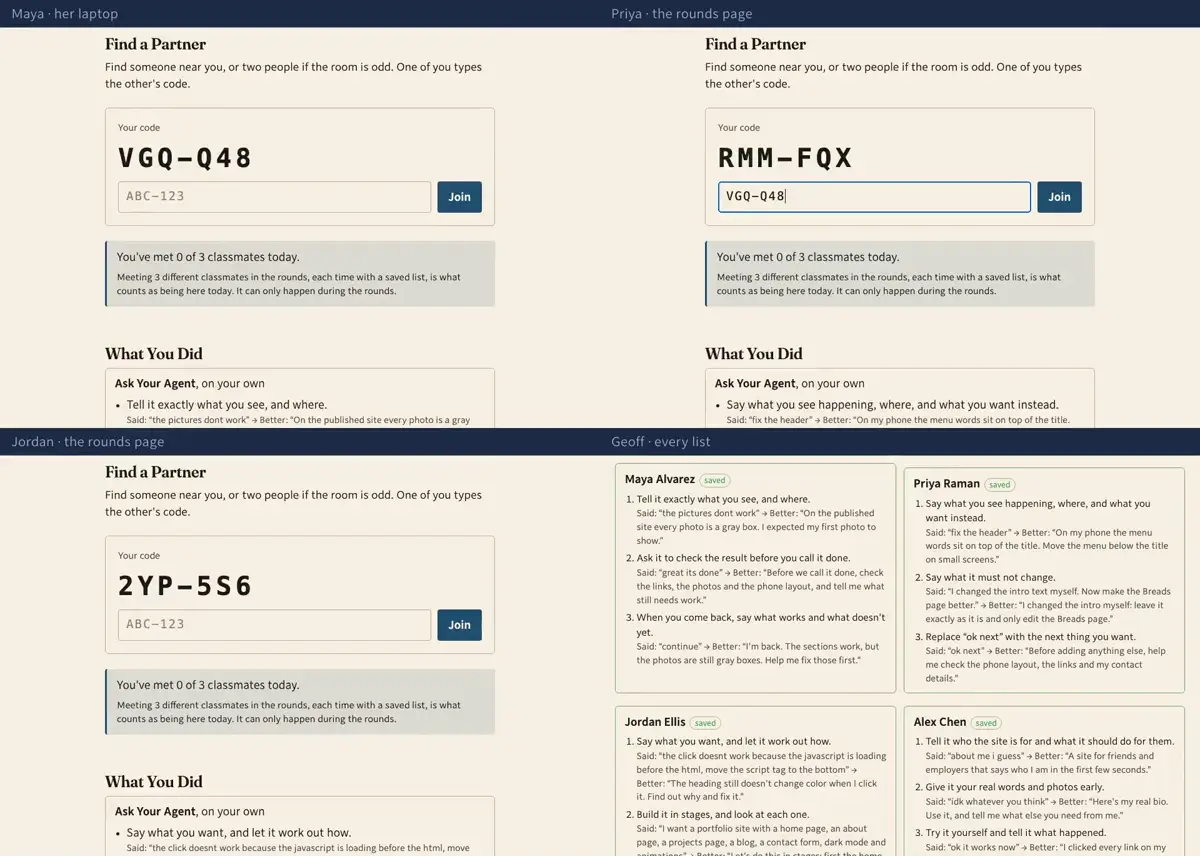
Priya typed Maya's code, so Priya has the pen: one list, one person typing, and the other watching it arrive. Either of you can take the pen whenever you like.
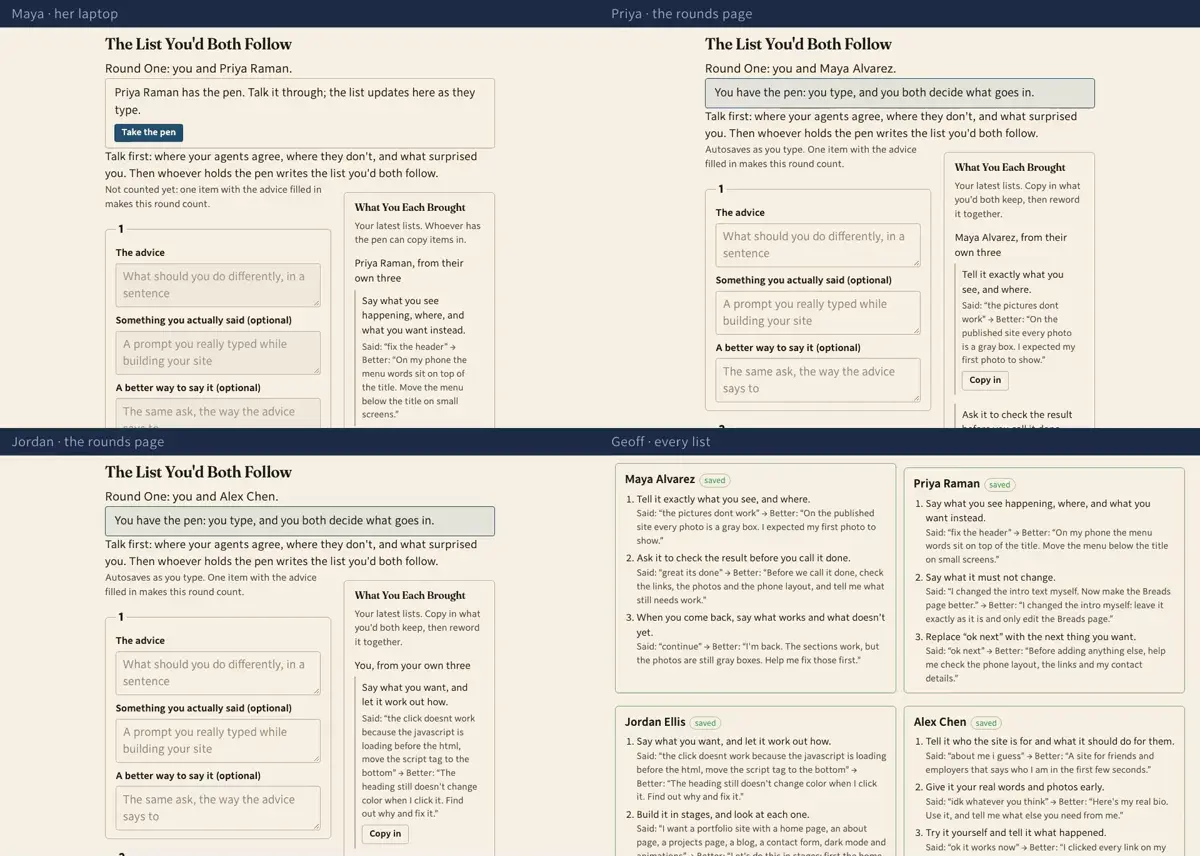
Beside the list is what you each brought: your three, side by side. Talk first. Where do your agents agree? Both of theirs said to describe what you see, in different words.
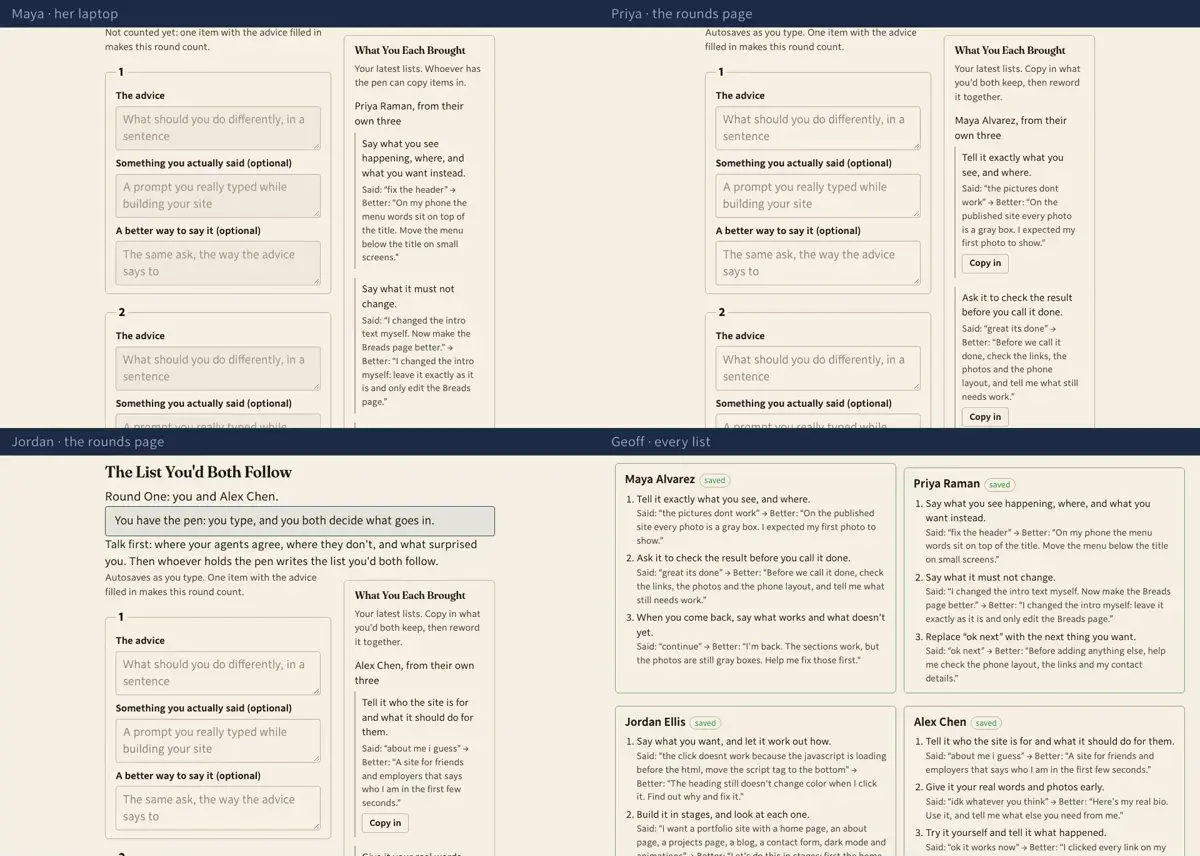
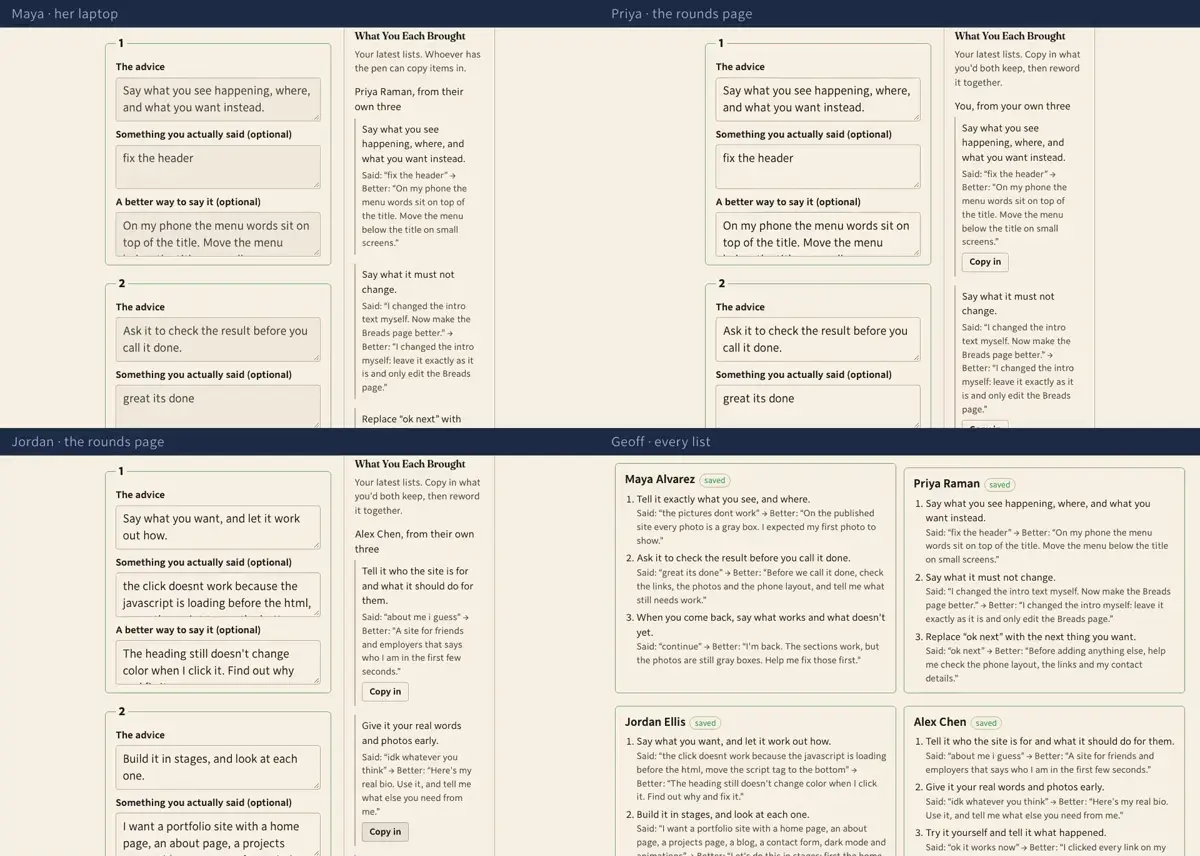
Copy in what you'd both keep, then reword it together. The moment one item has the advice filled in, the list is saved and the round counts, for both of you.
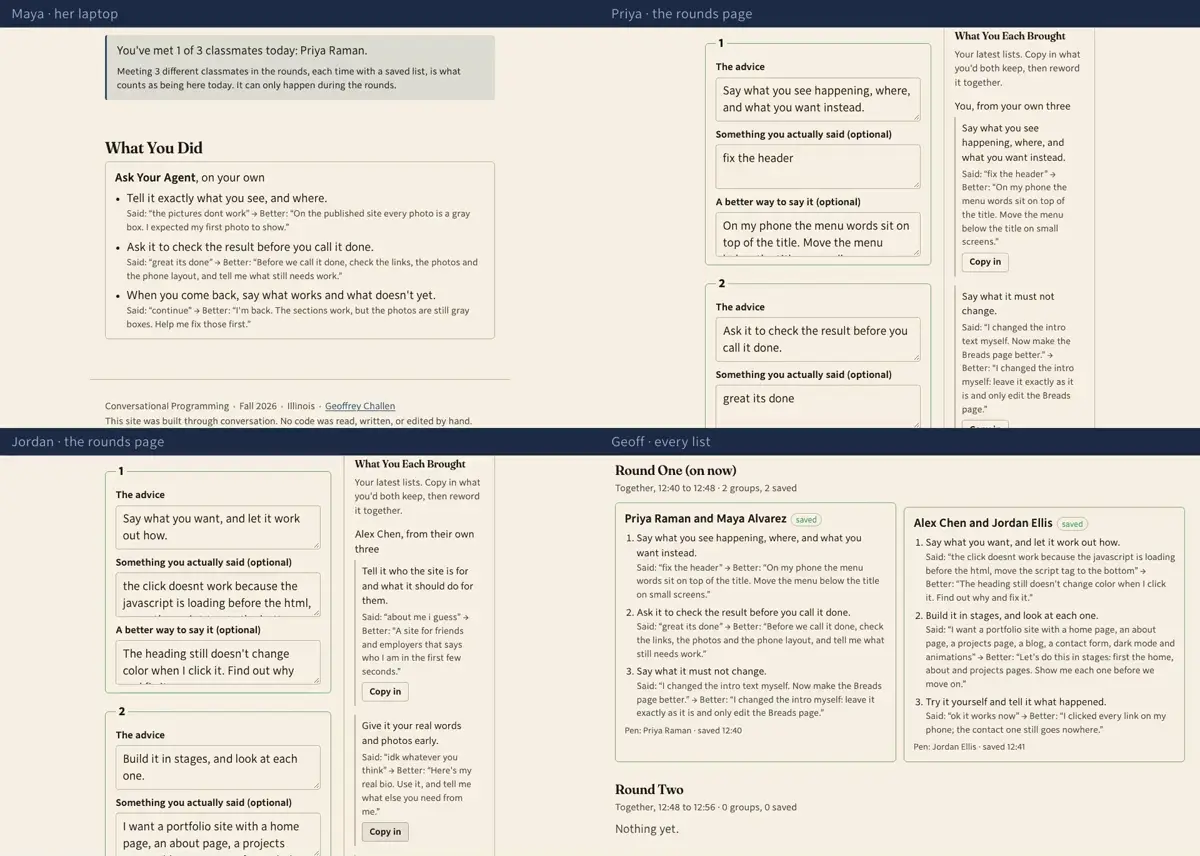
Under the list, the page keeps count: Maya has met one of the three classmates today asks for. Meeting three, each time with a saved list, is what being here means today, and it can only happen during the rounds.
12:48, Round Two: someone new. Priya tries Maya again, and the page says they've already been together today. It won't stop them, since in a small room there may be nobody left, but it asks.
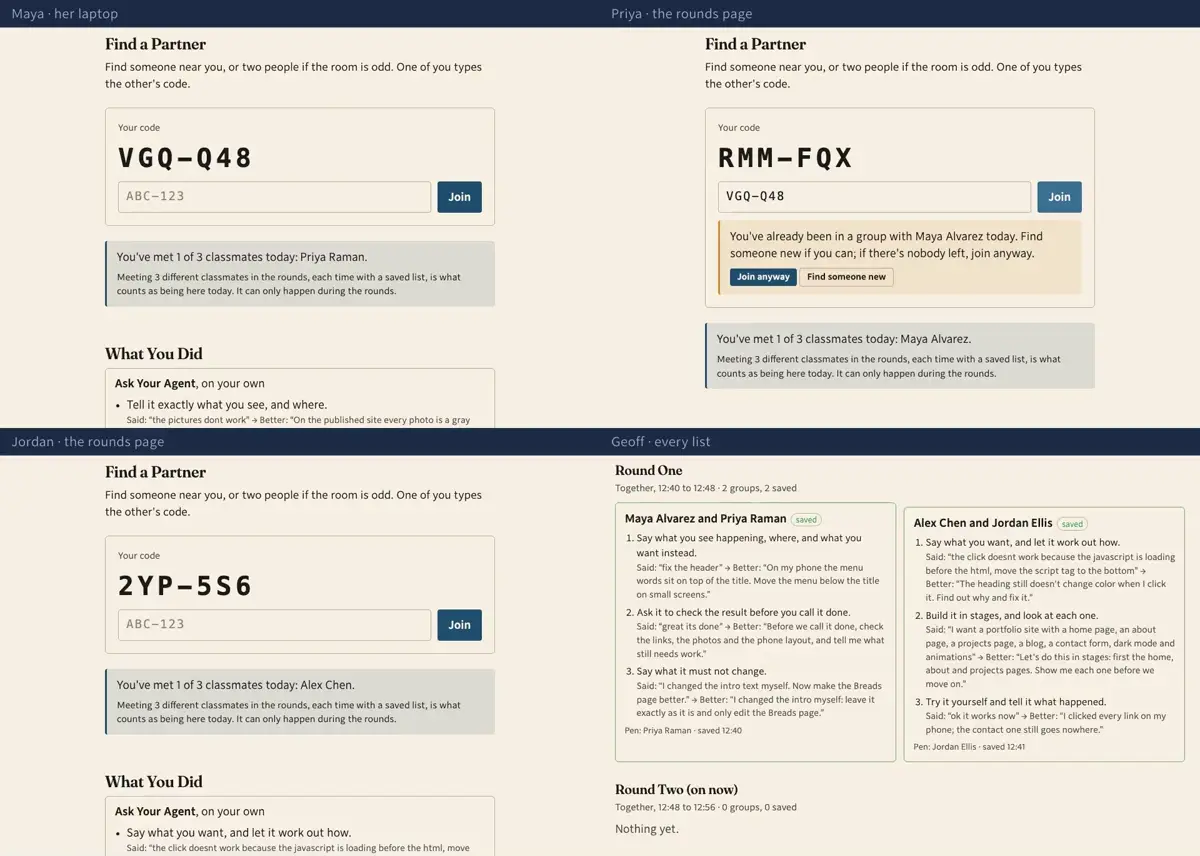
So Priya finds Sam instead, and Jordan types Maya's code. Your latest list comes with you: Maya brings the one she made with Priya, Jordan the one from Alex.
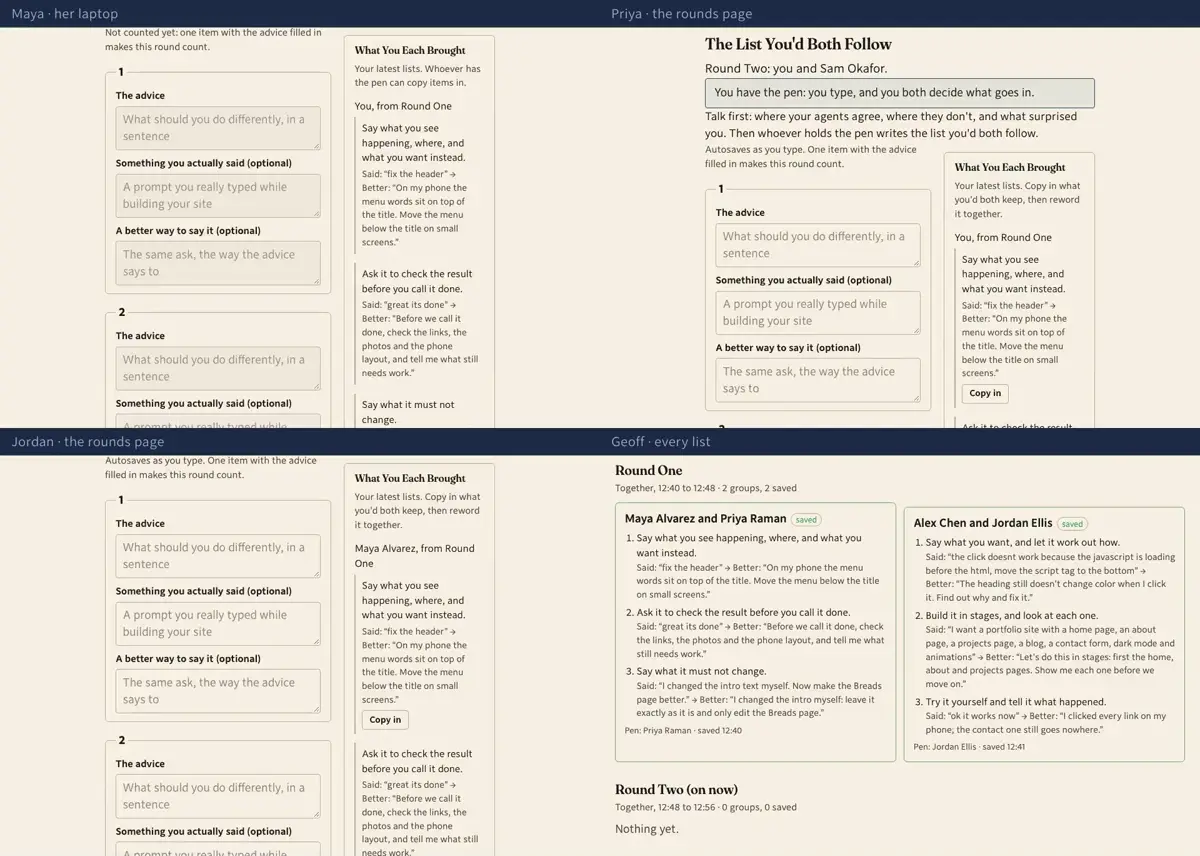
Jordan has the pen and copies in four. Then Maya takes it, because she wants to say one of them better: her agent said to describe what you see, Jordan's said to say what you want and leave the how to it.
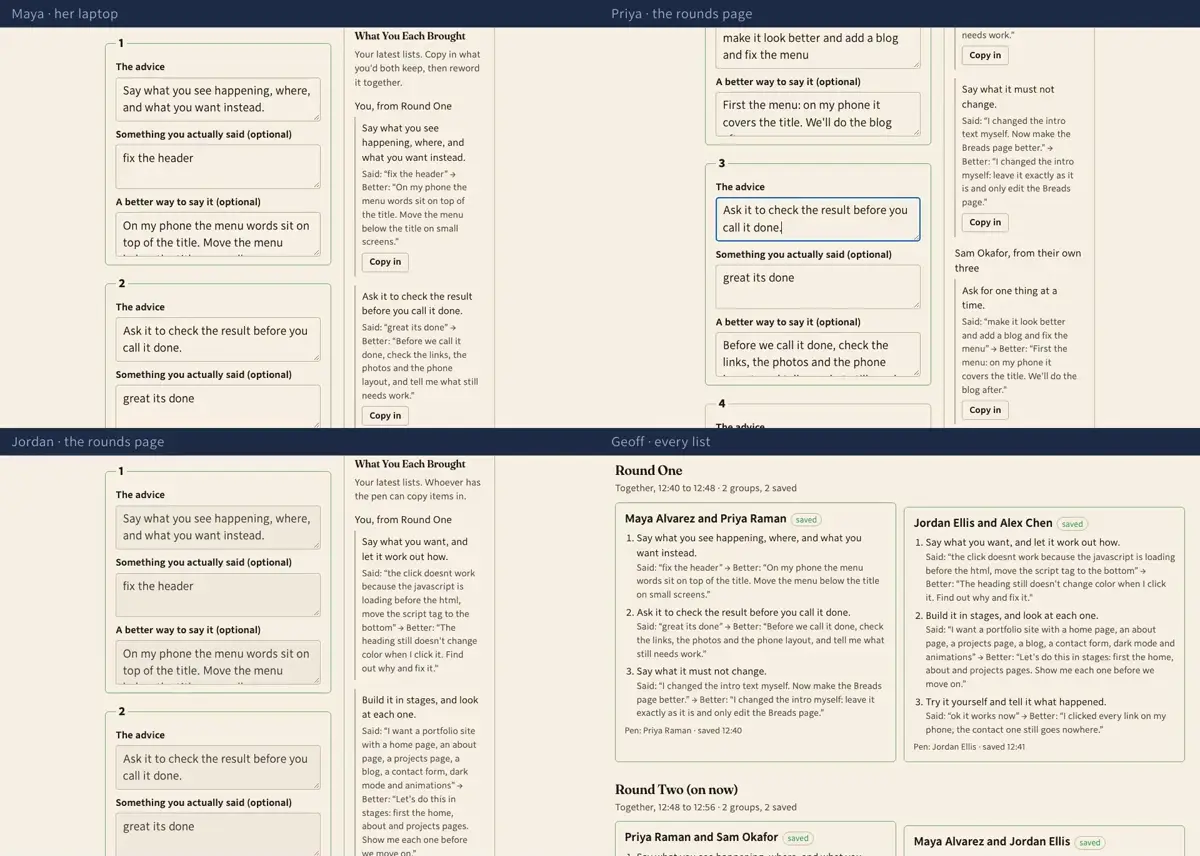
She rewrites the first as the two of them would say it, and deletes the one it replaces. Jordan watches it change on the other screen.
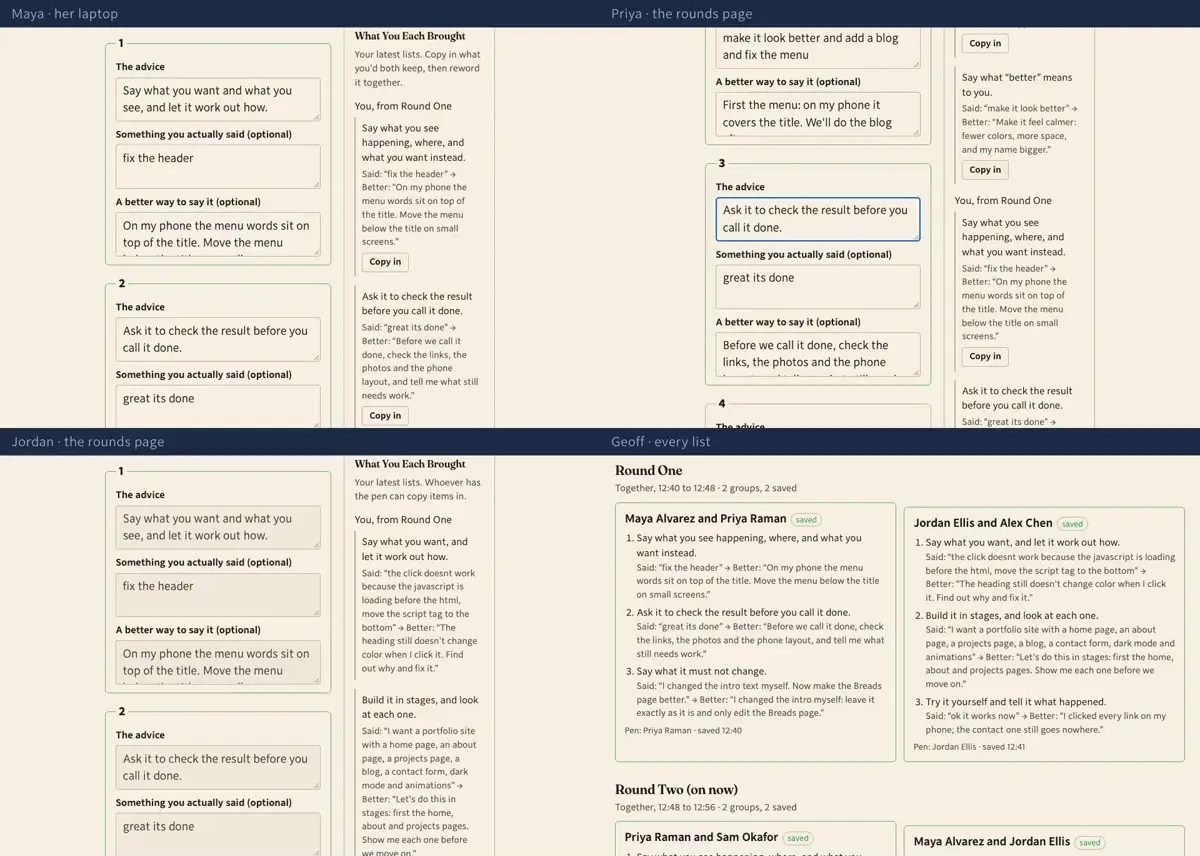
From this round on, the course offers each group one question, aimed at something agents say helps that your list hasn't reached yet. It's a question, never the answer, and you can ignore it.
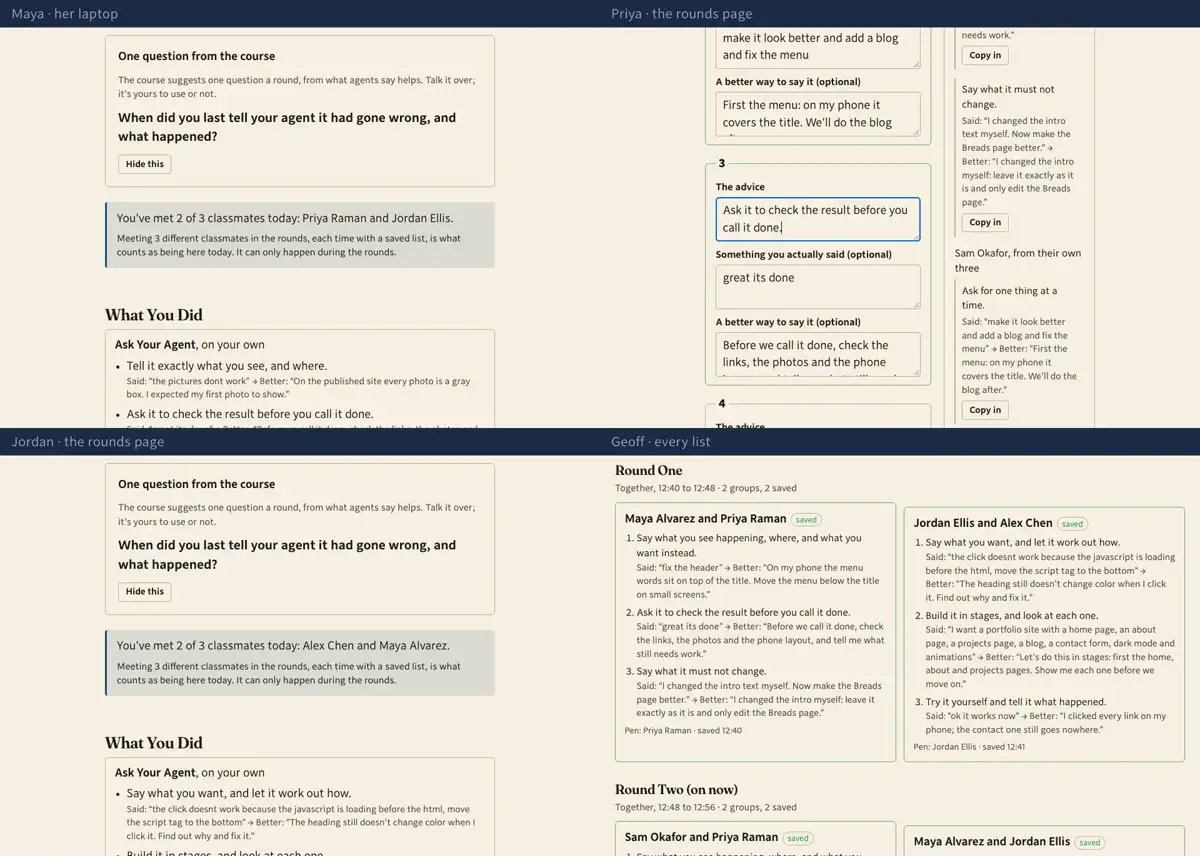
That's two classmates each. And I can see every group's list from wherever I am, and which question the course asked them.
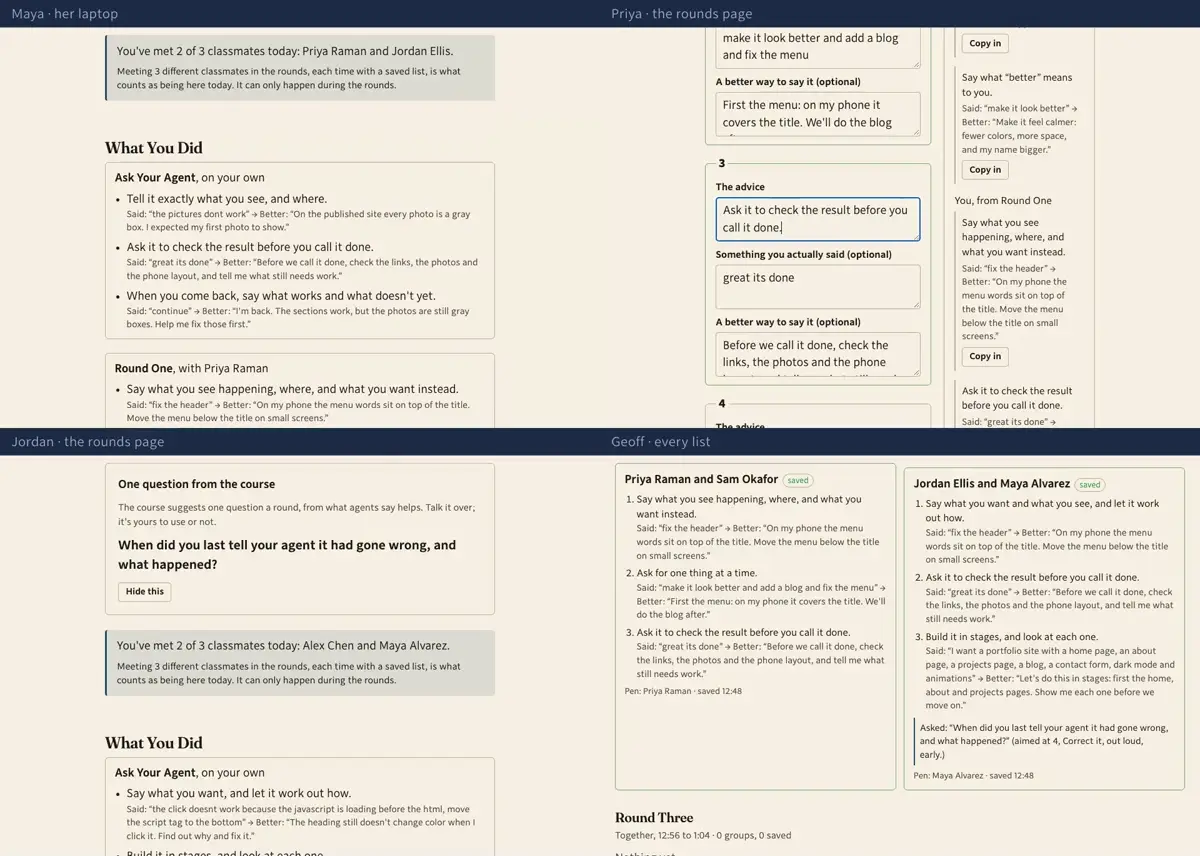
12:56, Round Three, someone new again. The room came out odd, so Maya makes a three: she types Alex's code, and Sam joins them. Priya and Jordan haven't met yet, so they pair.
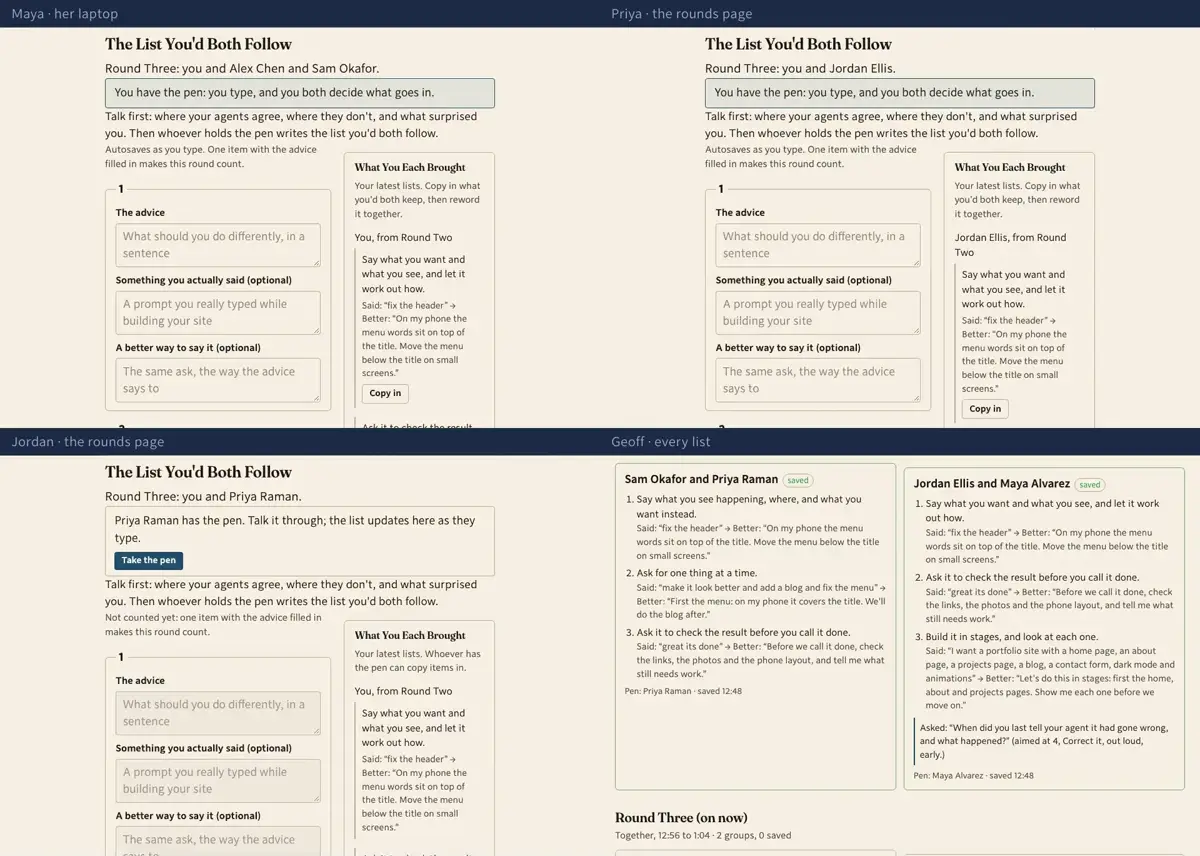
Three lists come in this time, and they've started to look alike. That's the class agreeing: the same advice arriving by different paths.
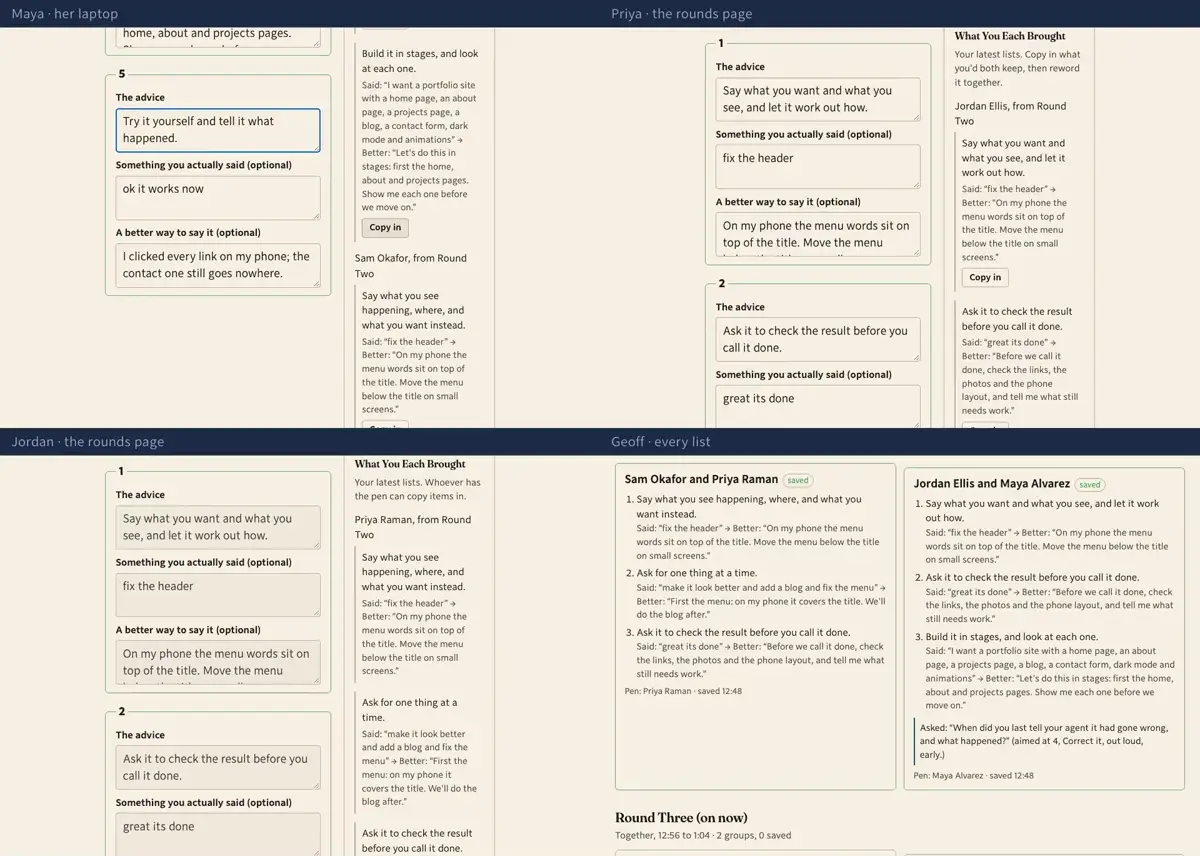
And Maya has met her three, and one more. So has everyone on screen: three rounds, three new people, a saved list each time.
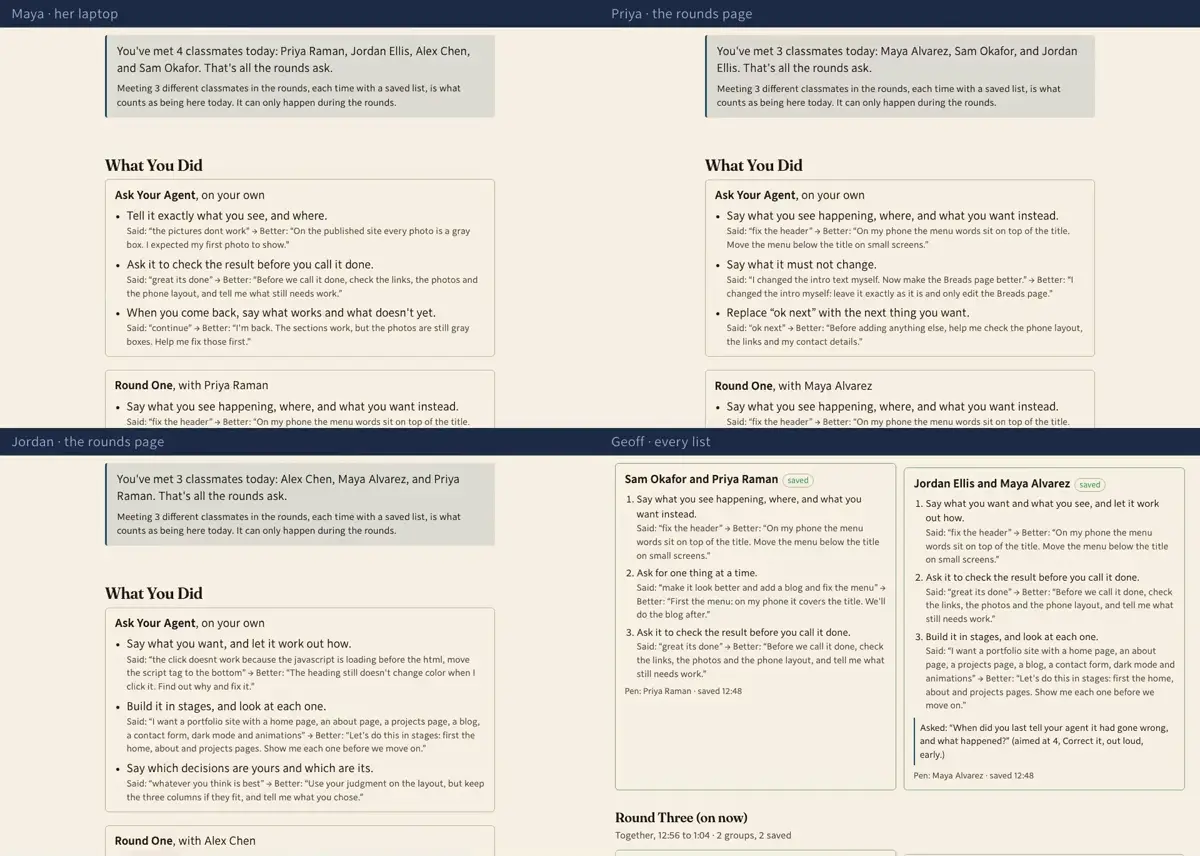
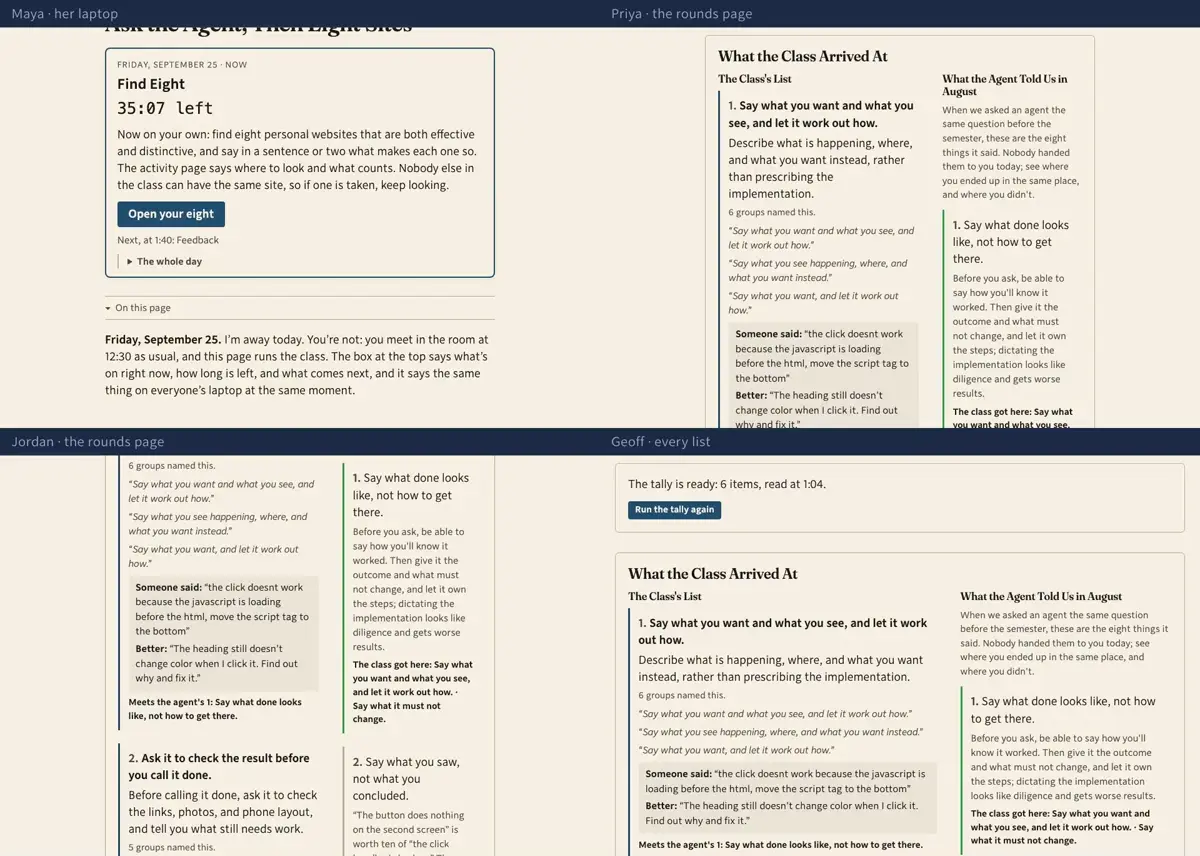
13:04, and the rounds are over. The page reads every list in the room into the class's own, with how many groups named each one, in their own words.
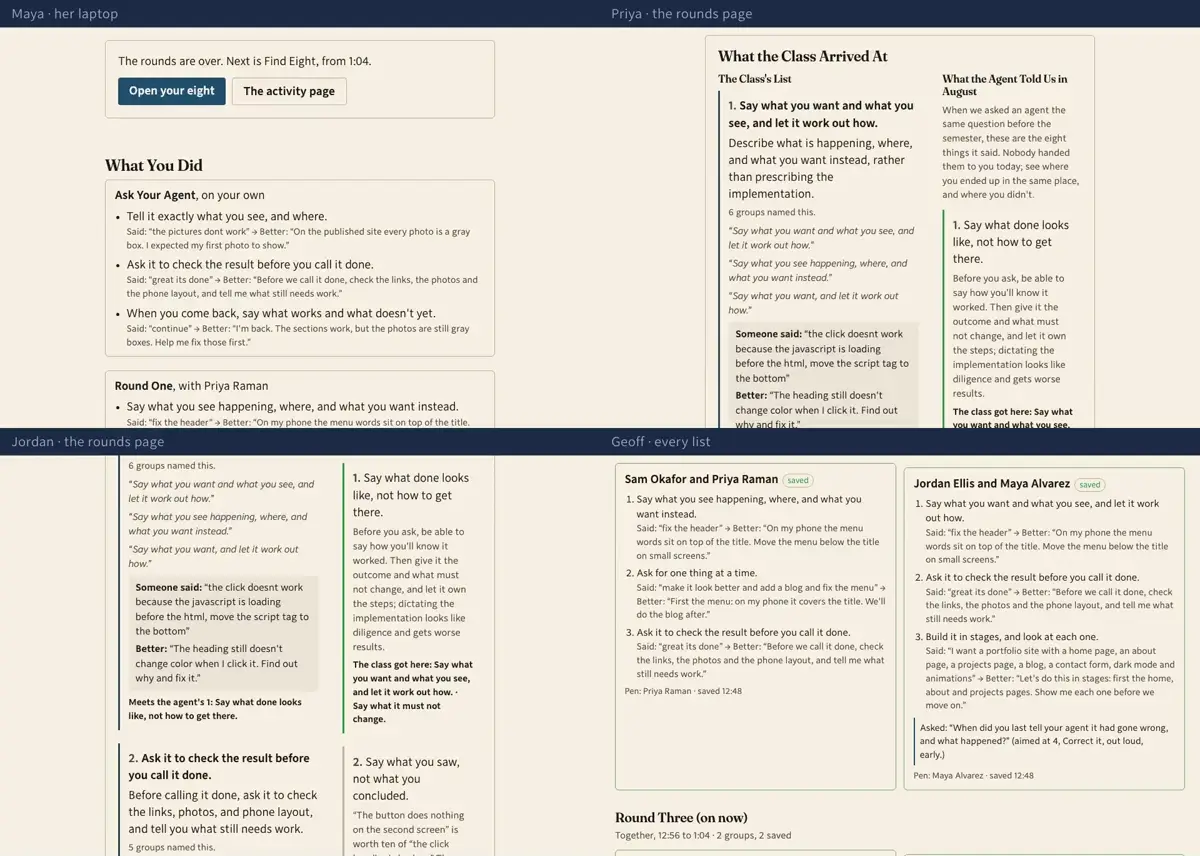
Beside it is something I kept from you until now: what the agent told me in August, when I asked it the same question. Look for where the class got to on its own, and where it didn't.
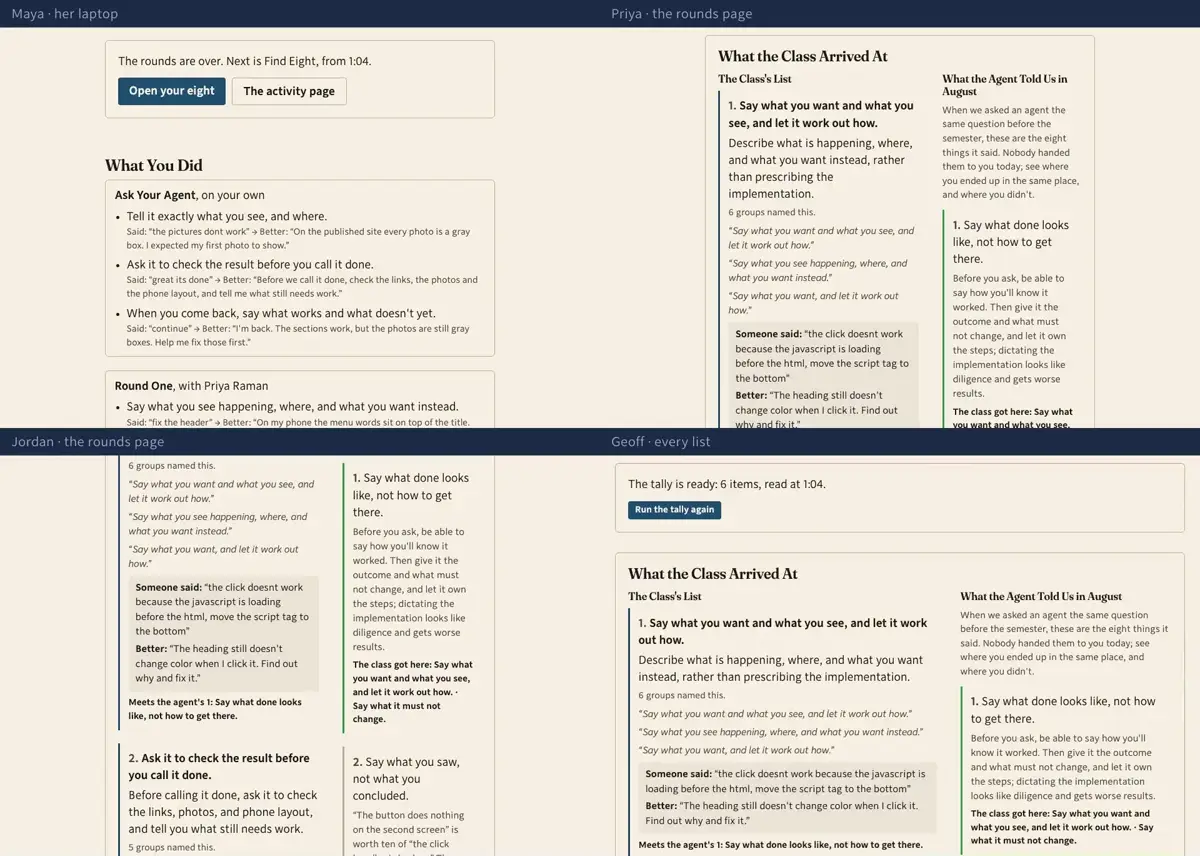
Meanwhile the box on the activity page has moved on to Find Eight, and the class's list is on that page too, for the rest of the semester.
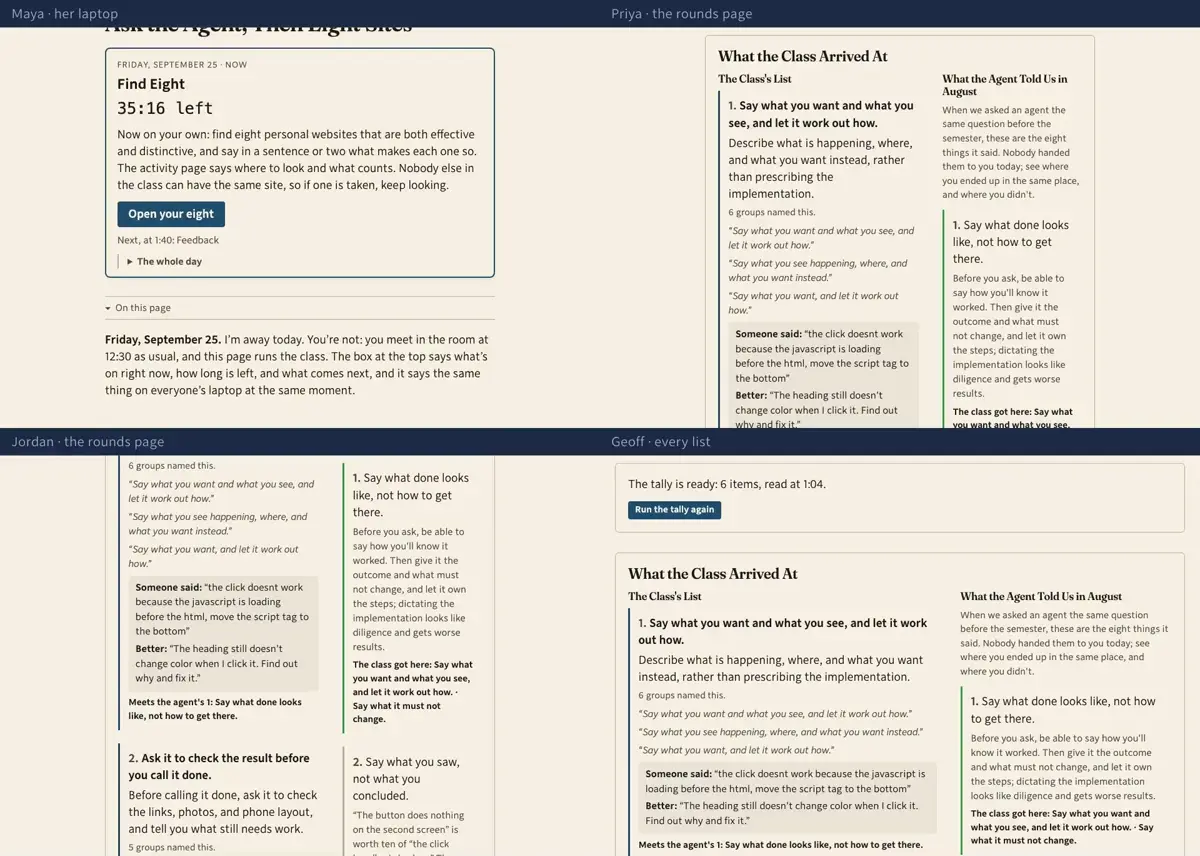
That's the first half. The list the class arrived at is yours: it's what we'll hold each other to. Now go and find eight websites.
Recorded September 24, 2026.