


Eight Sites
A class period with nobody running the room: everyone goes hunting for eight personal websites that are both effective and distinctive, writes a sentence or two about each, and finishing them is what counts as having been there. The sites found here are invented, served from the rehearsal rig, since a recording can't carry somebody's real website.
What You're Looking At
This is a rehearsal, not a class. The students are invented: they're the personas we use to test this course on itself. Wherever an agent or a companion speaks, its words were generated by gpt-5.6-luna, the model the course ran on until September 24, recorded once and replayed since so the run comes out the same every time. Everything else is the software students use: the real pages, the real proxy, the real timer, the real companion.
Three kinds of substitution are made for publication, and only these three. Where a screen would show the rehearsal rig's own 127.0.0.1 address or its scratch folder, it reads as the real one instead. A setup token is shortened, because a token should never be shown whole even when it's a throwaway from a test database. And where a film needs a website that isn't anybody's, a student's own site or one a student went and found, it is an invented page served by the rig, shown under an address ending in .example. Nothing else on any screen is altered.
The brief the students actually read is the activity page.
Step by Step
Friday, September 25. I'm away, and the class meets without me. This page runs the day: the box at the top says what's on, how long is left, and what's next, and so does the panel on every page you're signed in to. After the rounds, it's time to find eight.
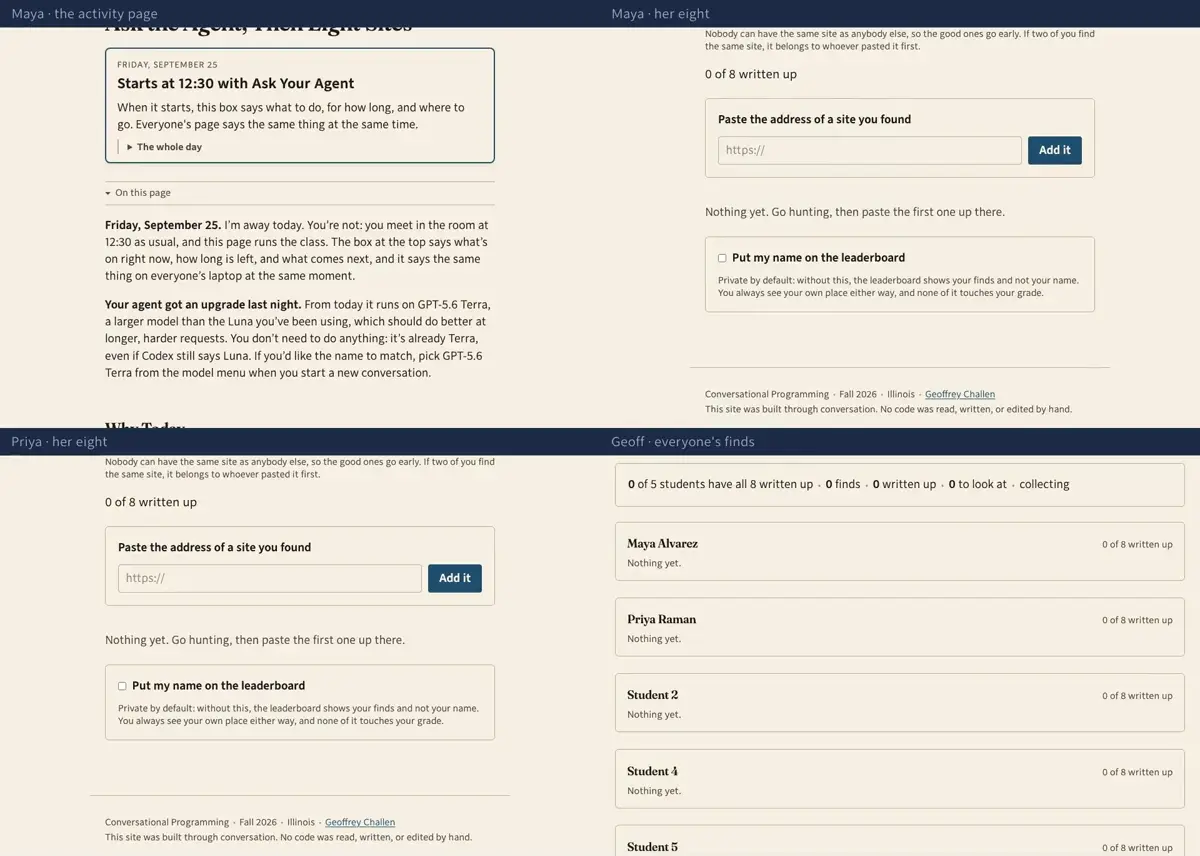
Being here today means finishing your eight. Nobody is in the room to see who came, so the work is what says you were here, and the foot of the page keeps the count. It's due Wednesday at 12:30, when the vote opens.
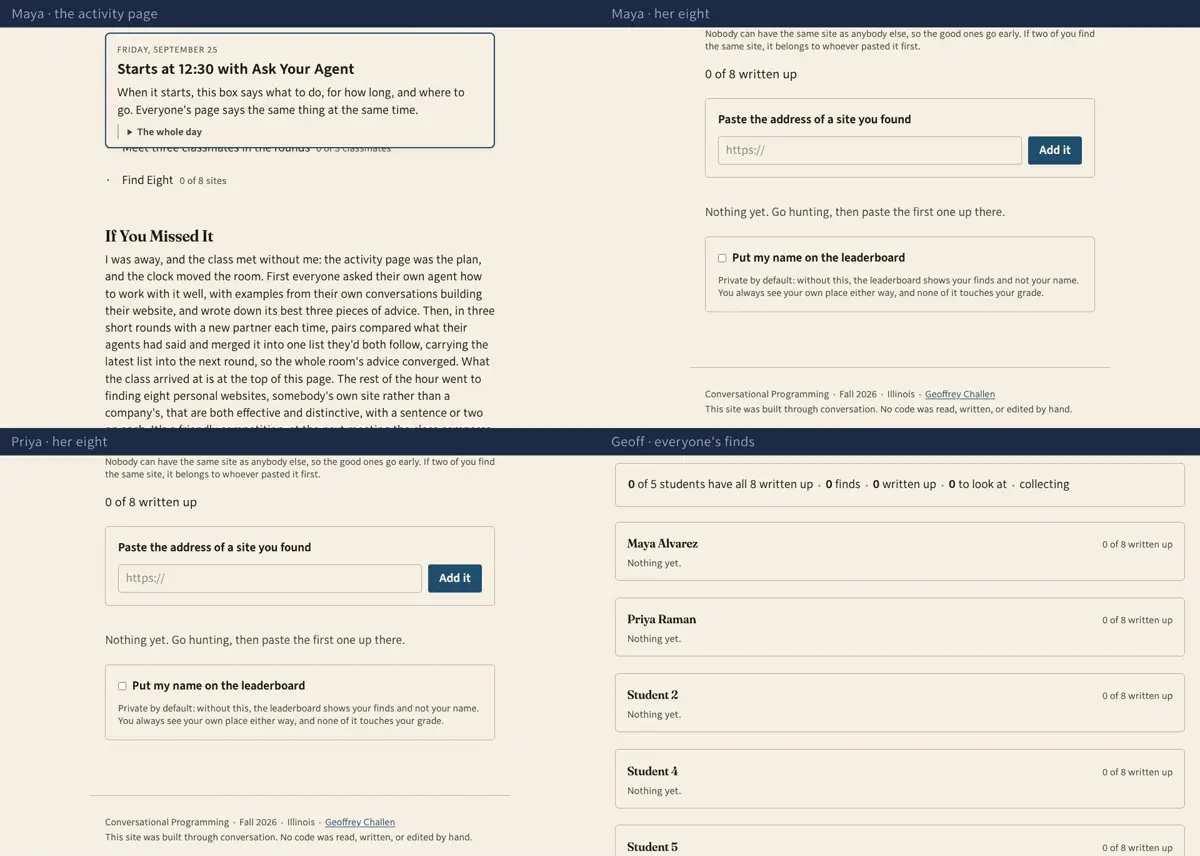
The hunt itself happens on your eight. The activity page lists a dozen places to start; when you find one worth keeping, you paste its address into the box.
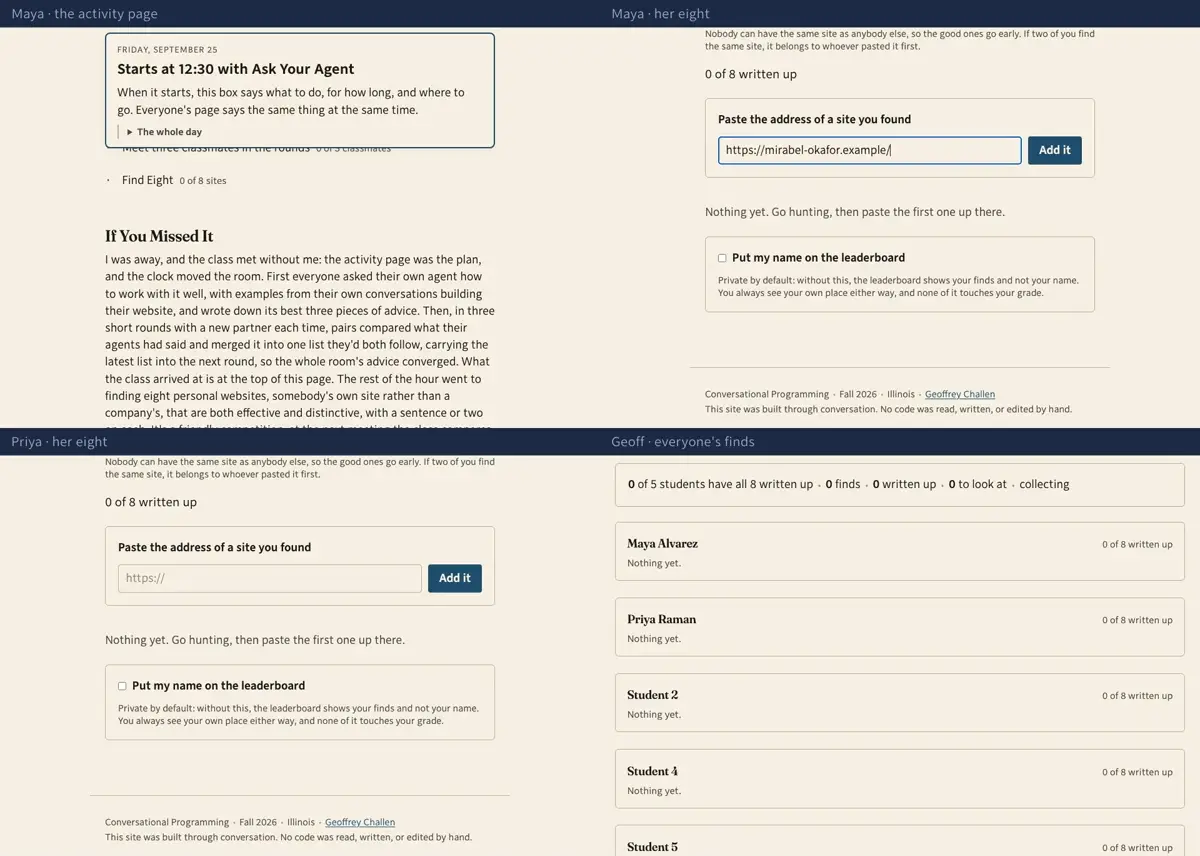
The course fetches it while you wait and answers in about a second: it's yours now, nobody else can have it, and here is the site itself, drawn at the size its maker meant and shrunk to fit the card.
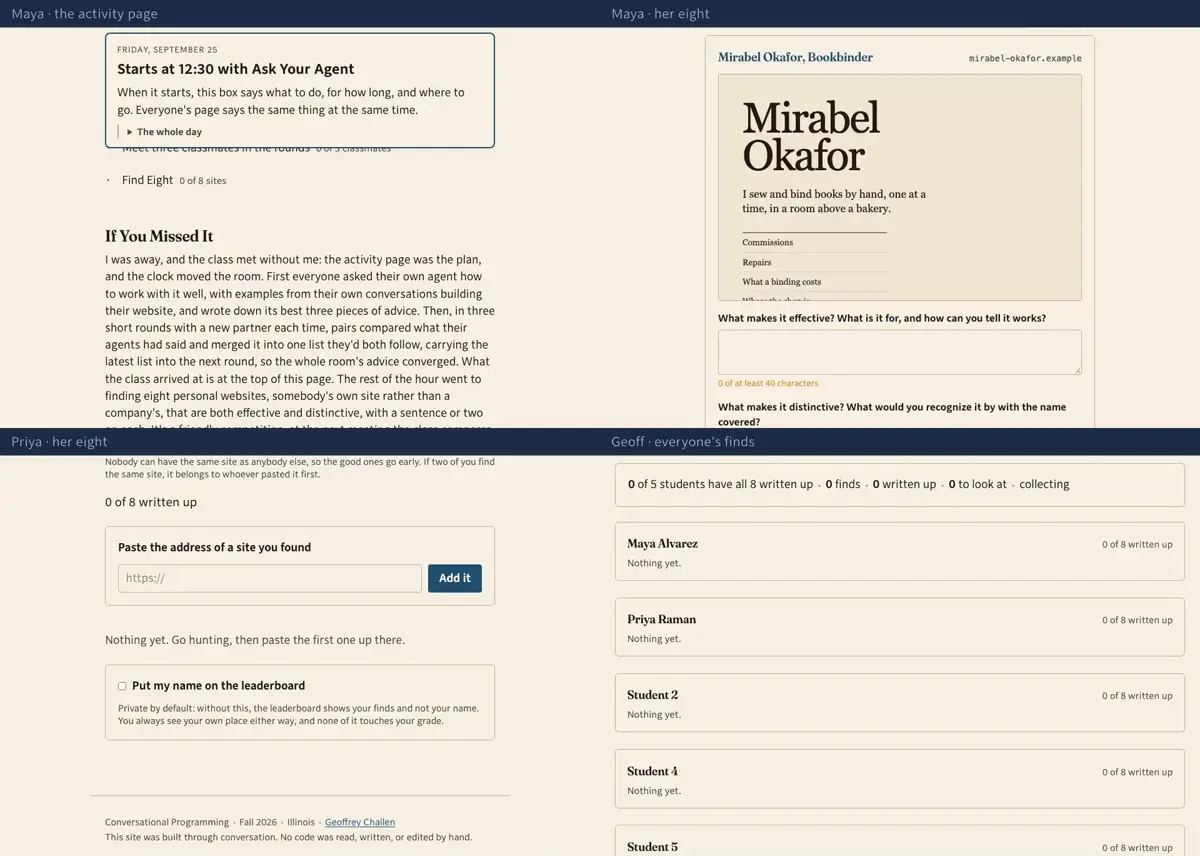
That preview is the point of the page. What you should be looking at while you write is the site, not its address, and next Wednesday the vote puts two of them side by side, live.
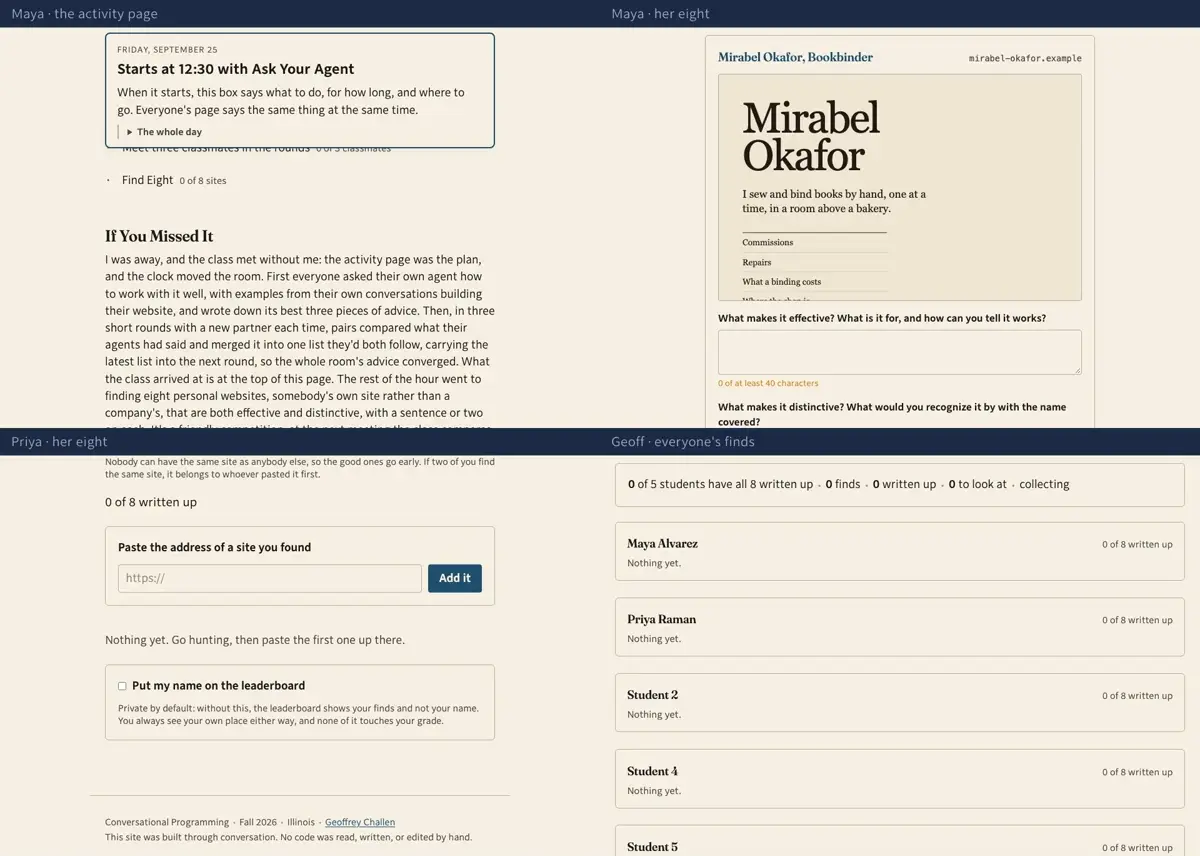
The sites in this recording are invented: one-page sites made up for the rehearsal and served from this machine, standing in for the real ones you'll go and find. Everything else here is the page you'll use.
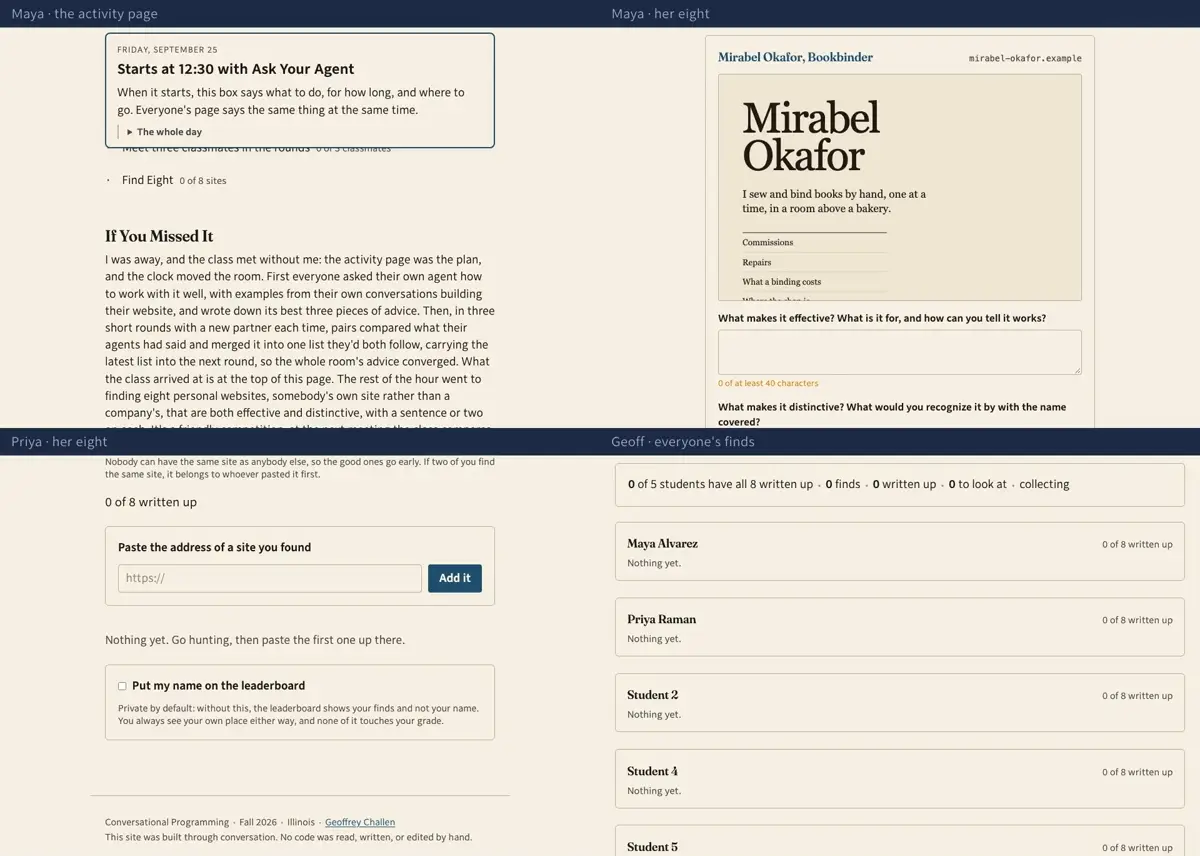
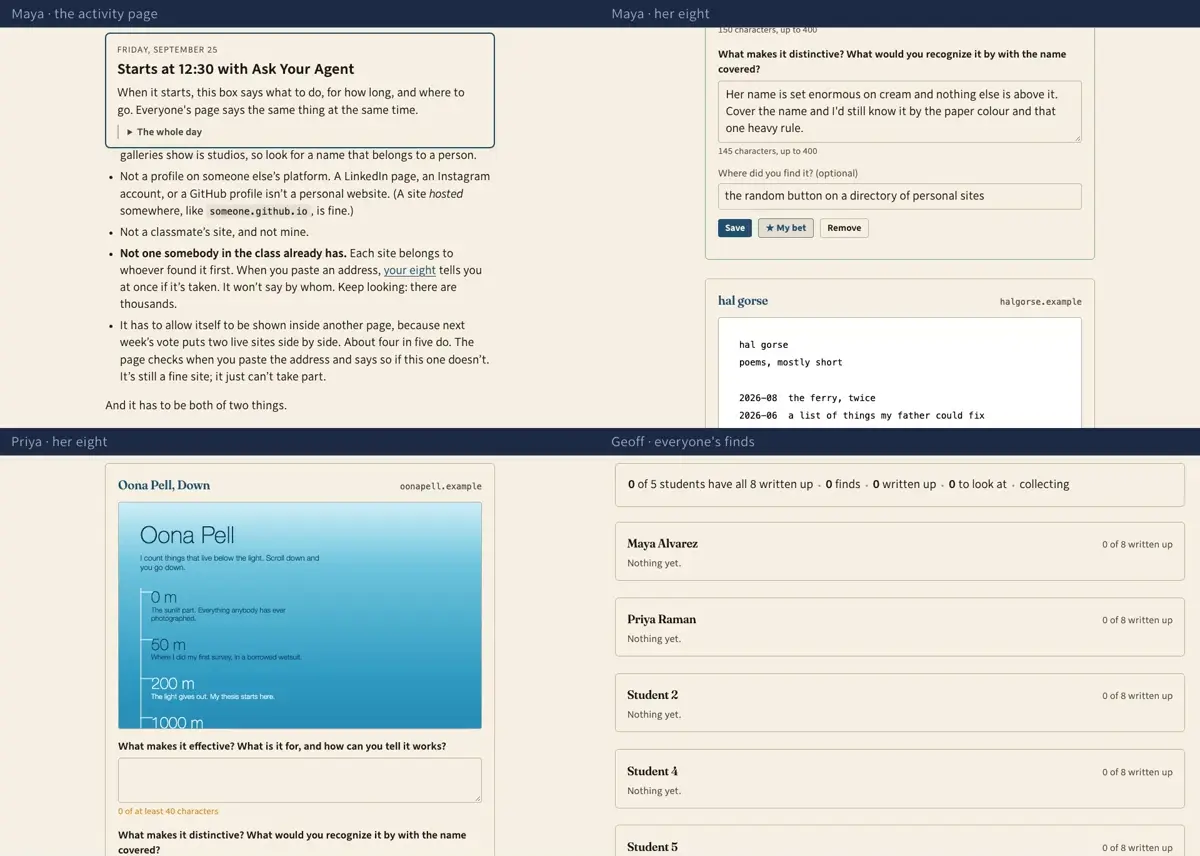
Then the two questions, the same for every find. What makes it effective, and what makes it distinctive: a sentence or two each, at least forty characters and at most four hundred, in your own words.
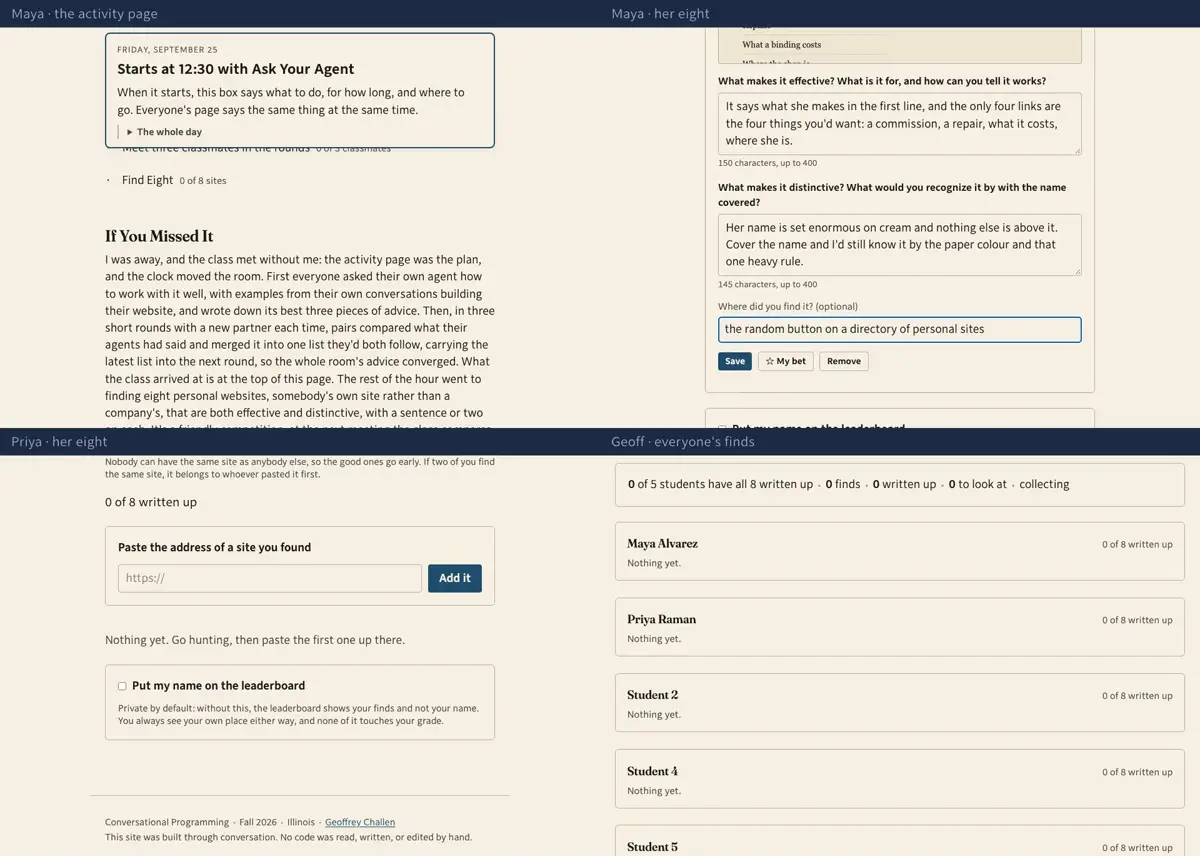
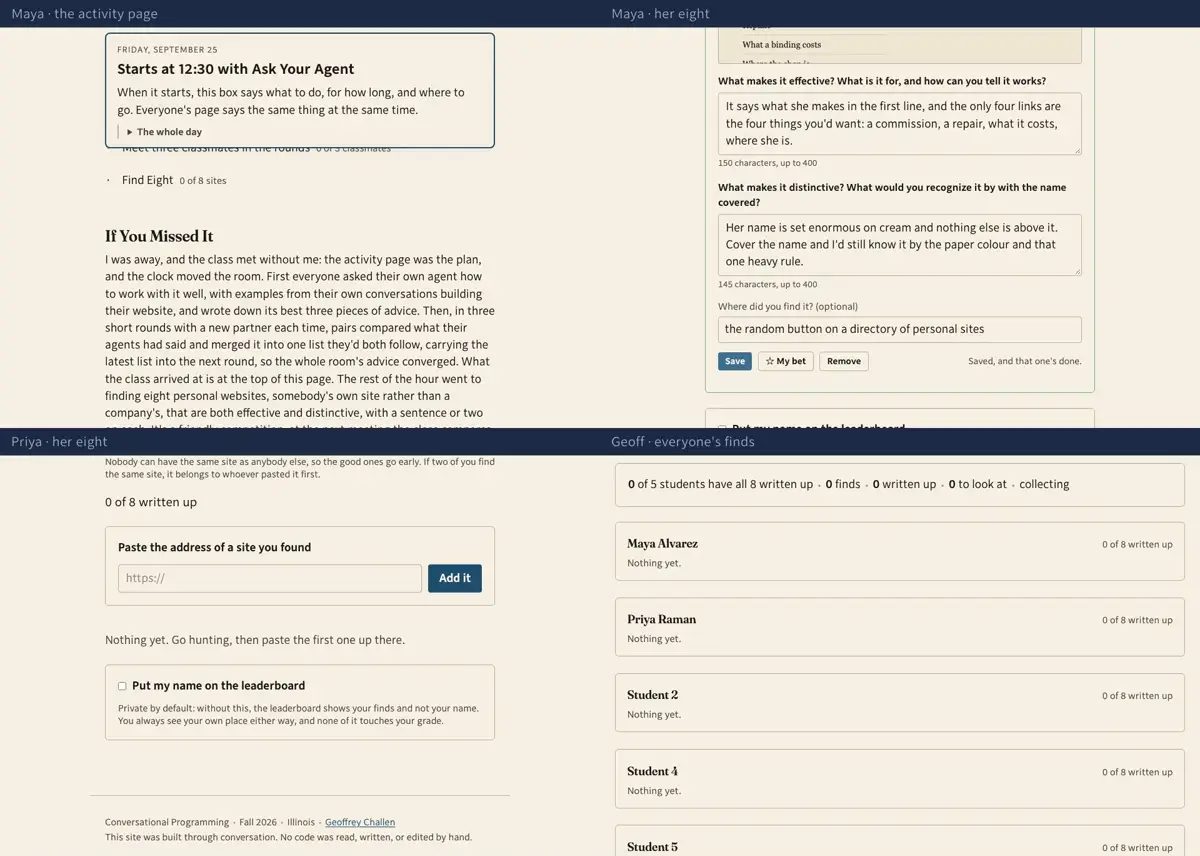
Save, and that one's finished. The line at the top counts what's written up, and that is the number the course reads on Wednesday: eight of them, and the day is done.
Nobody can have the same site as anybody else, so the good ones go early. Priya found the same bookbinder twenty minutes later and is told at once—and never by whom, so there is nobody to go and argue with.
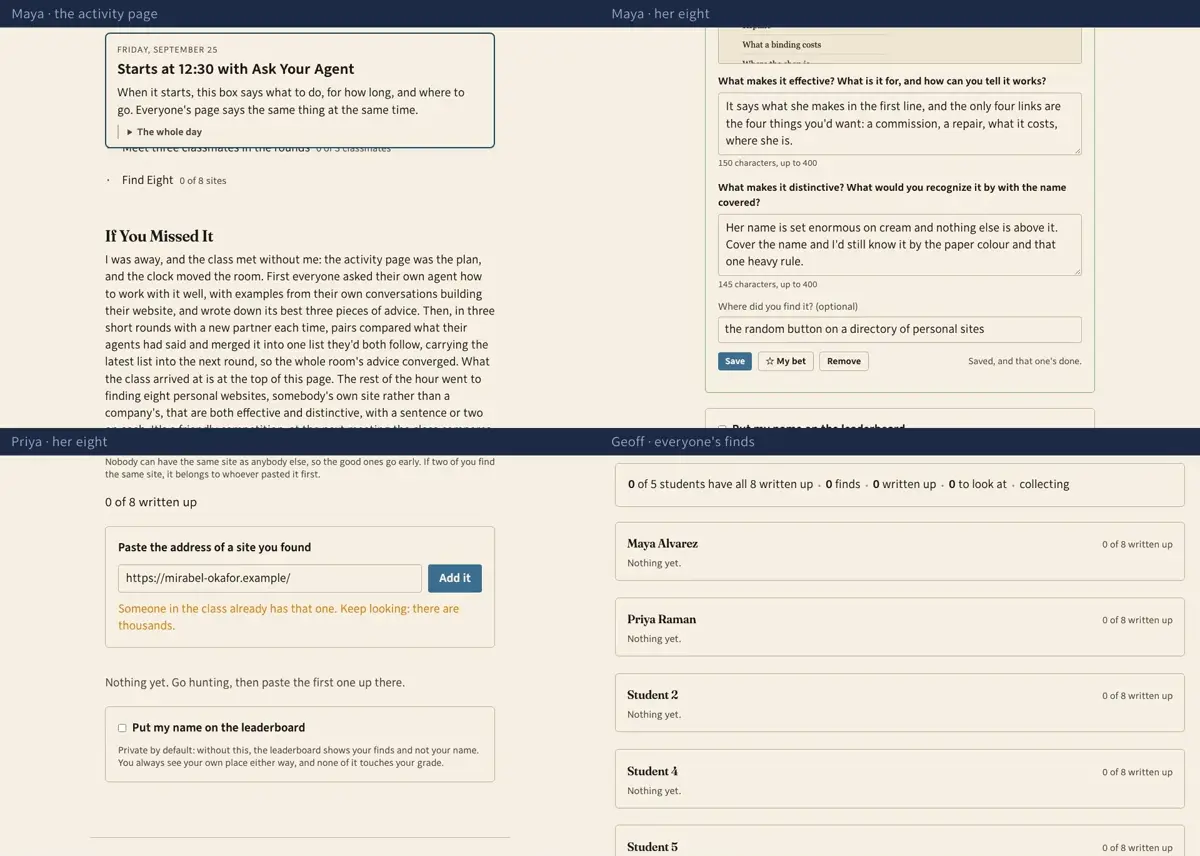
So she keeps looking, and the next one is hers: a marine biologist whose whole site is one long scrolling depth chart. That rule is most of why today works. Twenty people who can't duplicate each other get past the first page of every gallery.
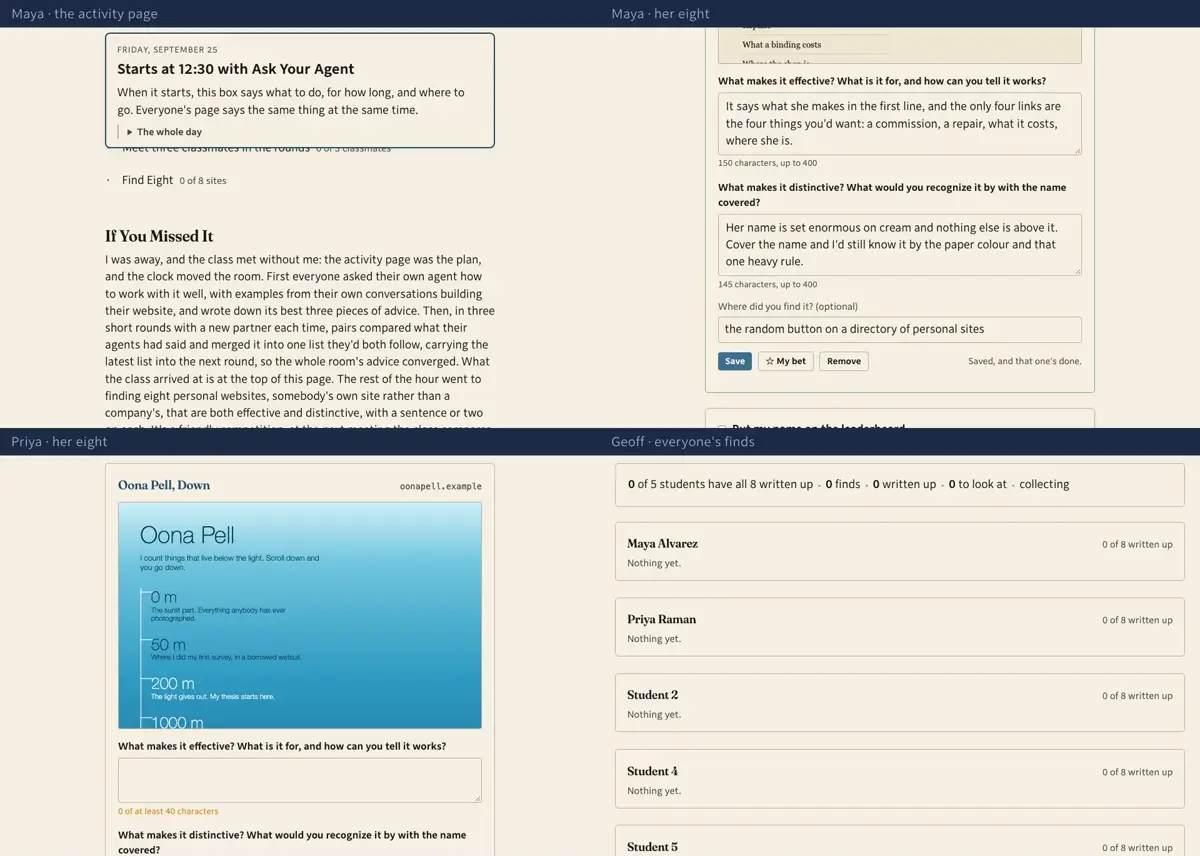
Two things do get turned away. Some sites won't let another page show them, and the vote shows two live sites side by side, so one that can't be shown can't take part. It's a fine site; the page says so and asks for another.
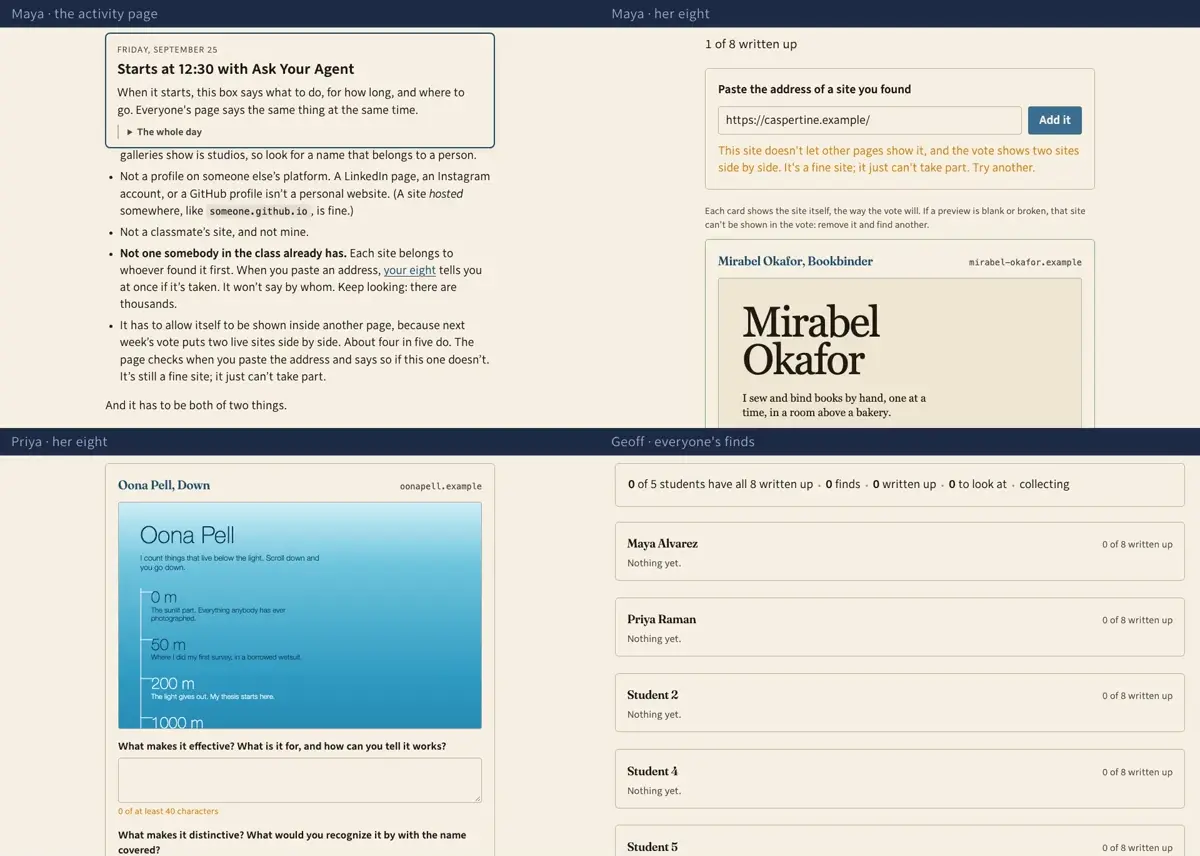
And a profile on somebody else's platform isn't a personal website. A GitHub page, a LinkedIn page, an Instagram: those are refused before the course even goes and looks. A site hosted somewhere, like someone.github.io, is a personal site like any other.
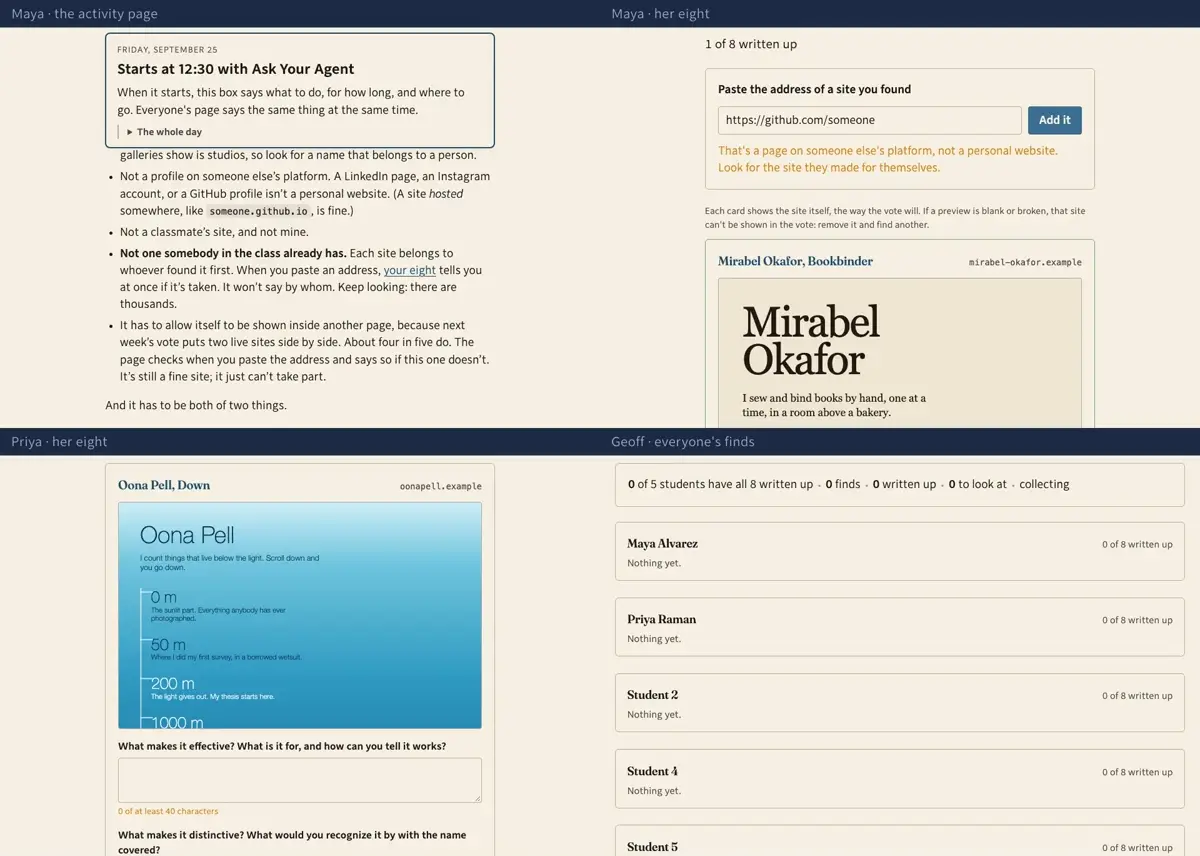
Two more go in the same way: a poet's plain monospace index, and a letterpress printer's site set like one of her own samples. Found and written up are different things, and the line at the top counts both, so you can gather a pile and write them up afterwards.
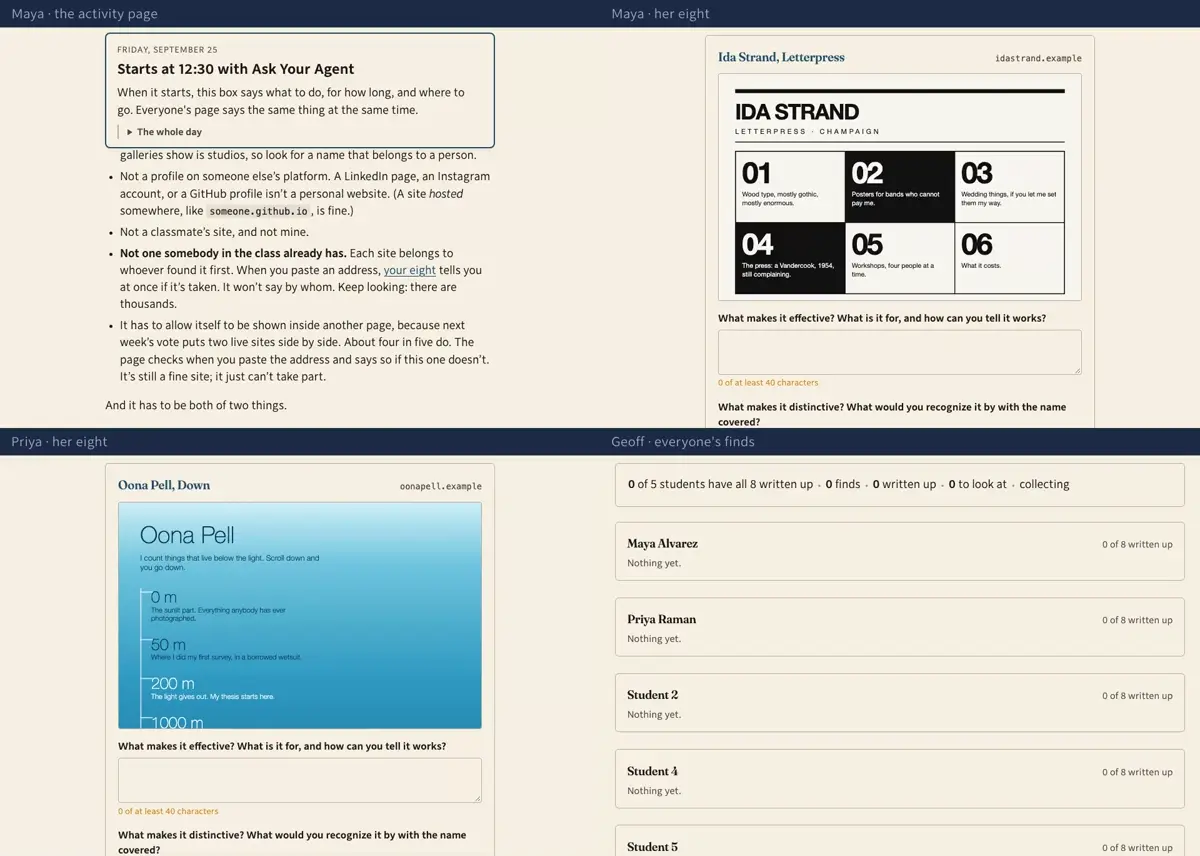
Star one of them as your bet: the find you think the room will rate highest. One at a time, and at the reveal we'll see who called it.
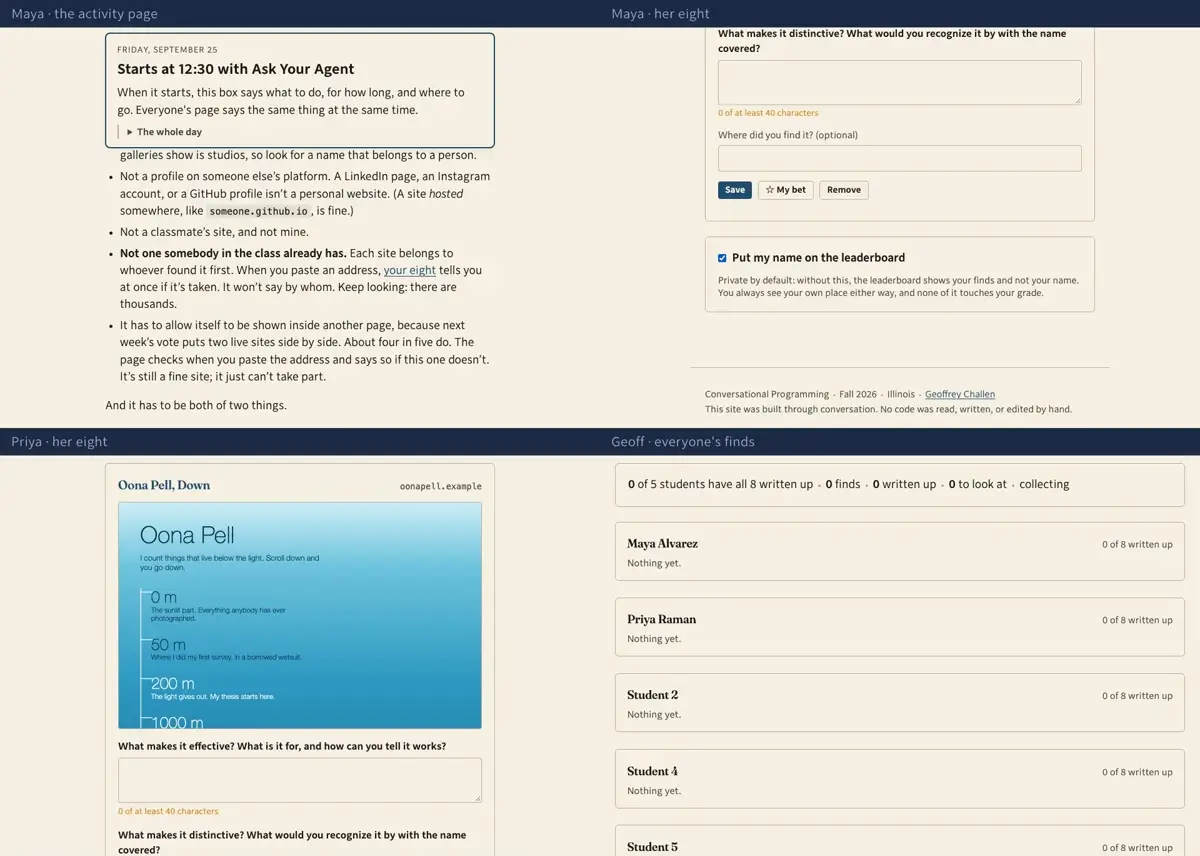
Your name is off the leaderboard unless you put it on. Either way you see where your own finds came, and none of it touches your grade: finishing the eight is the only part that counts for anything.
Back on the activity page, the count has moved on its own. Nothing is handed in and there is nothing to remember to do: the finds are the record.
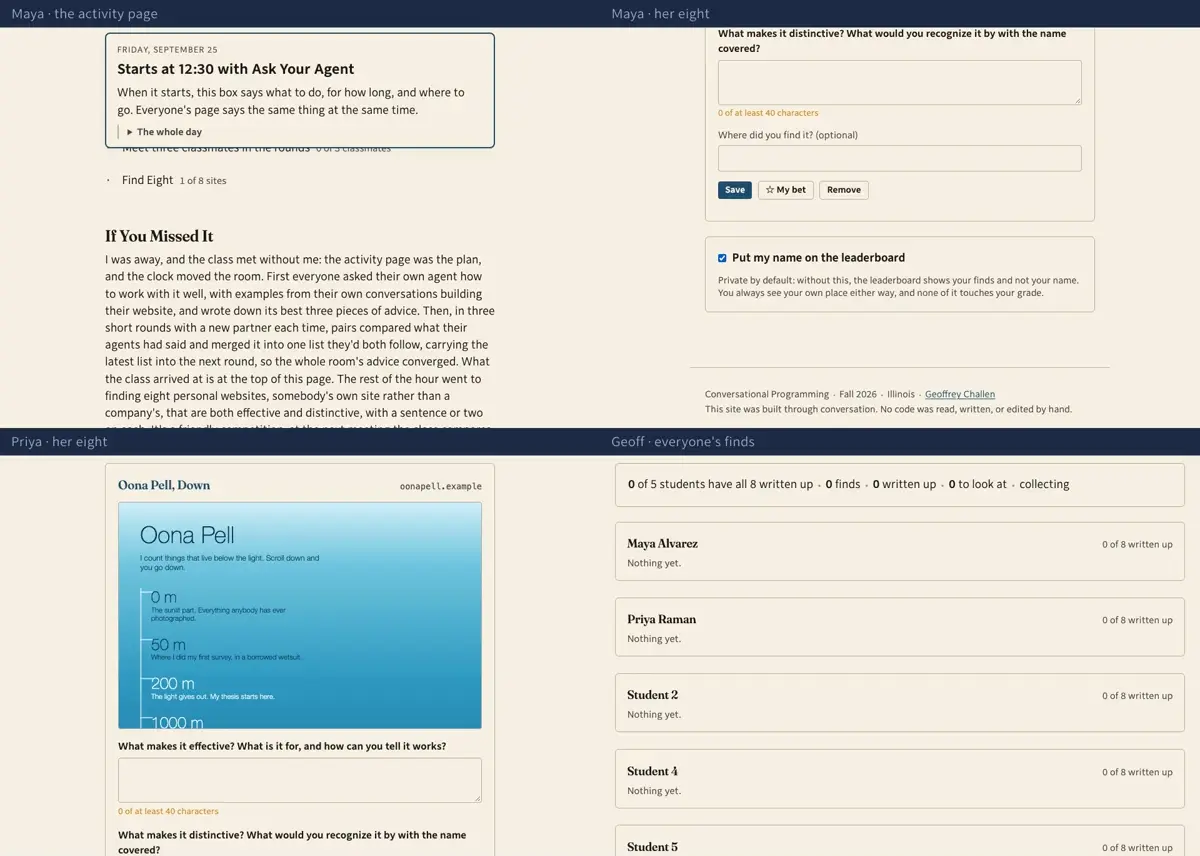
After class the day closes itself; nobody was there to stop it. Where You Stand then shows Friday as in progress rather than missed, with how far along you are and when it's due, right up to Wednesday at 12:30.
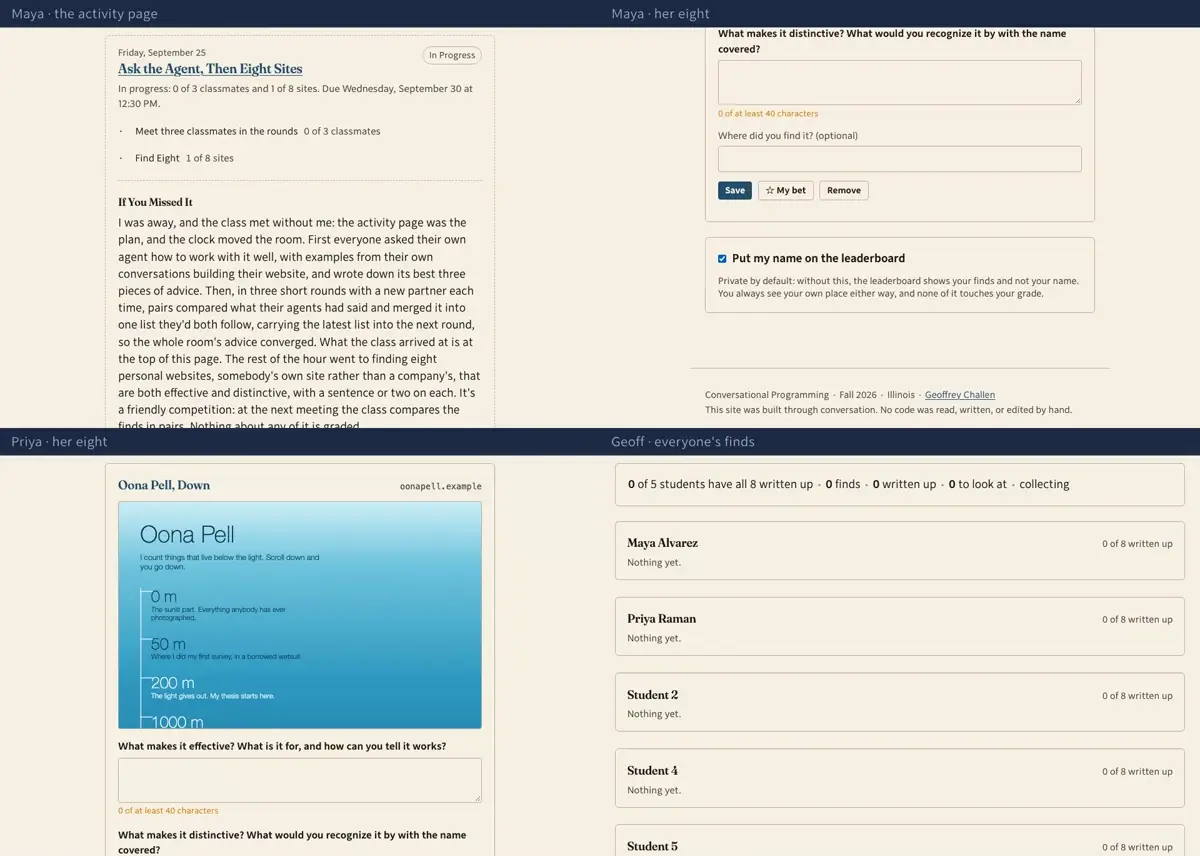
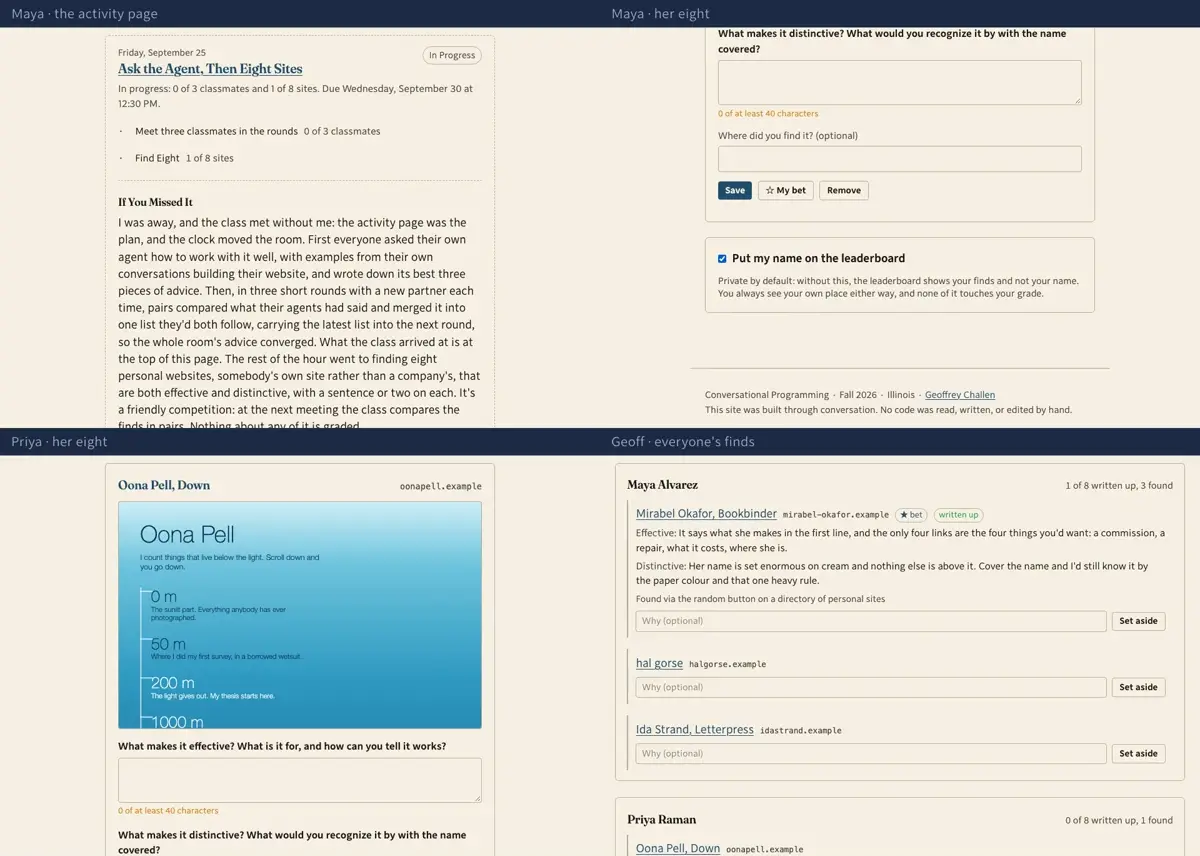
And this is what I see, from wherever I am: everyone on the roster, what they have found, and the sentences they wrote about it. Set aside takes a site out of the vote without taking it off the student who found it.
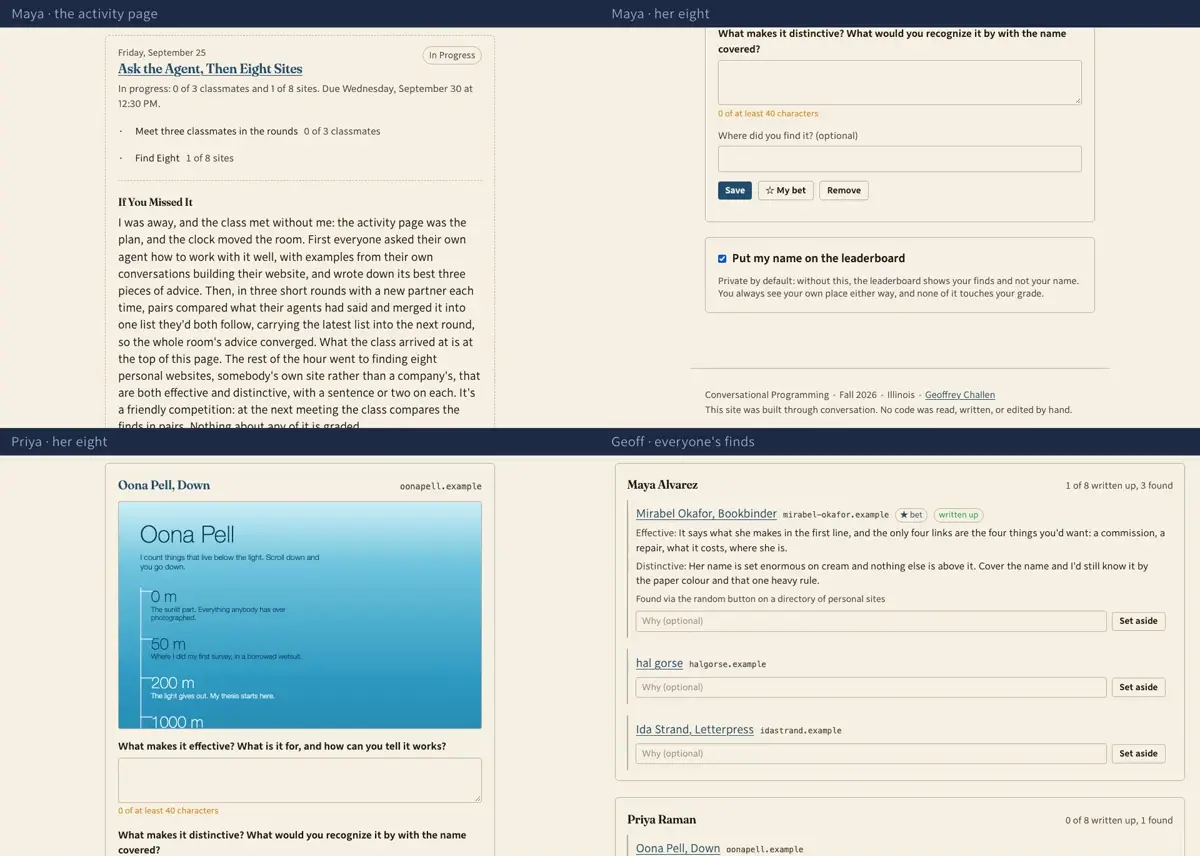
Eight each, by Wednesday at 12:30. Then the room votes, two sites at a time, with your sentences beside them and without your name on them. Go and look at some websites.
Recorded September 25, 2026.