


How Would You Know?
Checking the agent's work, a week before project two ships: students check in with a code only the projector shows, spend the brainstorm in their agents on how they'd know their project works without taking anyone's word for it, and watch the projector fill with the ideas the course reads out of their conversations, grouped and unnamed. Then the room goes around, one student's ideas on the screen at a time, sees its list beside the course's seven, and every agent gets the merged list for the building. The students and their projects are invented for the rehearsal.
What You're Looking At
This is a rehearsal, not a class. The students are invented: they're the personas we use to test this course on itself. Wherever an agent or a companion speaks, its words were generated by gpt-5.6-luna, the model the course ran on until September 24, recorded once and replayed since so the run comes out the same every time. Everything else is the software students use: the real pages, the real proxy, the real timer, the real companion. The one thing standing in for itself is the terminal, because students work in Codex and a browser can't record a terminal; that pane shows what genuinely passed through the course's proxy, and never invents output for a command that wasn't run.
Three kinds of substitution are made for publication, and only these three. Where a screen would show the rehearsal rig's own 127.0.0.1 address or its scratch folder, it reads as the real one instead. A setup token is shortened, because a token should never be shown whole even when it's a throwaway from a test database. And where a film needs a website that isn't anybody's, a student's own site or one a student went and found, it is an invented page served by the rig, shown under an address ending in .example. Nothing else on any screen is altered.
The brief the students actually read is the activity page.
Step by Step
Friday, 12:30. A week before project two ships, today is about one question: your agent says it's done. How would you know? Students keep the activity page open behind their agent all class.
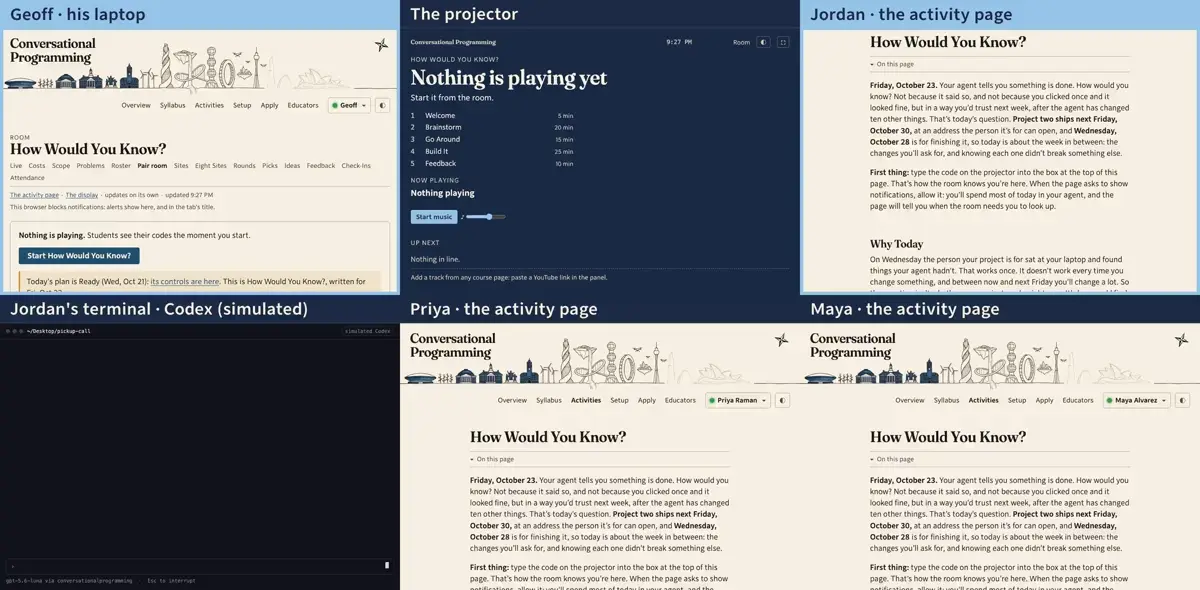
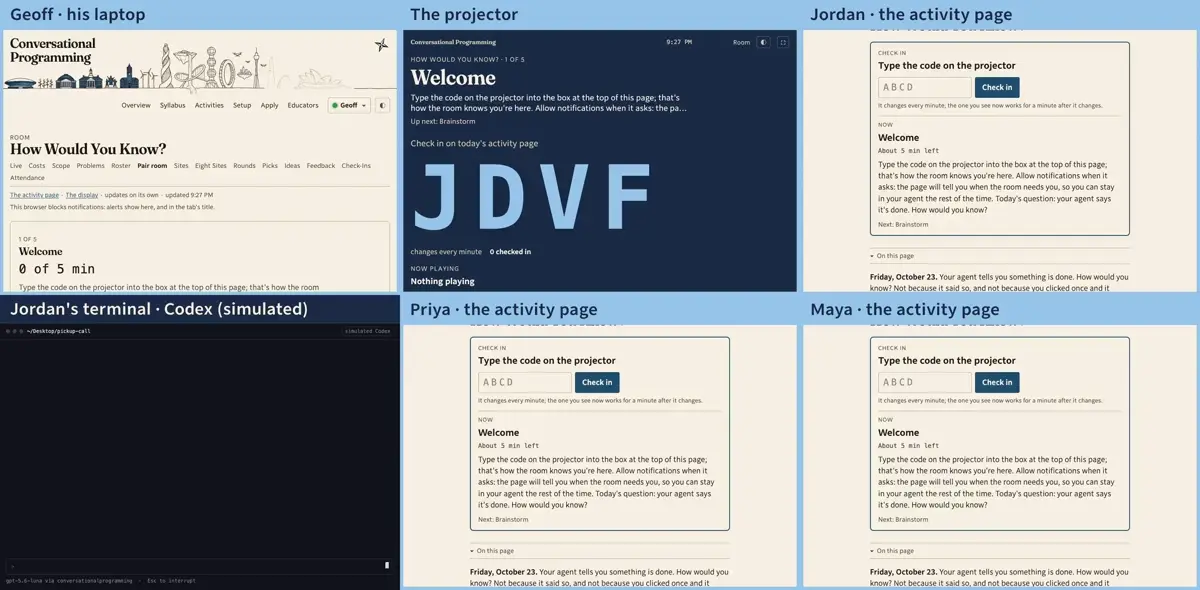
I press Start. The projector shows a four-letter code, large, that changes every minute. Typing it on the activity page is how the room knows who is actually here.
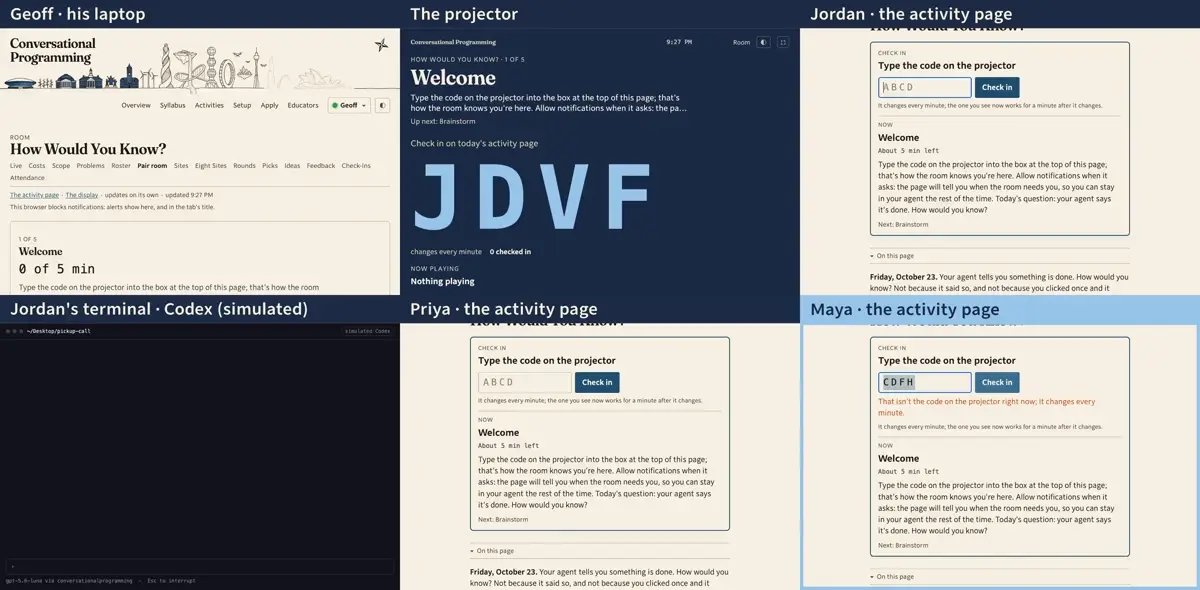
Maya types last minute's code from memory, wrong. The page says so plainly. A code you can only read in the room is the cheapest proof of being in it.
Jordan and Priya type what's on the projector, and the box goes away. Under it is the strip they'll glance at all class: what's on now, what to do, about how long is left, and what's next. The page asks to send notifications, to call them back when the room needs them; this rehearsal's browser blocks them.
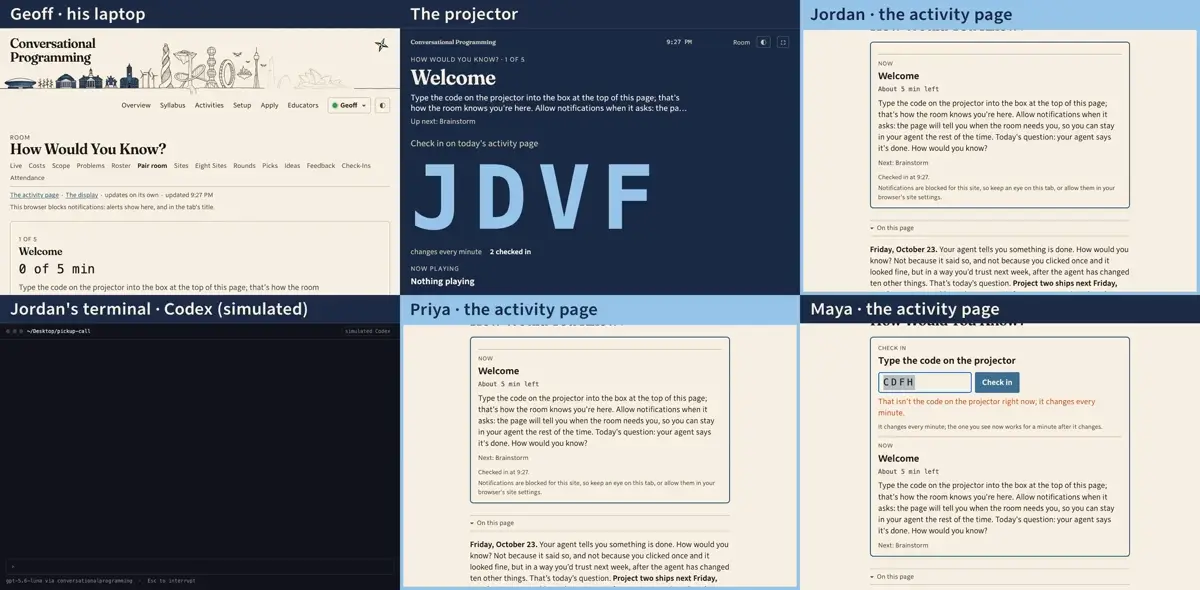
Maya tries again with the code on the screen, and Alex checks in from his laptop too. The projector counts who has checked in.
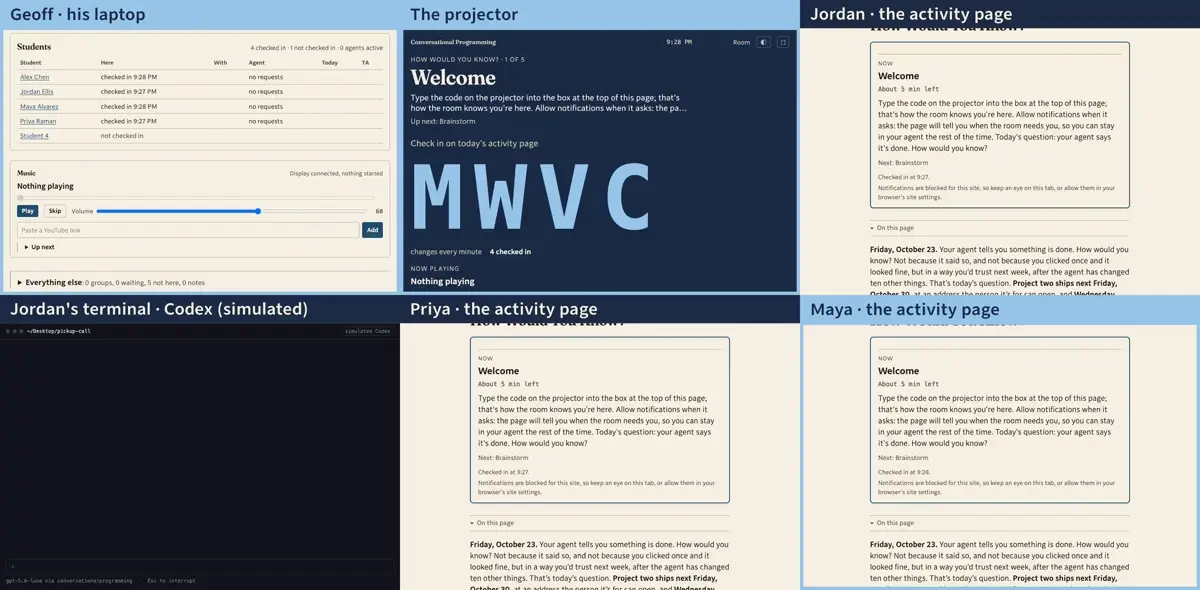
Next, Brainstorm: twenty minutes alone with your agent on how you'd know it works without taking anyone's word for it, the agent's included. The code shrinks to a corner for latecomers, until 1:00.
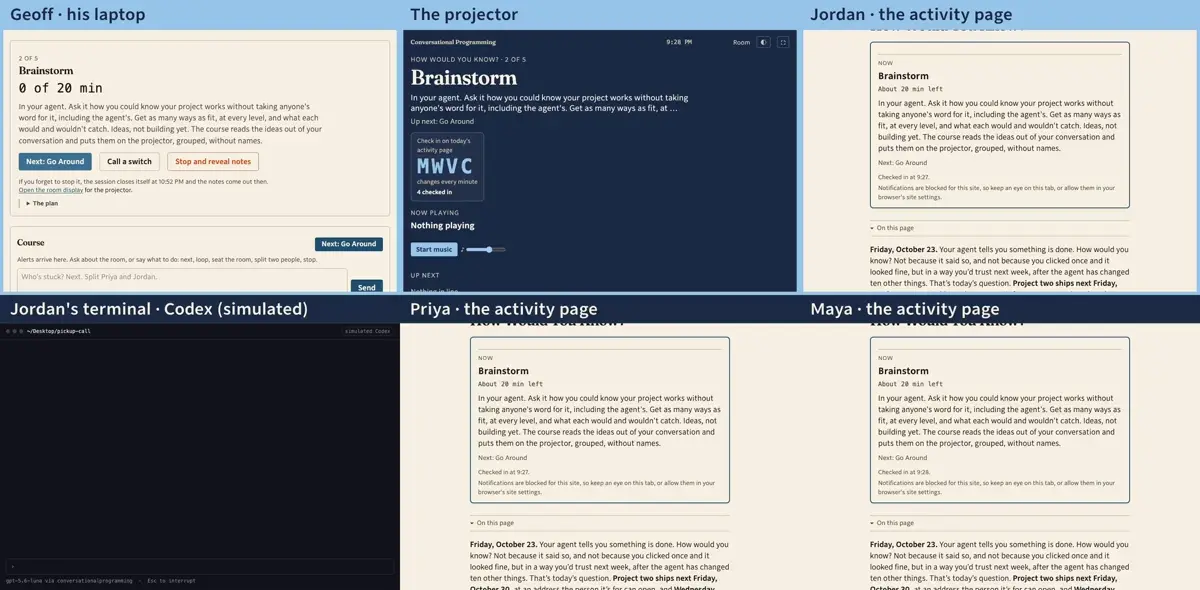
Jordan asks his agent, in his own words, how he'd know Pickup Call works without taking its word for it, and what each way would miss.
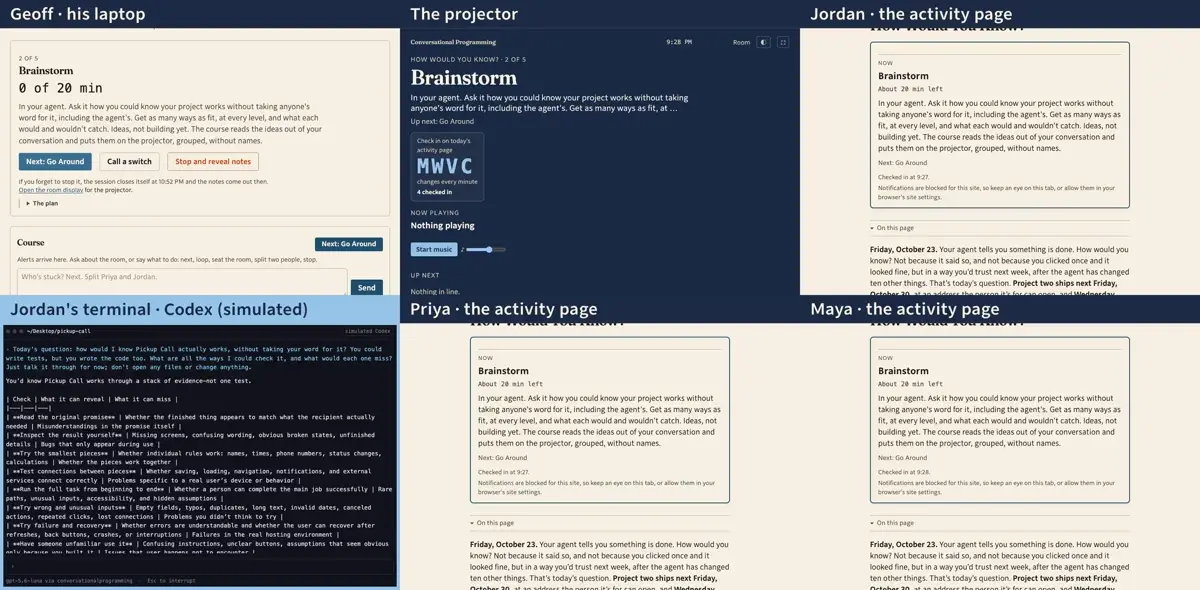
Its answer is a table of ways to check, from testing the smallest pieces up to the person it's for using it, each with what it can reveal and what it can miss.
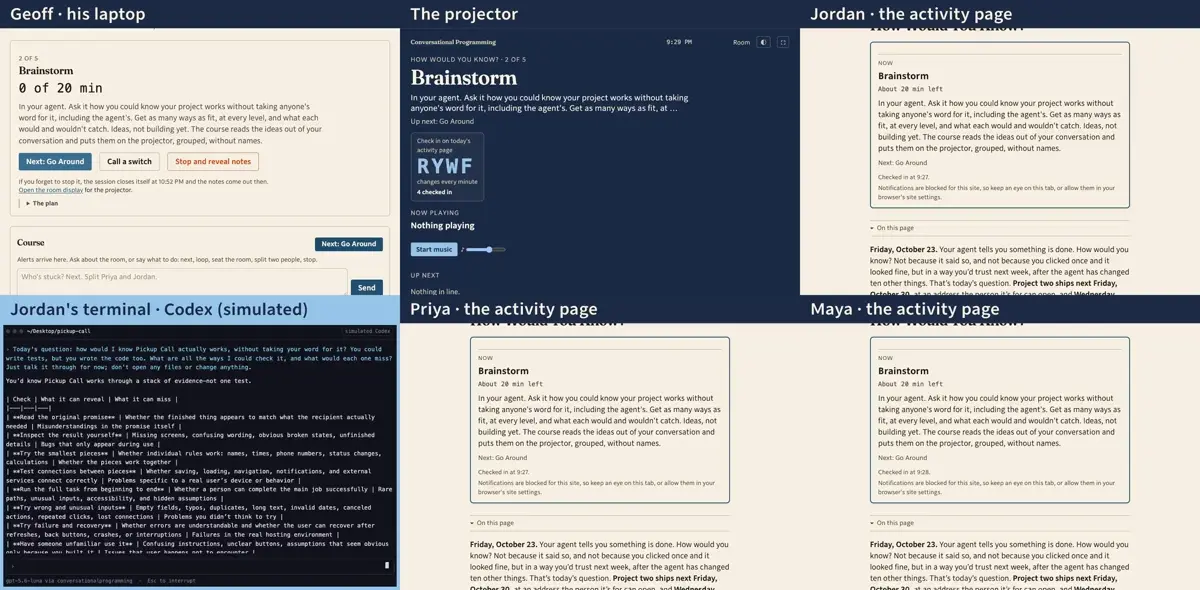
What reached his agent ended with the day's note. It asks for as many ways as fit and says ideas, not building yet. It names no kinds of checking: the point is to see what the room comes up with on its own.
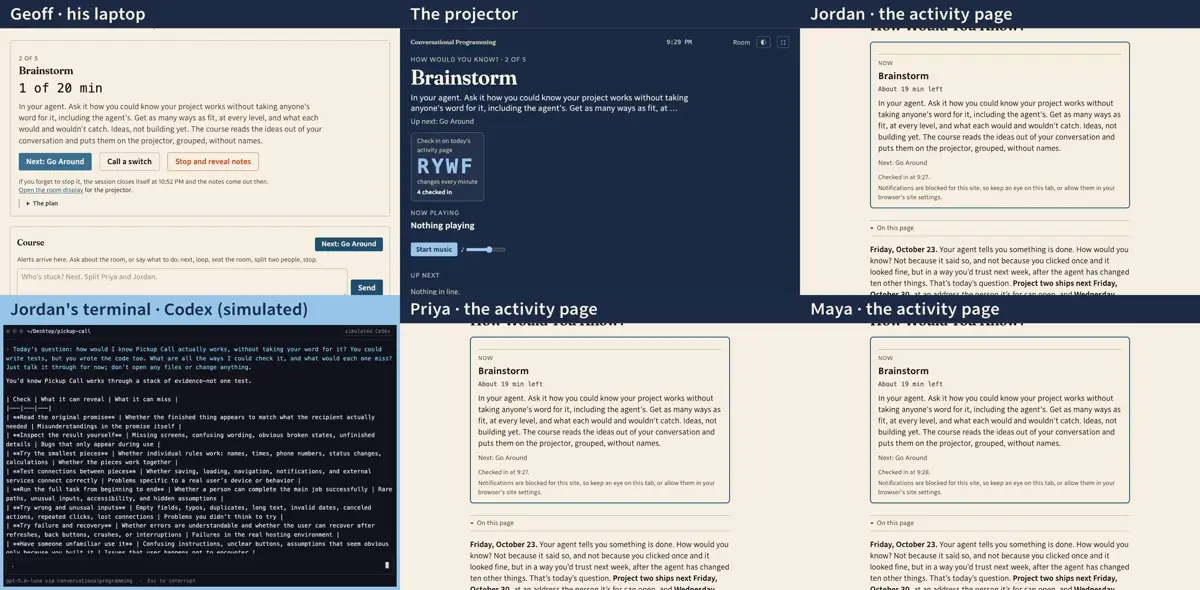
Priya and Maya ask their own agents the same question about their own projects: Thrift Drop and Quiet Spot.
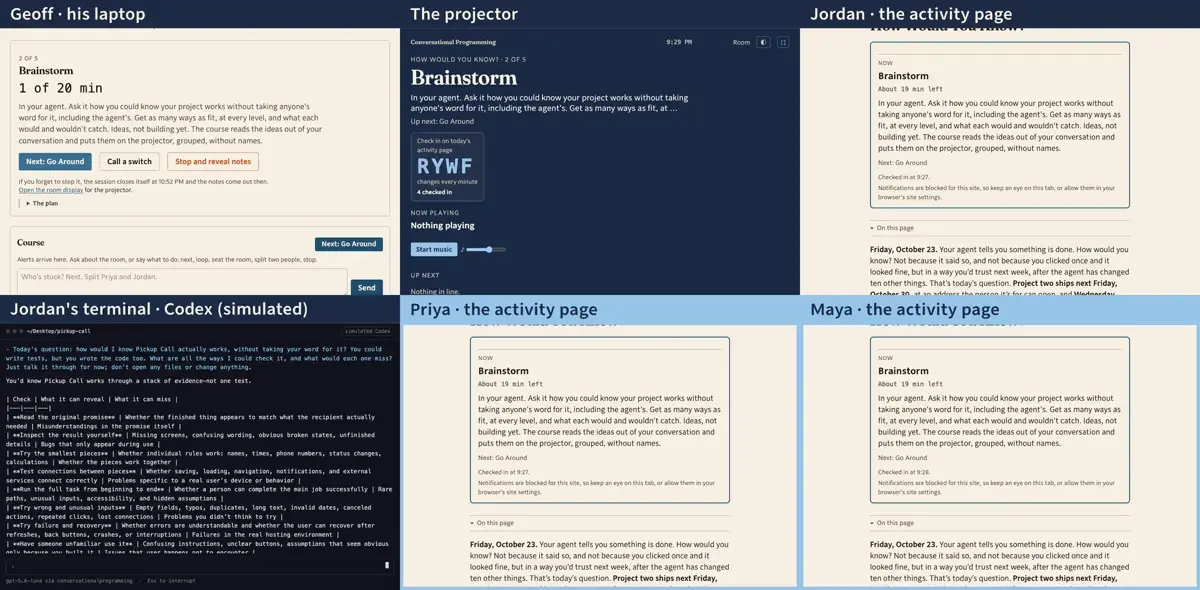
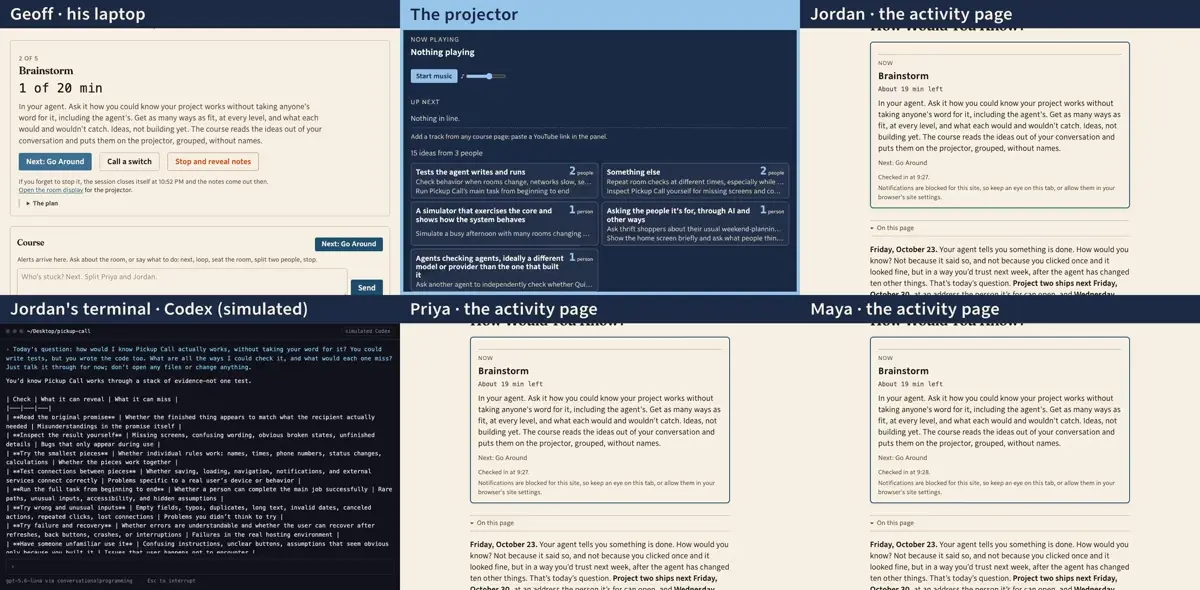
Nobody reports anything. While the projector is up, the course reads the ideas out of each conversation and the wall fills: grouped by kind, how many people named each, a few example lines, and no names.
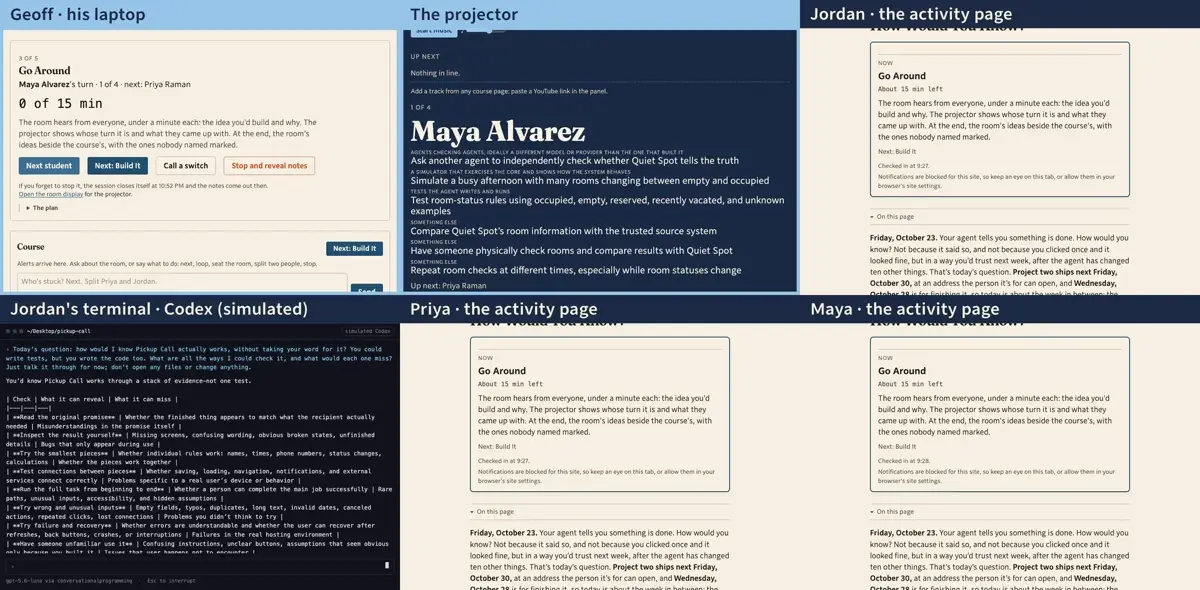
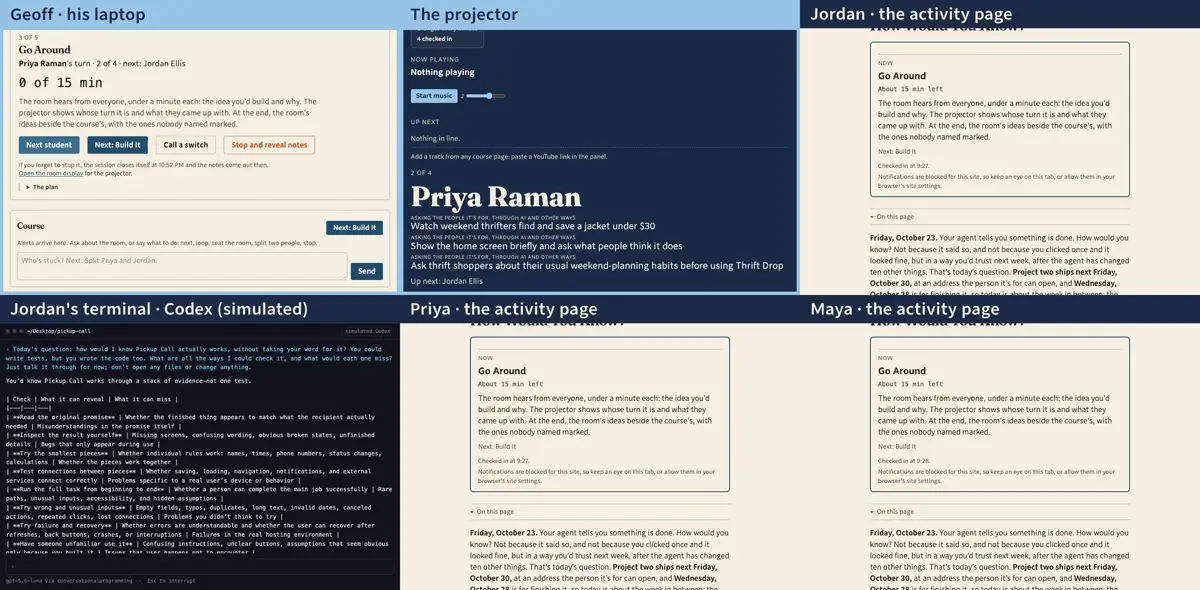
Next, Go Around. The order is drawn: everyone checked in, the ones with ideas first, shuffled. The projector shows whose turn it is, by name, with the ideas from their conversation, and who's up next.
Every student's tab title changes to "Look up: the room is going around," and where notifications are allowed, a desktop notification says the same, so someone deep in their agent knows to look up.
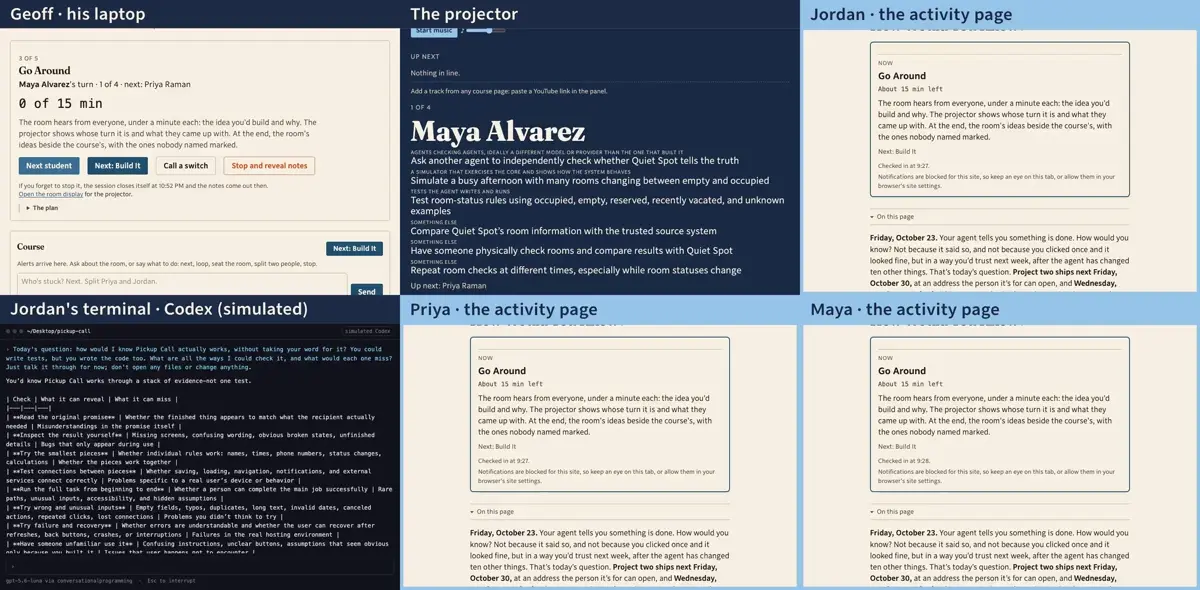
My room page says whose turn it is, 1 of 4, and who's next. Loop is now Next student; Next still leaves the section.
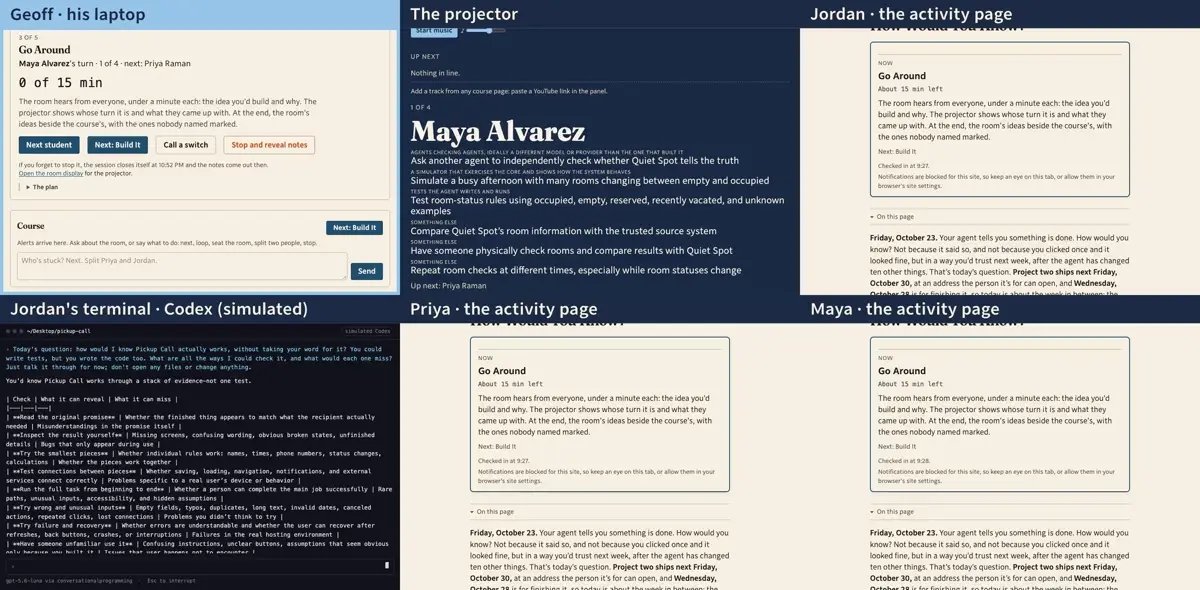
Under a minute each: the idea they'd build, and why. I press Next student, and the projector moves on.
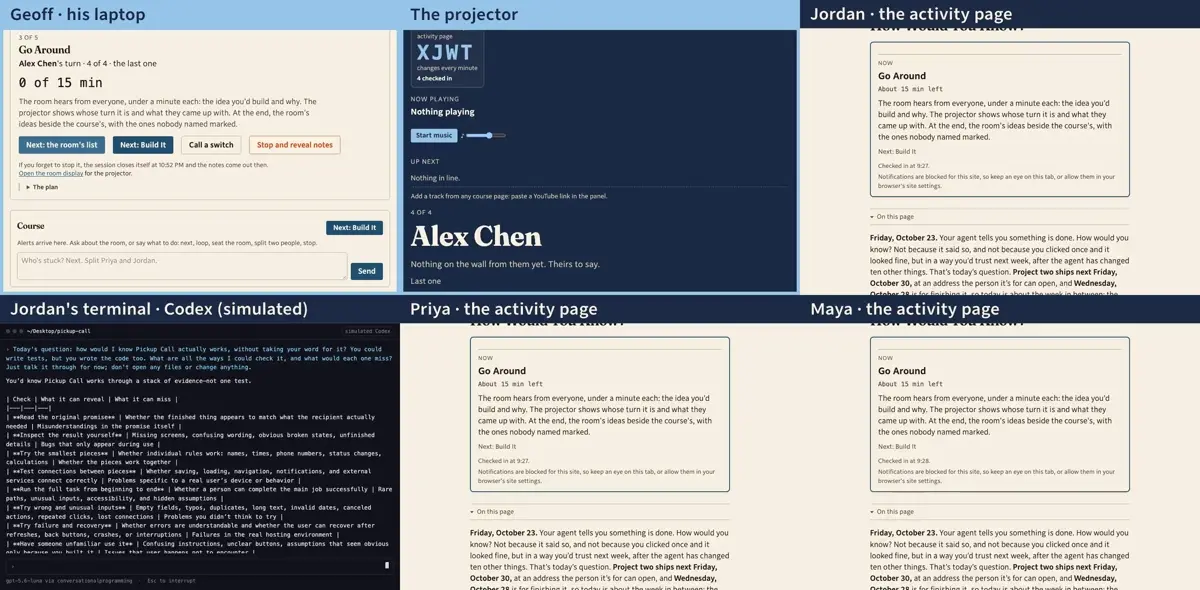
Alex said nothing to his agent before his turn, so he comes last, and the projector says it's his to say.
After the last student, the projector puts the room's ideas beside the course's seven kinds. The ones nobody named are marked, "the course adds". That's mine to talk through.
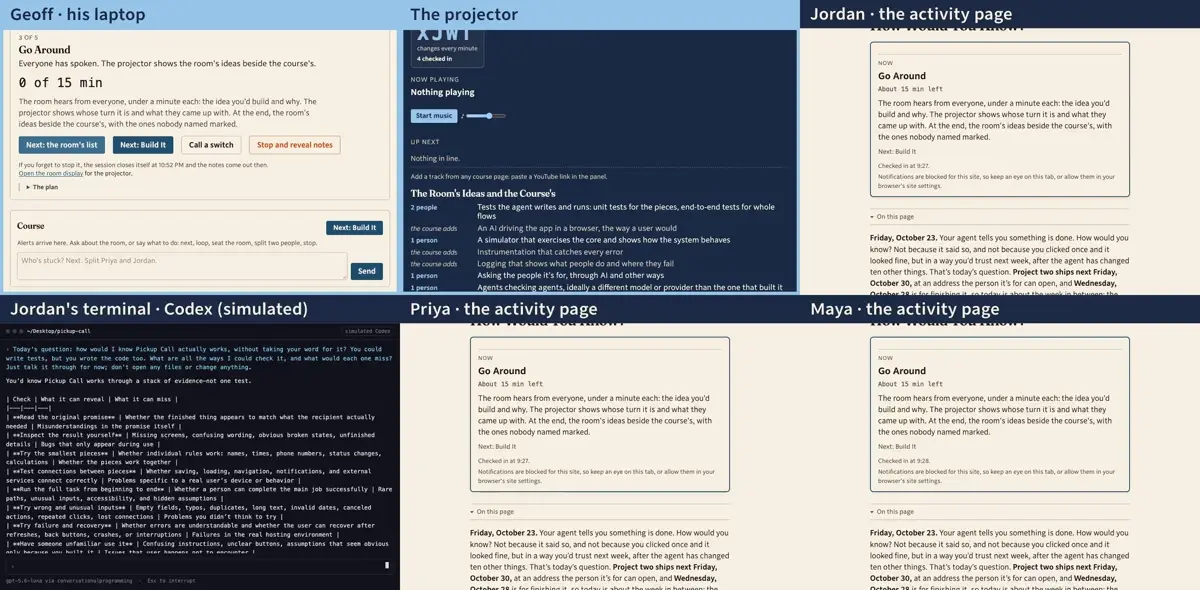
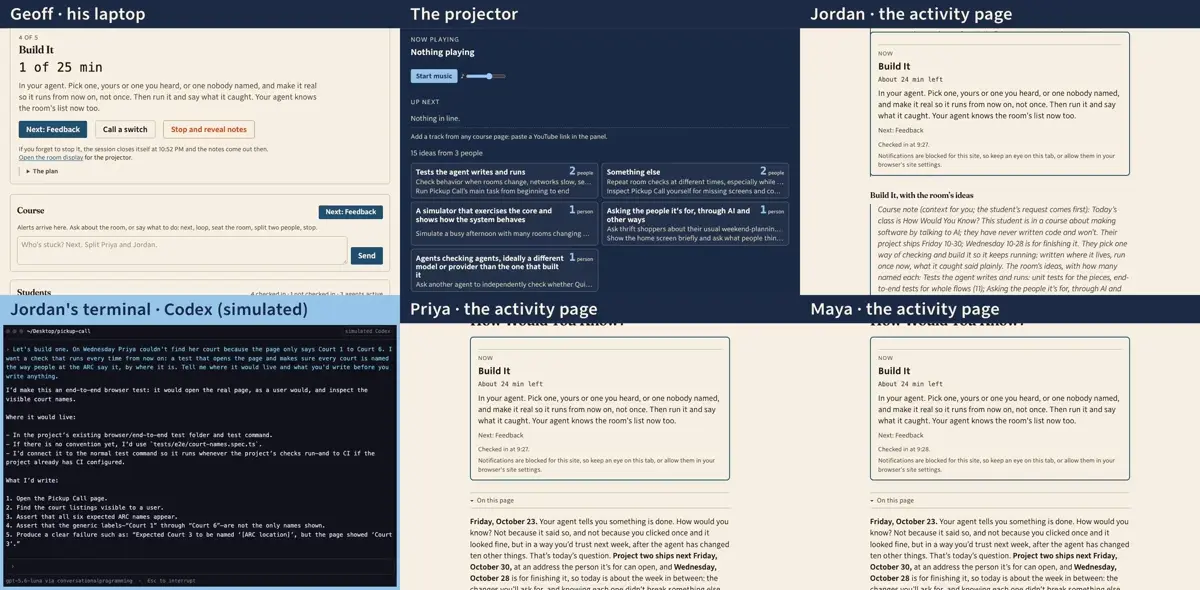
Next, Build It: twenty-five minutes back in the agent. Pick one way of checking, yours, one you heard, or one nobody named, and make it real so it runs from now on. The tab titles and notifications send everyone back.
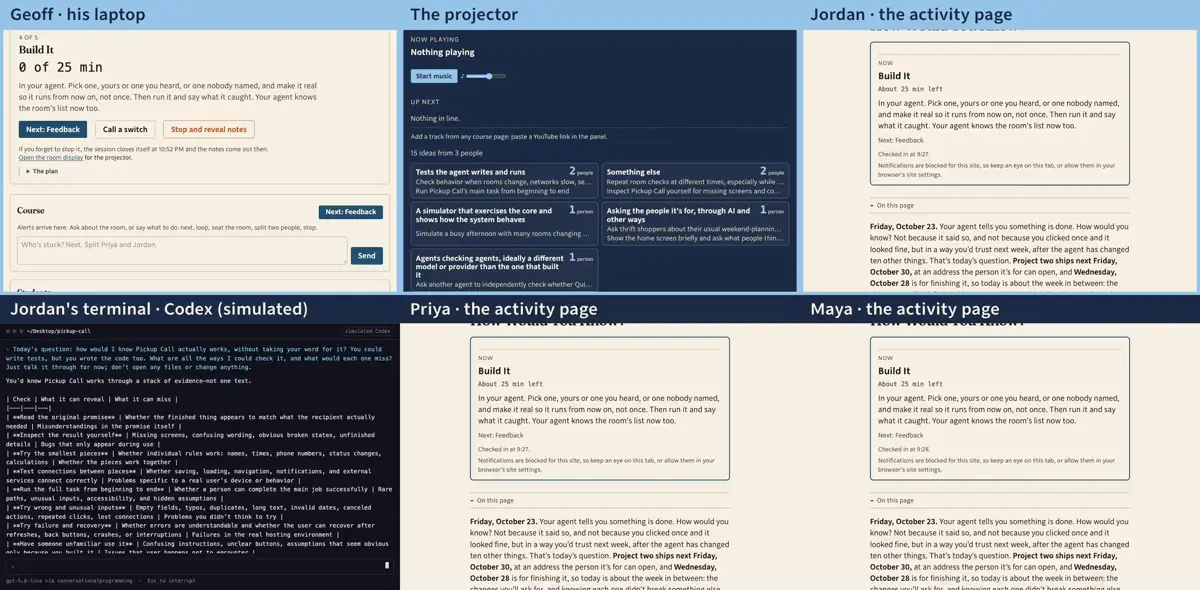
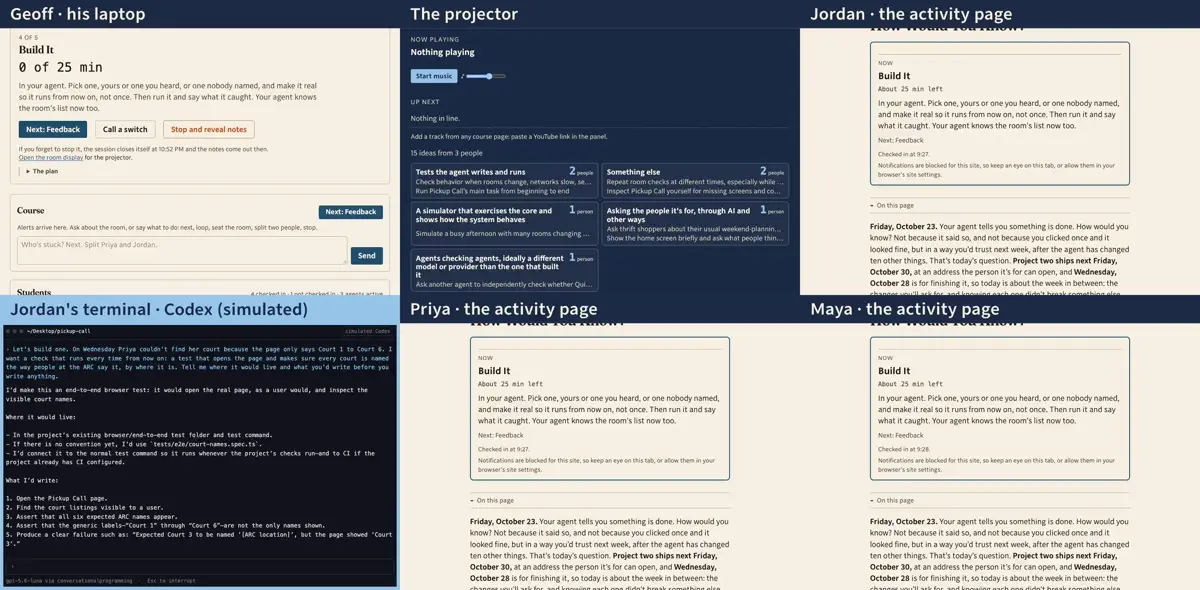
Jordan picks one he heard about on Wednesday: a test that makes sure every court is named the way people at the ARC say it. He asks where it would live before anything is written.
His agent's note has changed. It now carries the room's ideas, each kind with how many people named it, then the kinds the course adds. The activity page quotes it word for word.
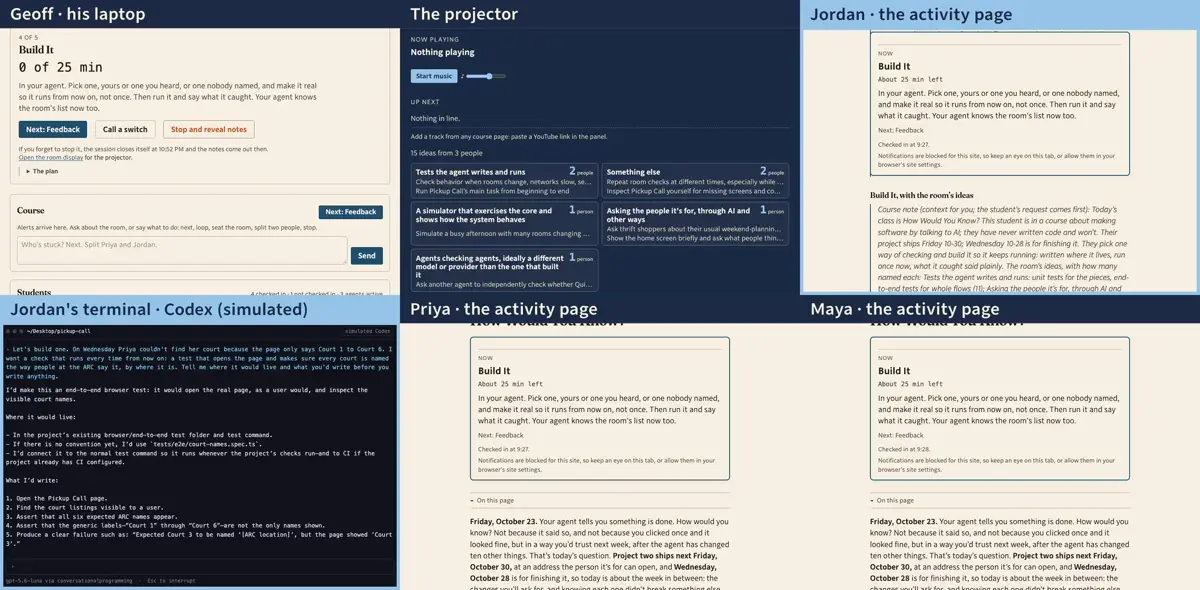
It proposes a browser test that opens the page and checks all six court names. It won't invent the names: those have to come from the people who play at the ARC. And it says what the test can't prove.
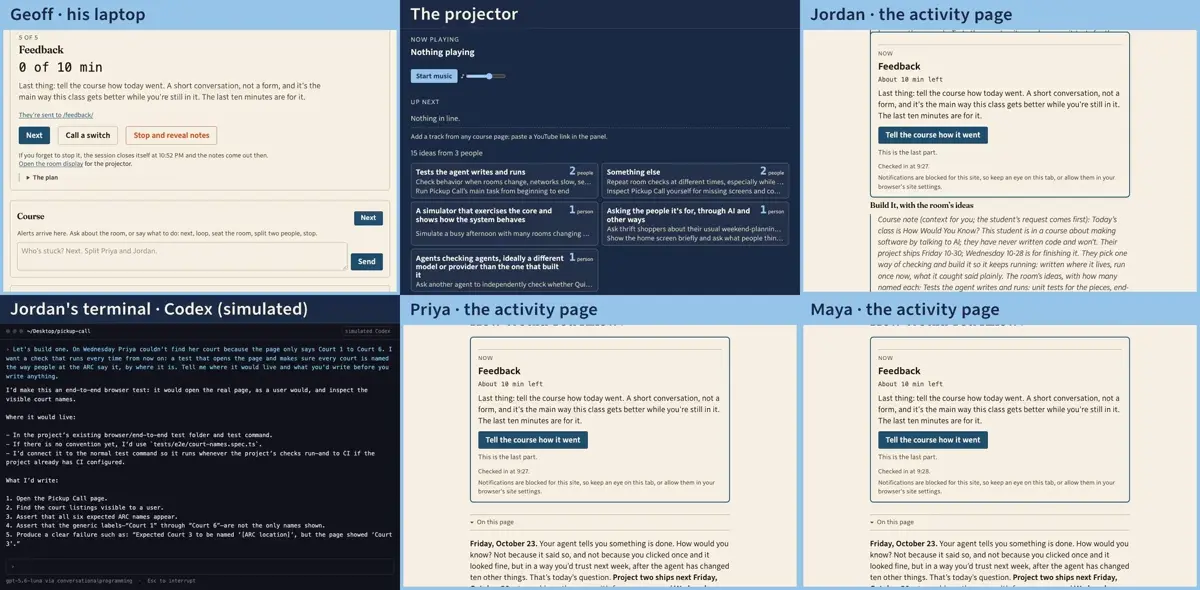
At 1:35, Feedback: ten minutes nothing moves. One more call back, and every strip links to it. The ideas the course read stay with each student's name, for Geoff to read afterwards.
Recorded October 21, 2026.