


Pair Prompting
One student talks to the agent while a partner follows the conversation, asks, and keeps notes. Then they switch.
What You're Looking At
This is a rehearsal, not a class. The students are invented: they're the personas we use to test this course on itself. Wherever an agent or a companion speaks, its words were generated by gpt-5.6-luna, the model the course ran on until September 24, recorded once and replayed since so the run comes out the same every time. Everything else is the software students use: the real pages, the real proxy, the real timer, the real companion. The one thing standing in for itself is the terminal, because students work in Codex and a browser can't record a terminal; that pane shows what genuinely passed through the course's proxy, and never invents output for a command that wasn't run.
Three kinds of substitution are made for publication, and only these three. Where a screen would show the rehearsal rig's own 127.0.0.1 address or its scratch folder, it reads as the real one instead. A setup token is shortened, because a token should never be shown whole even when it's a throwaway from a test database. And where a film needs a website that isn't anybody's, a student's own site or one a student went and found, it is an invented page served by the rig, shown under an address ending in .example. Nothing else on any screen is altered.
The brief the students actually read is the activity page.
Step by Step
Nothing happens until Geoff starts the session. Until then every student's page says so and keeps checking.
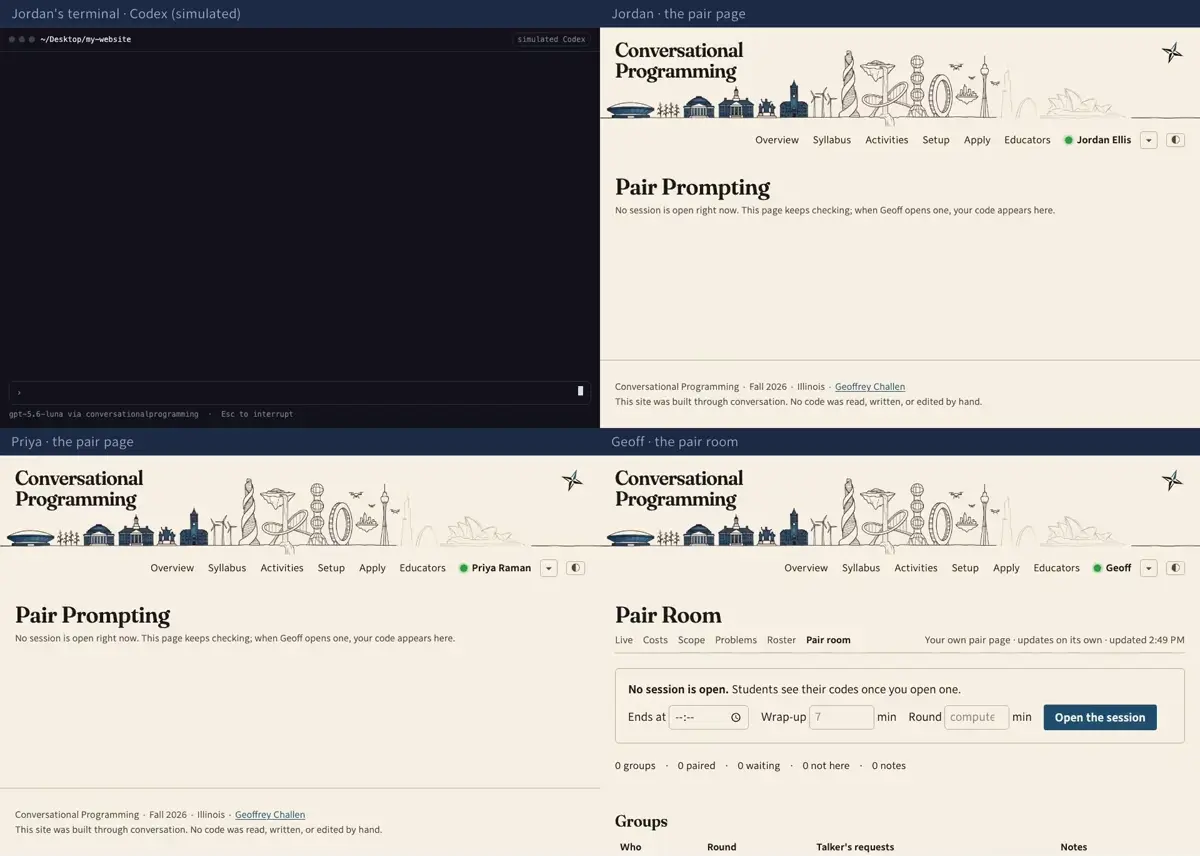
The plan is a file, and the room plays it like a playlist. Start puts the room in the first section; codes appear on both students' pages within a few seconds.
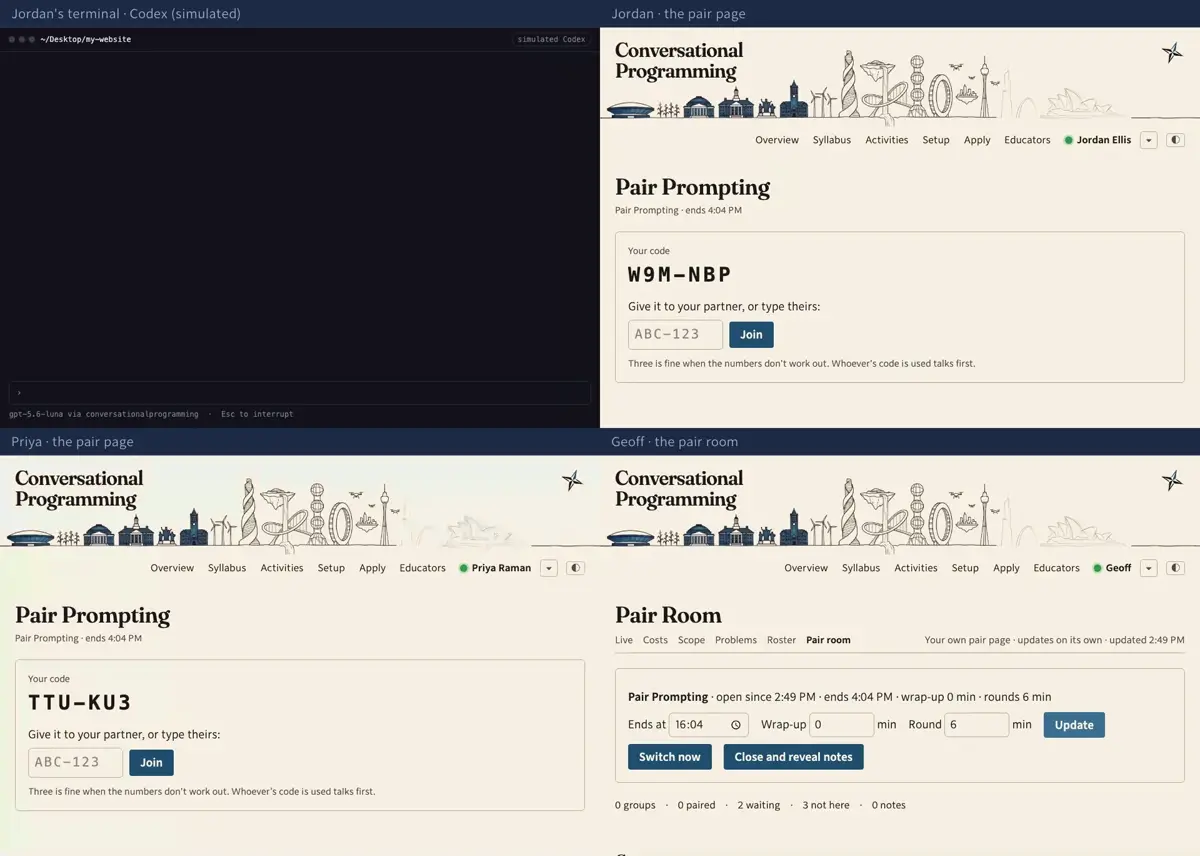
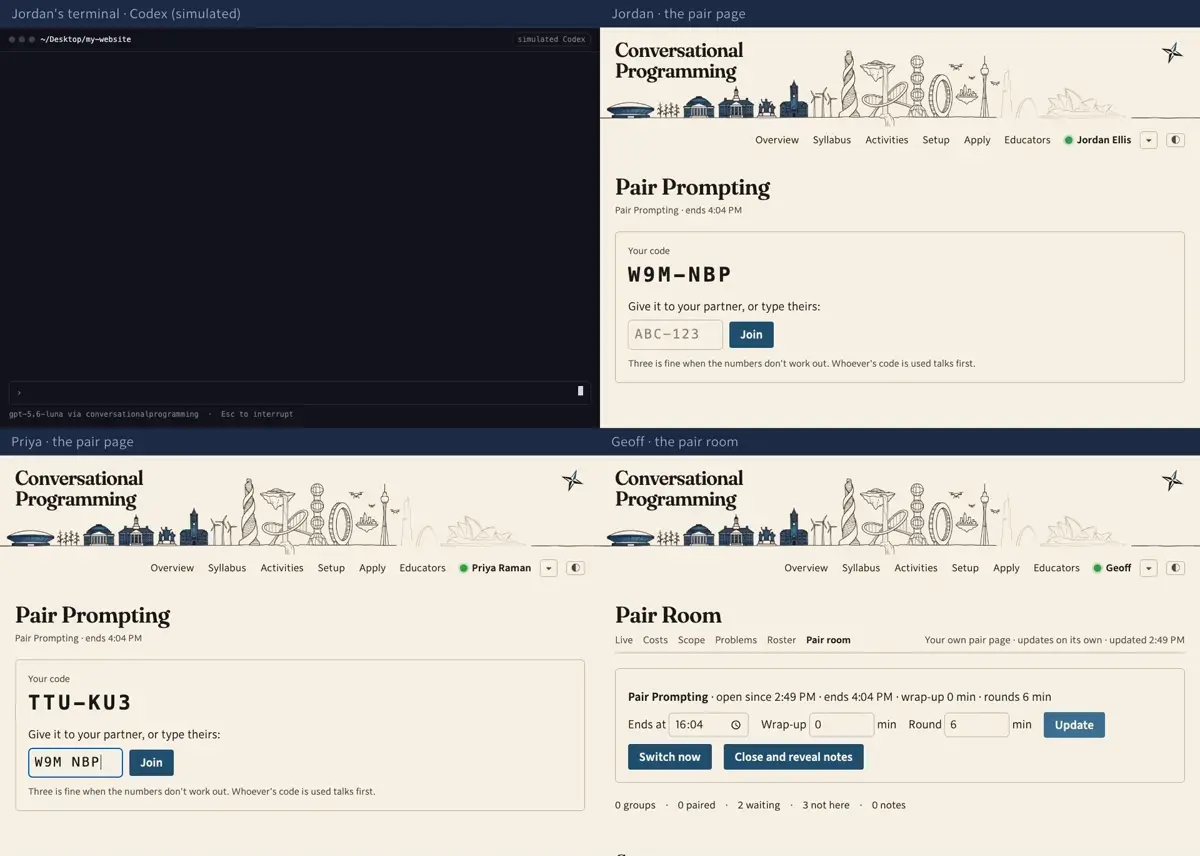
Priya types Jordan's code the way anyone types a code read across a table: lowercase, with a space.
They're a pair. Whoever's code was used prompts first, so Jordan gets the seat and Priya gets the feed, the notes, and the companion.
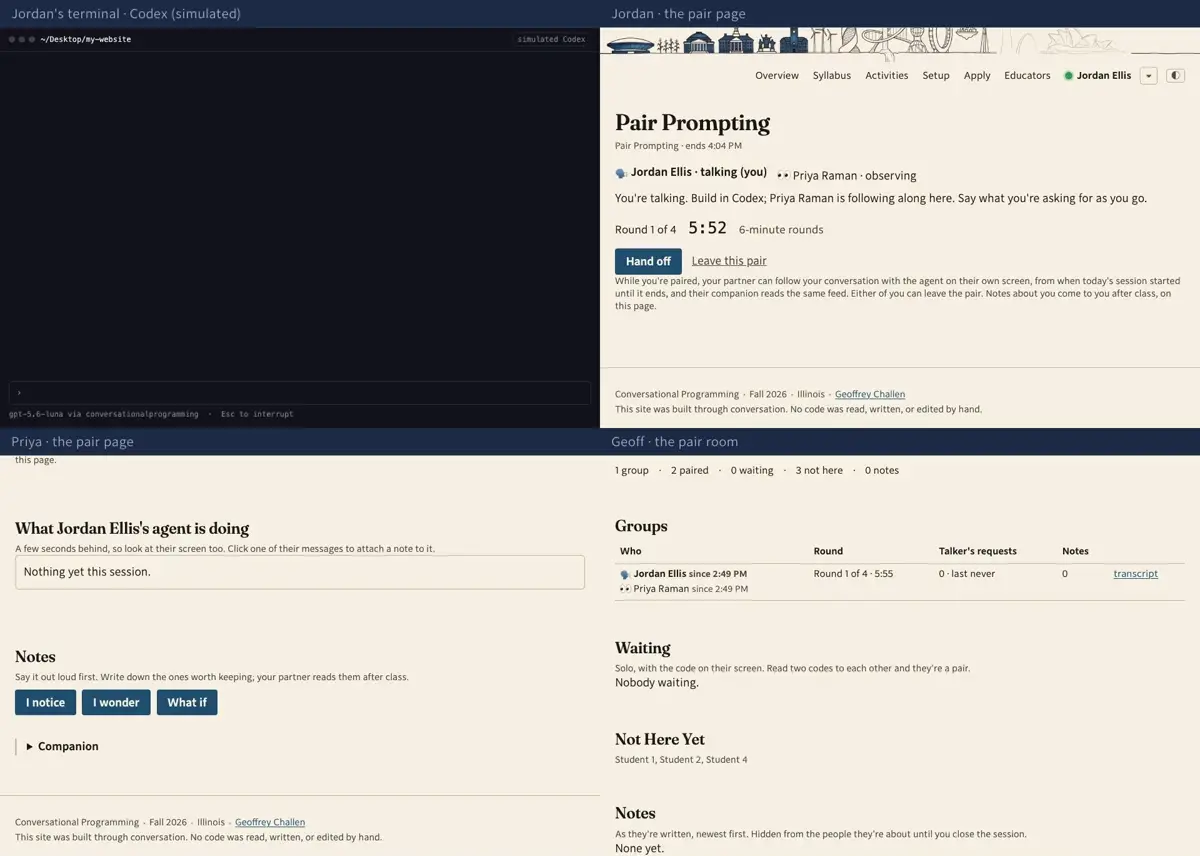
Geoff presses Next and the whole room moves to the first round. Both students' pages change to say what they're doing now.
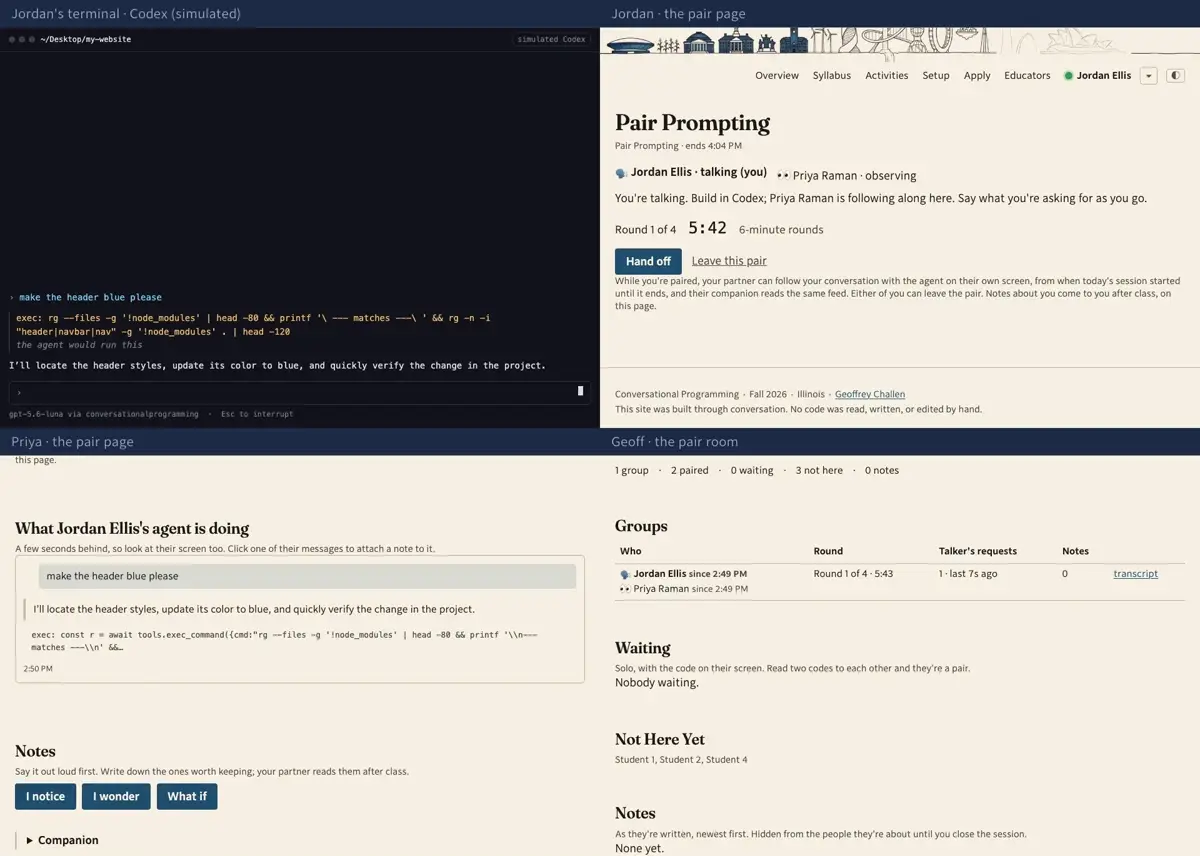
Jordan asks for something he can picture but hasn't described. He knows which header he means; the agent doesn't.
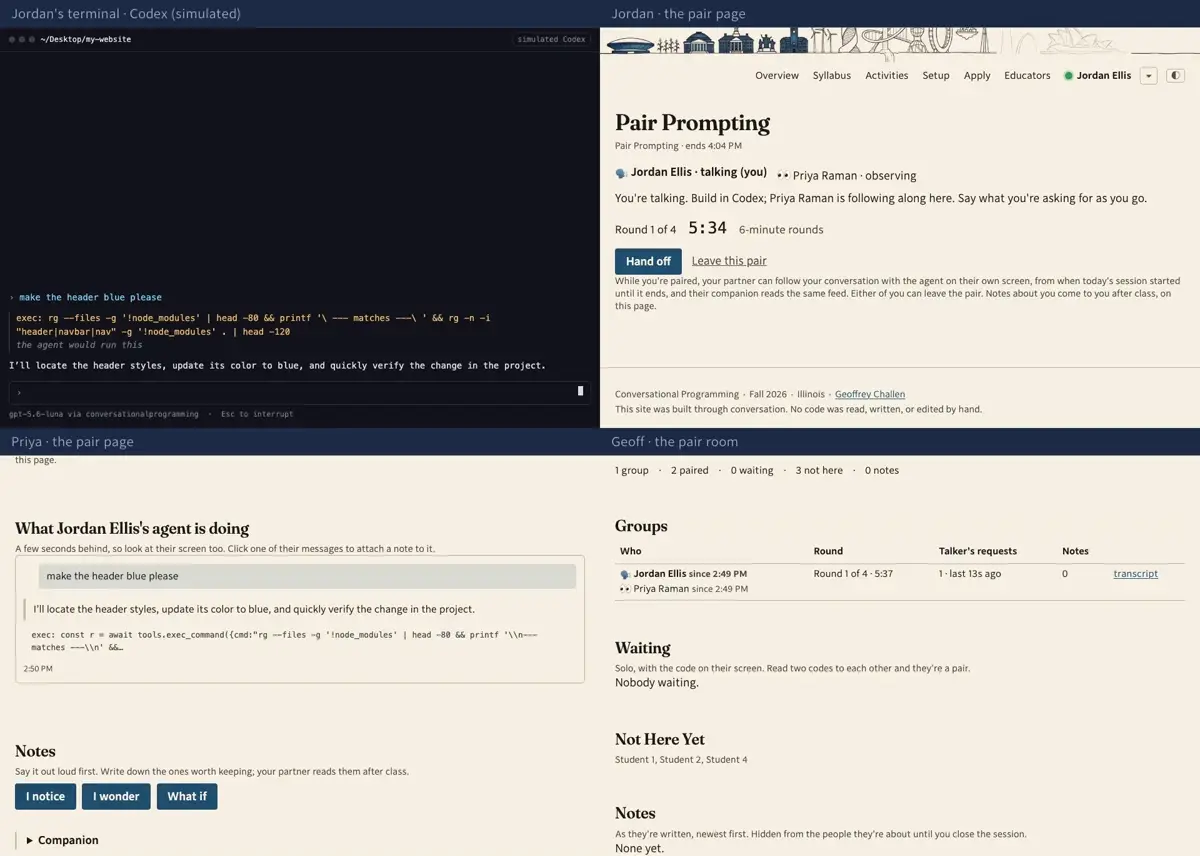
It reaches Priya's screen a few seconds behind, which is why she is also told to look at his actual screen.
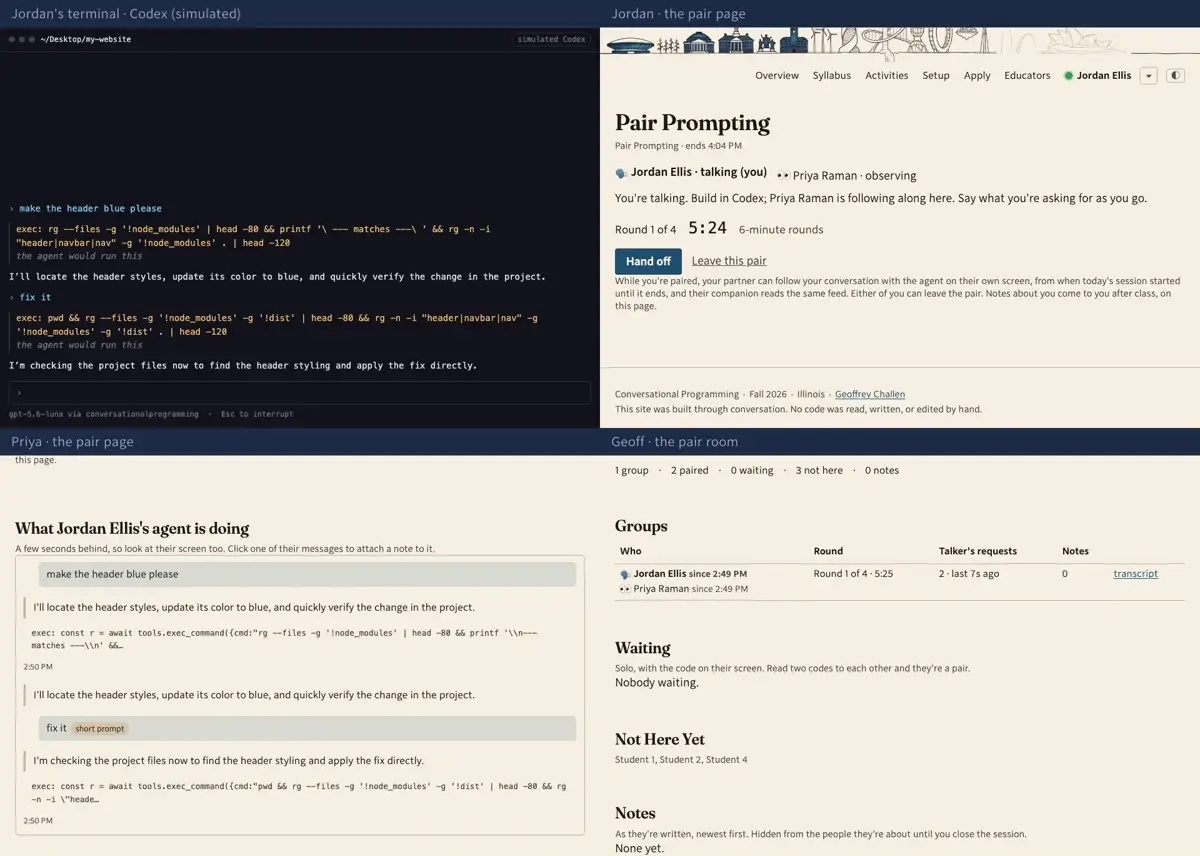
Then the shortest prompt in the room. The page flags it — not to scold, but to give Priya something to ask about.
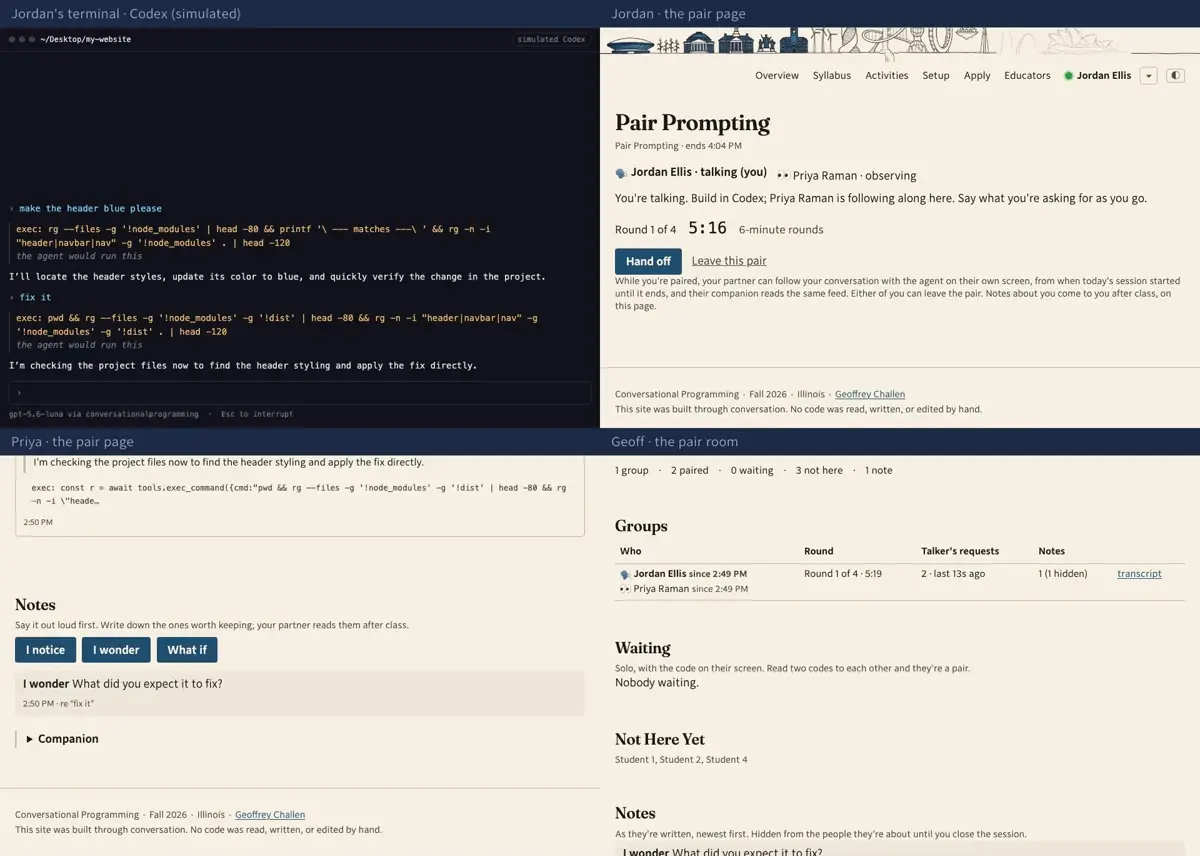
She clicks the prompt to anchor a note to it, picks “I wonder”, and writes the question she'd ask him.
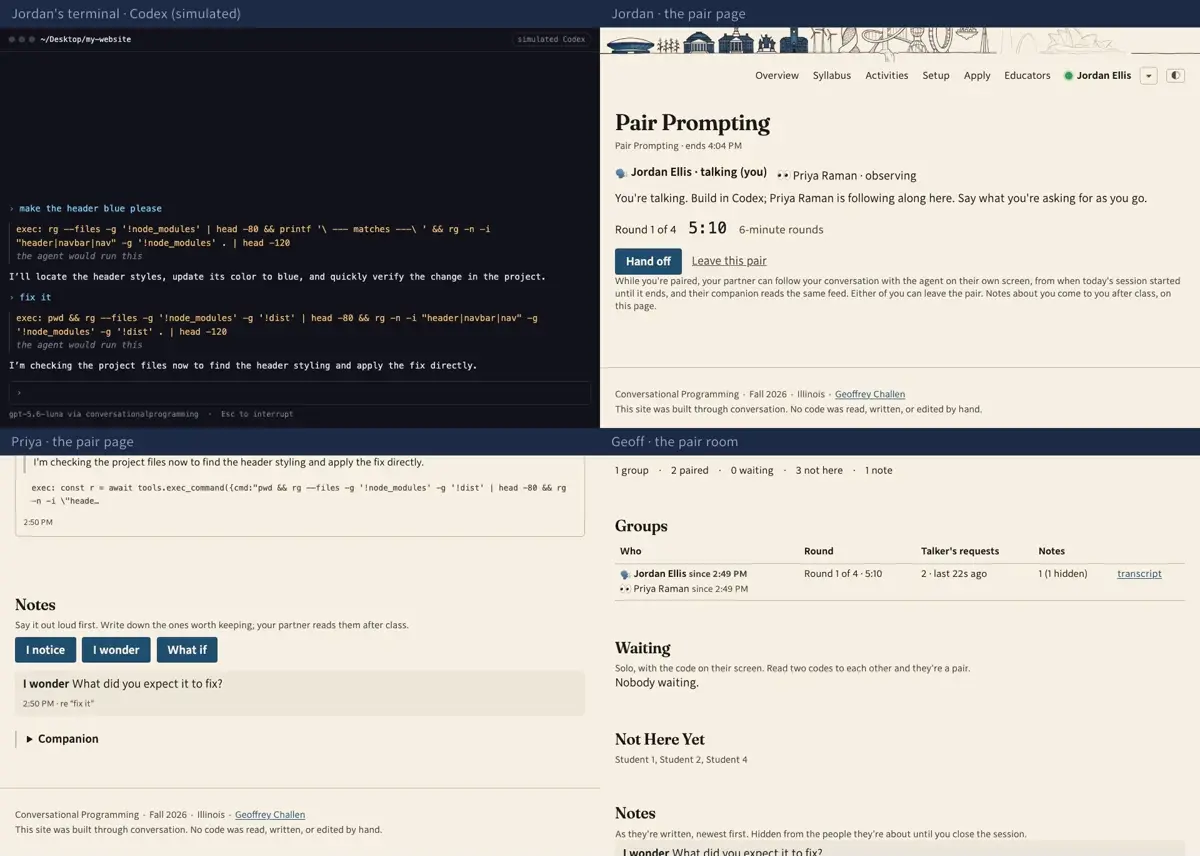
The note stays with her. Jordan's page shows no notes section at all while he's the one prompting.
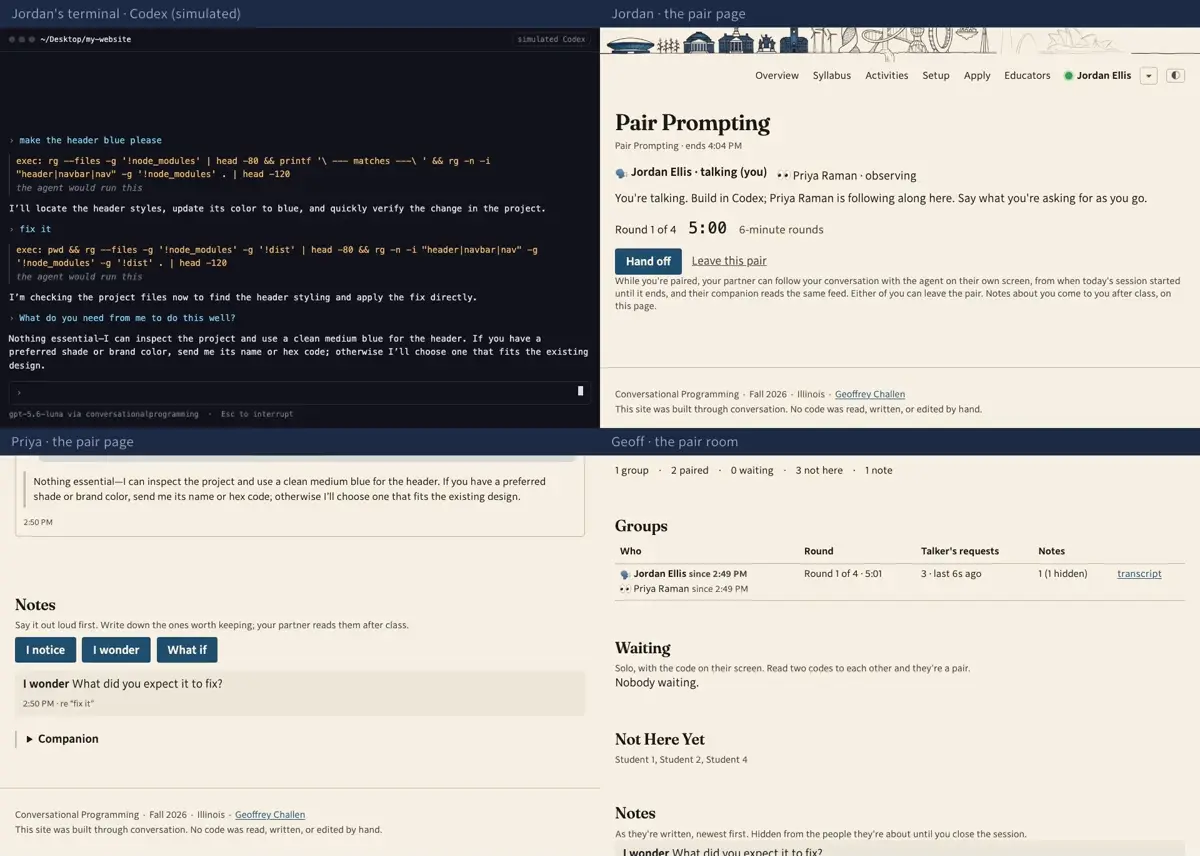
Then Jordan asks the question from Wednesday's activity. The page marks it in green: this is the habit worth having.
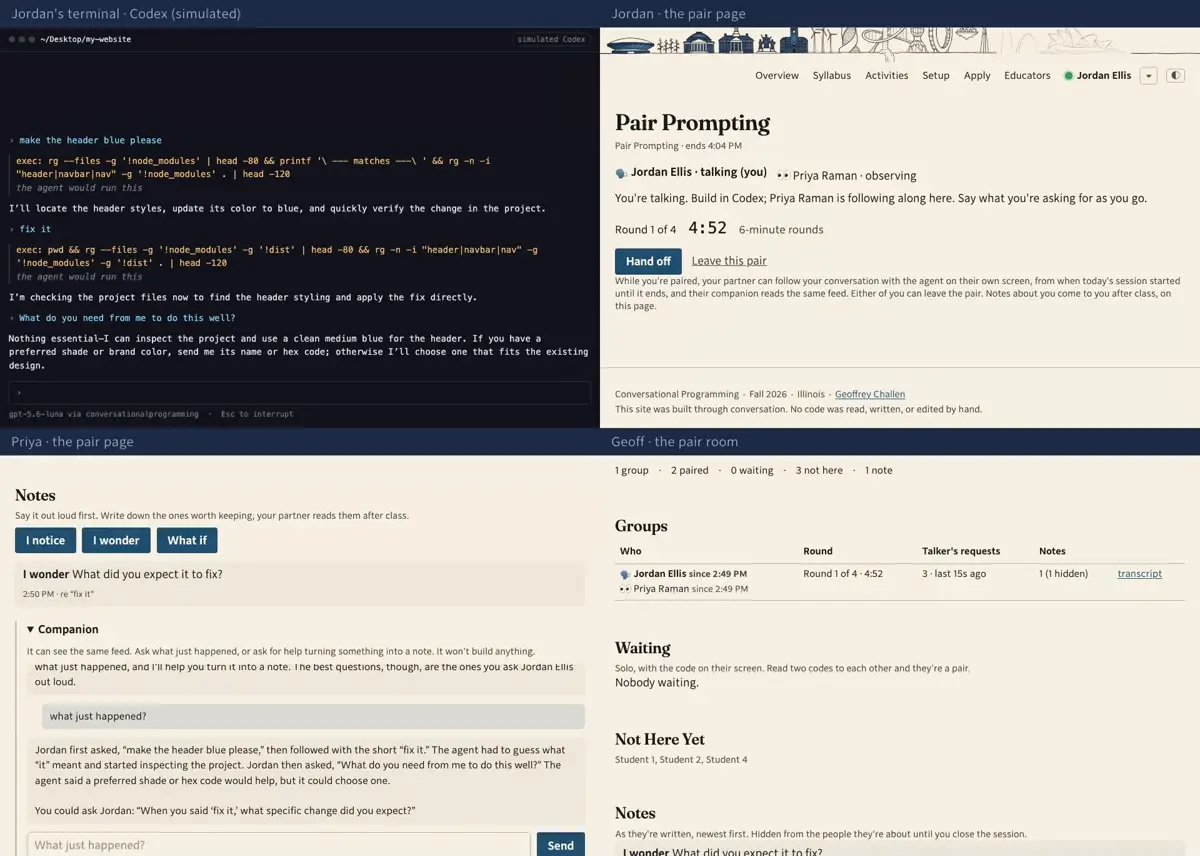
Priya opens the companion. It reads the same feed she does, and it will not build anything or tell her the answer.
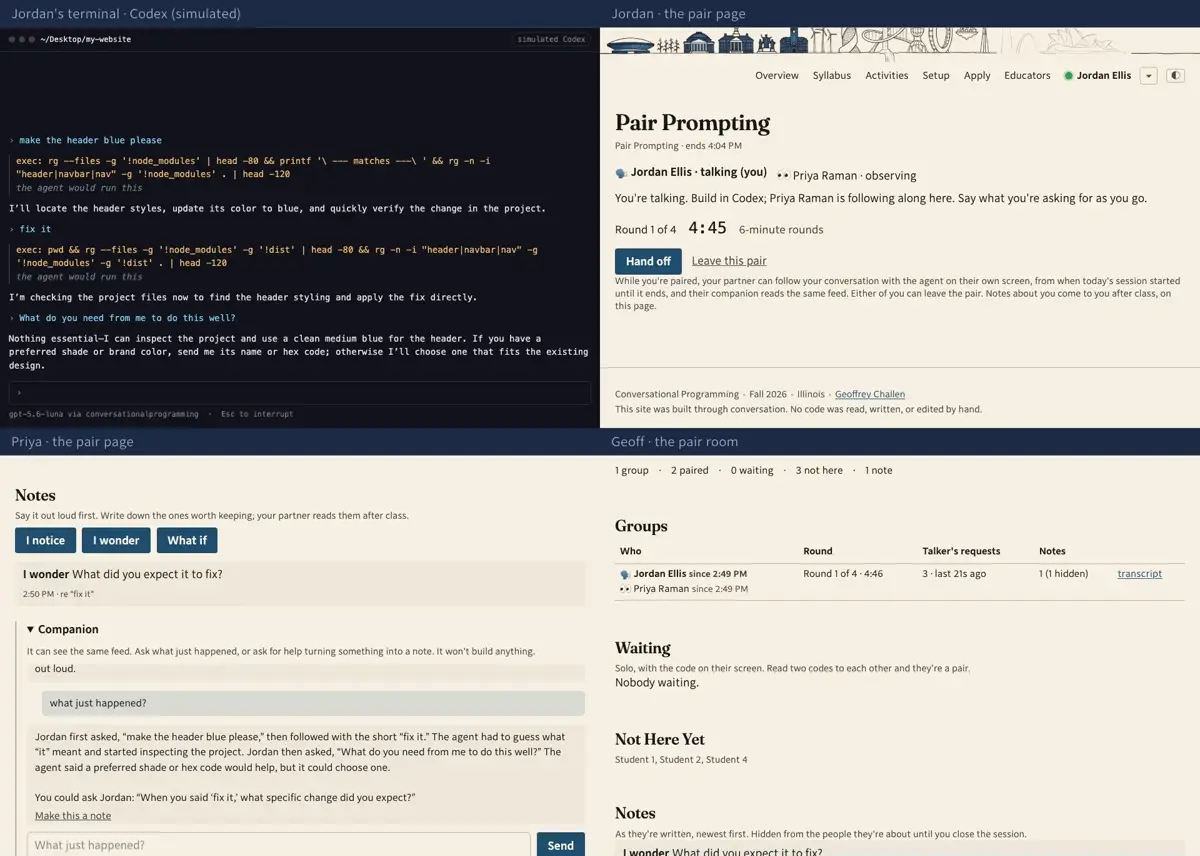
It hands her a question to ask Jordan rather than an answer, and any reply can become a note.
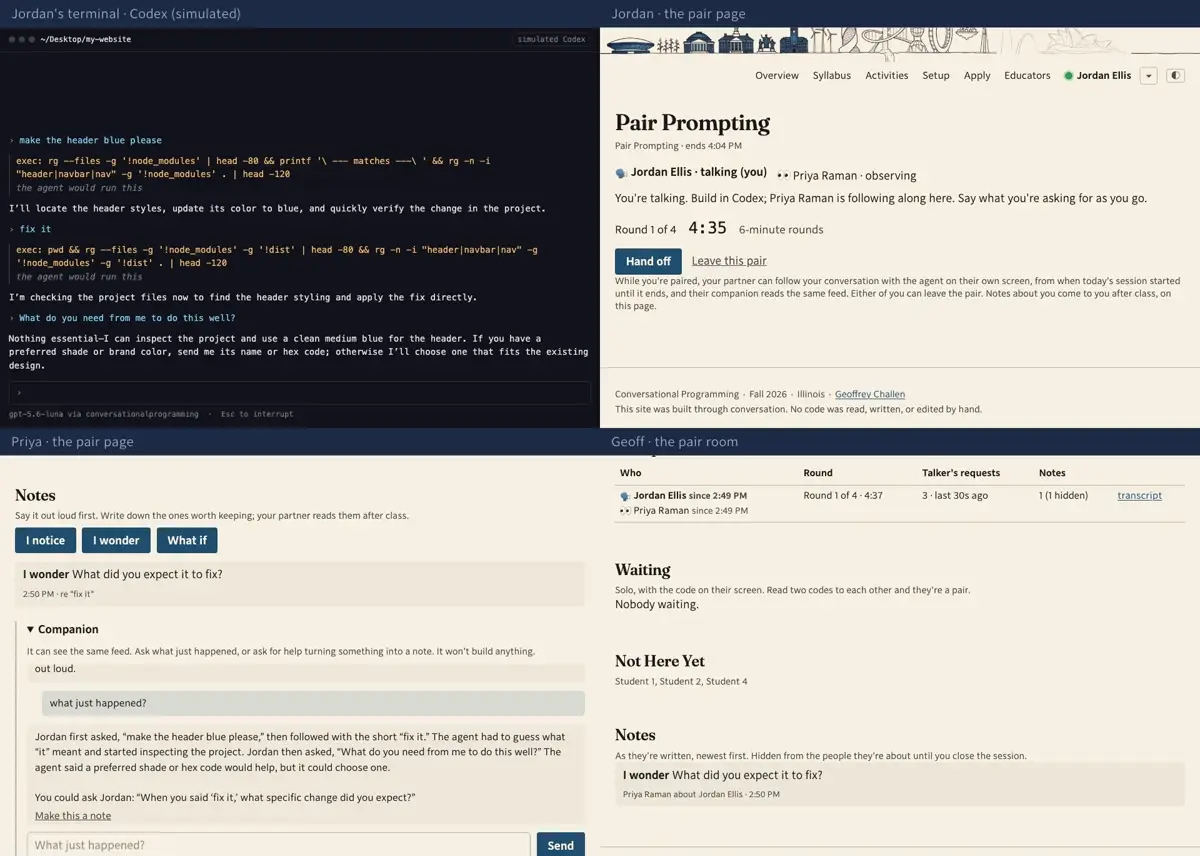
Geoff's room shows every pair, who's prompting, how quiet they've been, and every note as it's written. “1 hidden” means hidden from the person it's about, not from him.
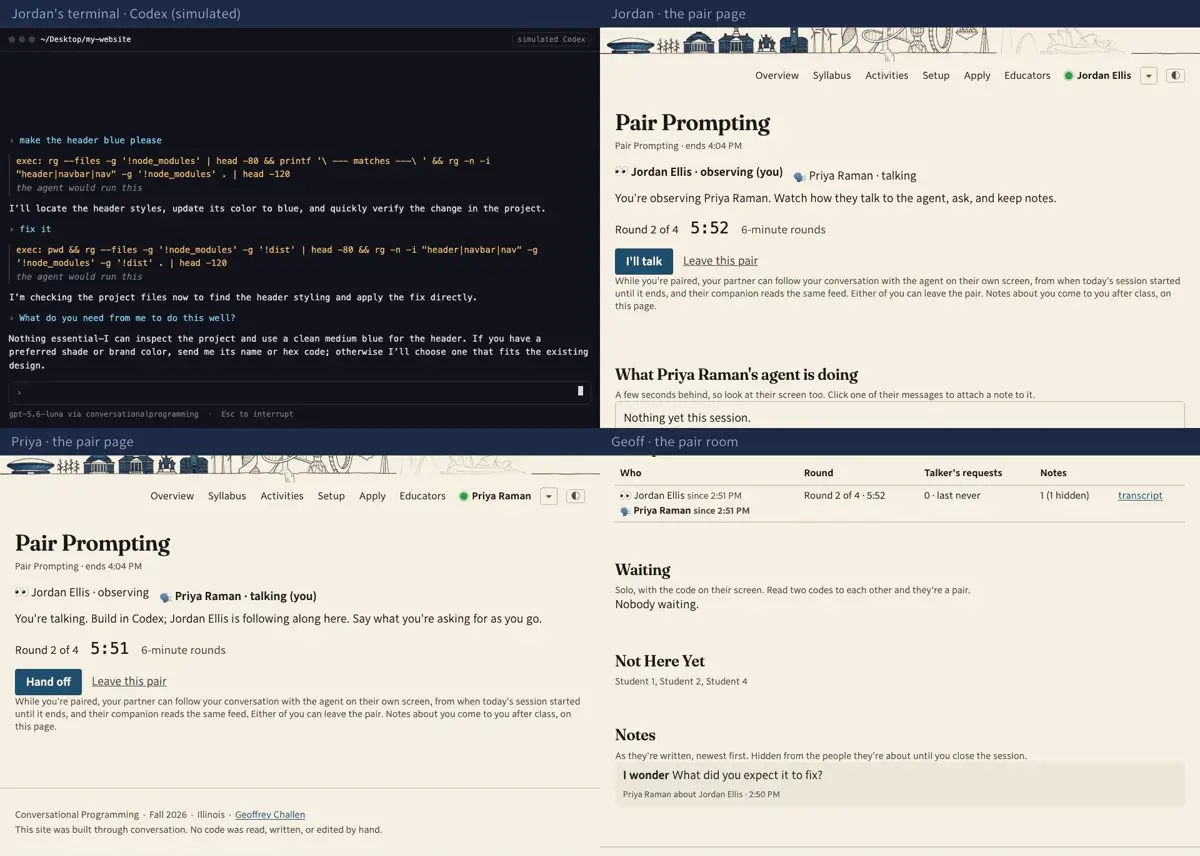
When the round ends they switch. Priya takes the seat; Jordan gets the observer's tools and an empty feed, because he's watching her conversation now, not replaying his own.
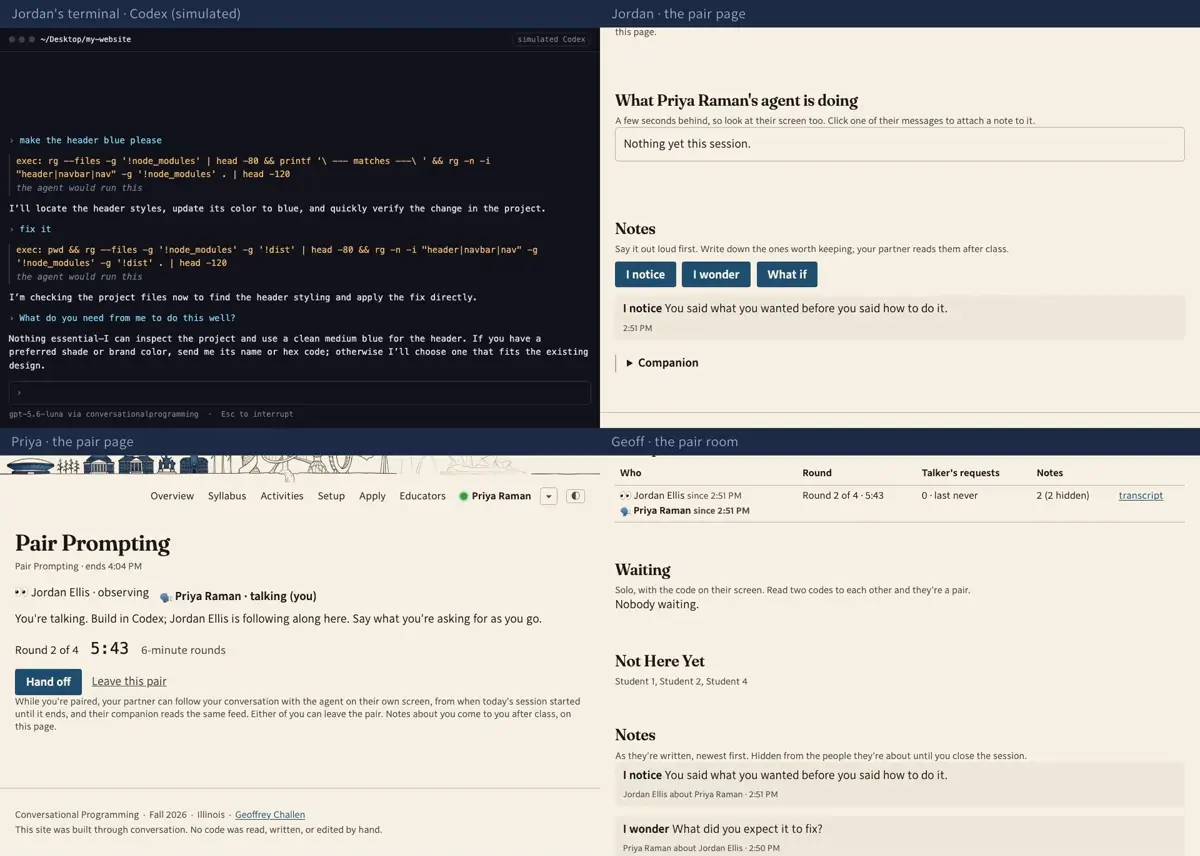
Now Jordan is the one watching. A note doesn't have to be anchored to a prompt; this one is about the whole round.
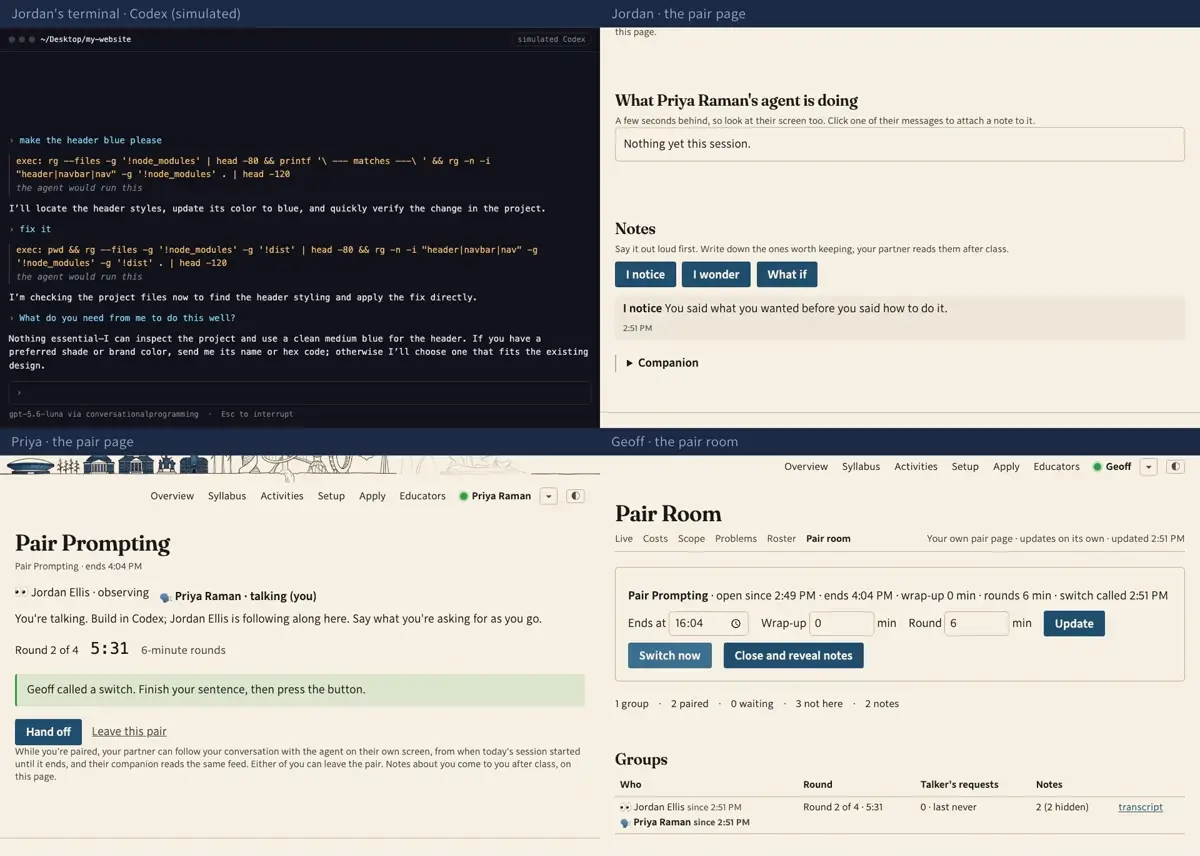
Geoff can also call a switch for the whole room. It's a banner on every page, not a rotation: nobody is moved out of a sentence they're in the middle of.
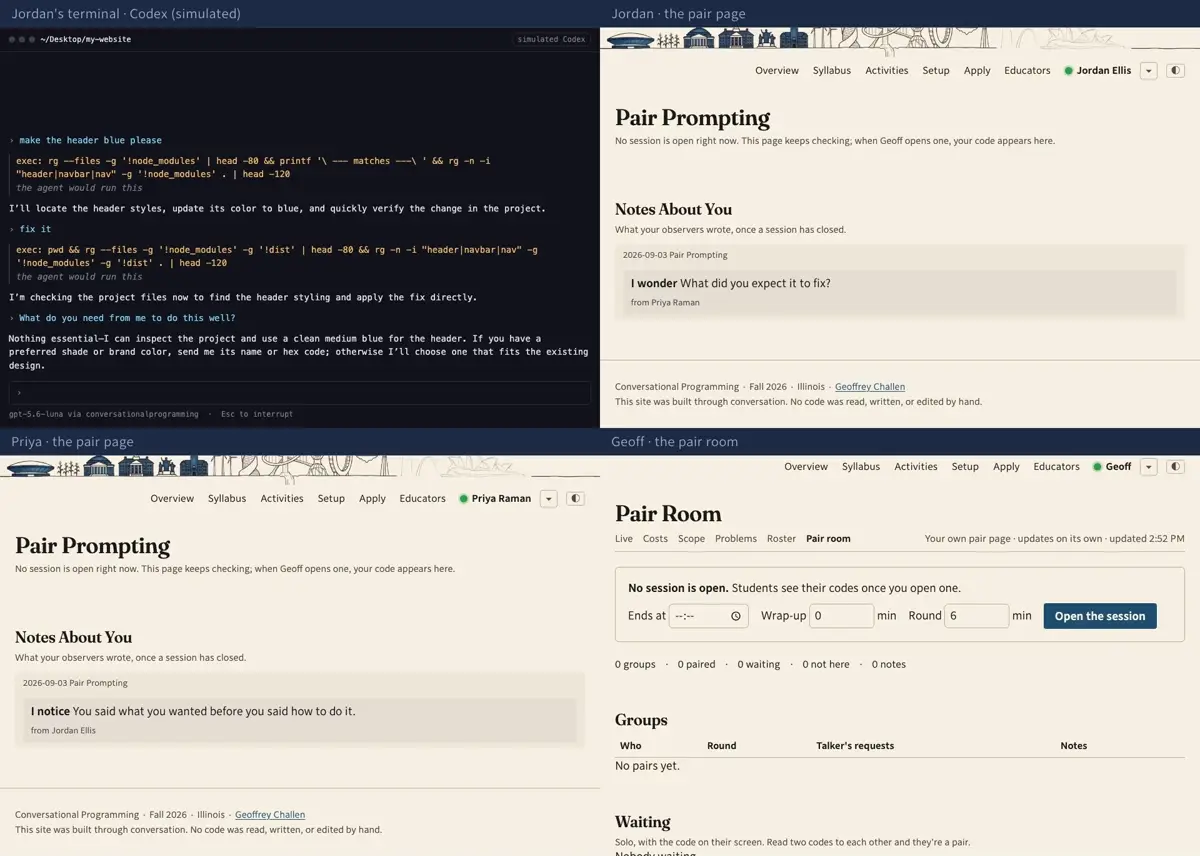
At the end he closes the session. That's the moment the notes are revealed, and it takes two clicks so it can't happen by accident.
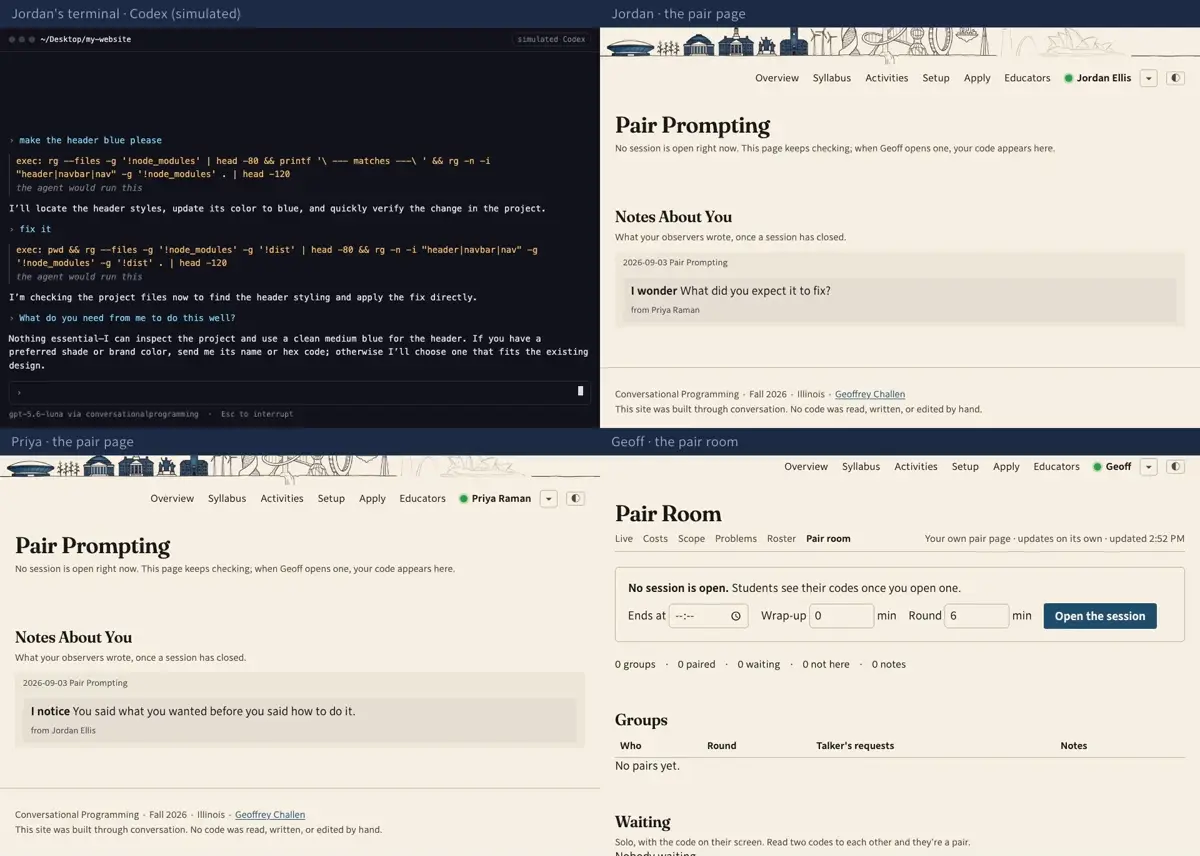
Now Jordan sees what Priya wrote about him — after class, on his own page, with her name on it.
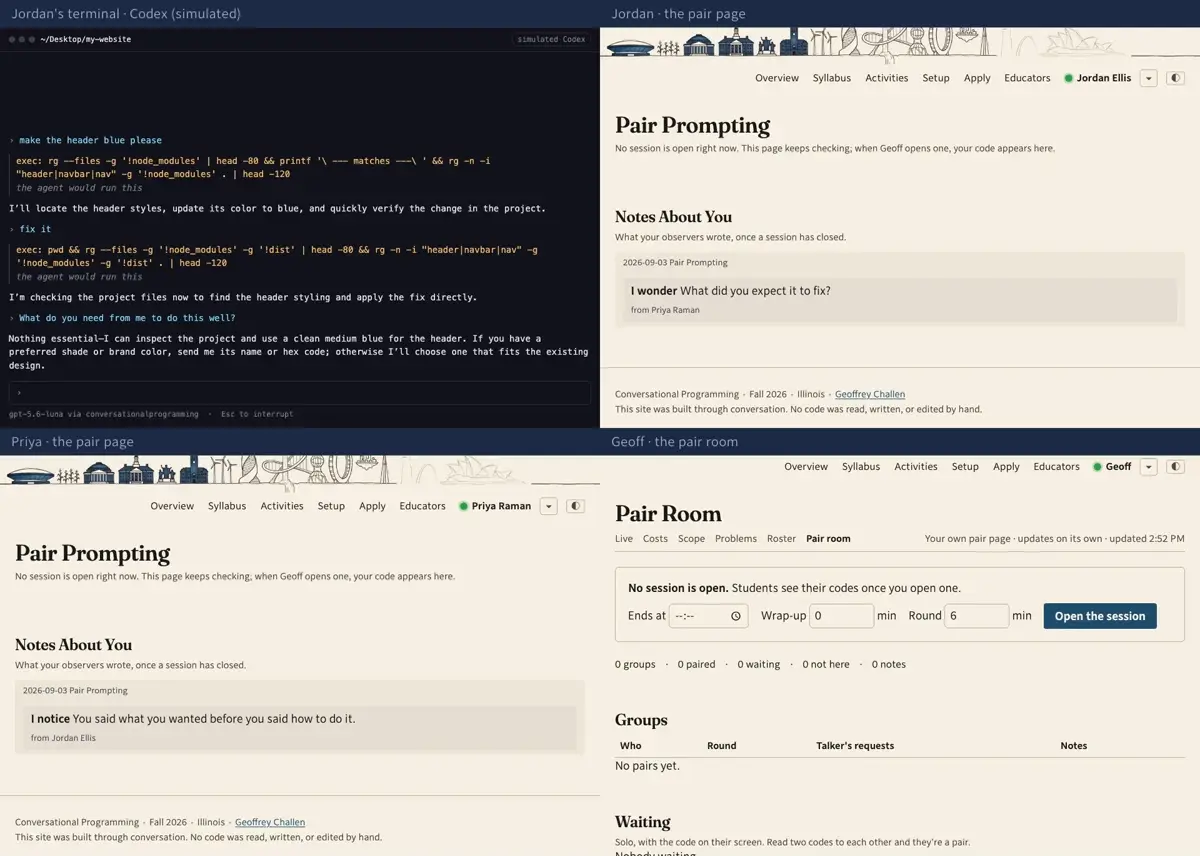
And Priya sees Jordan's. Both of them get one thing a person said about how they talk. Nothing is handed in, and nothing is graded.
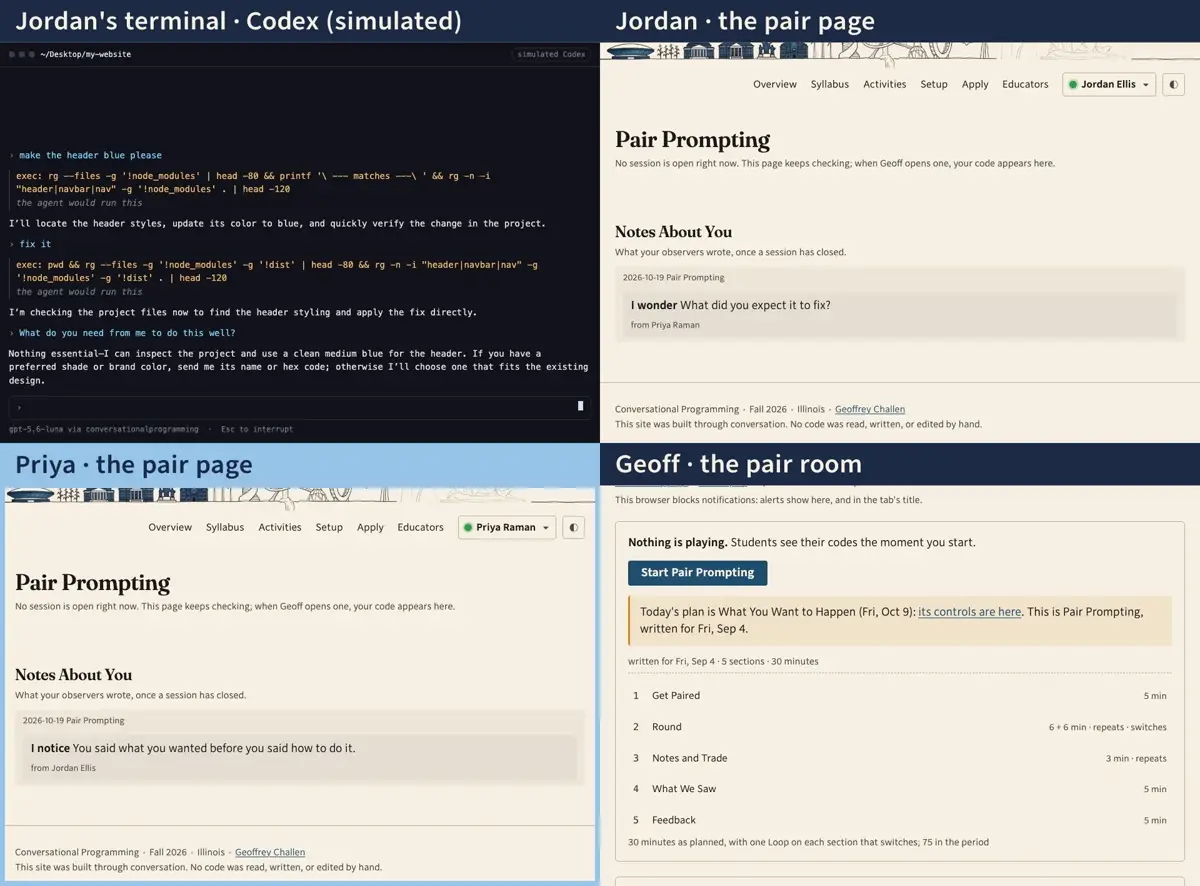
Recorded October 19, 2026.