


Ready to Ship
Two days before project two ships, with nobody at the front and the clock running the room: everyone writes one line about their own project, spends fifteen minutes with their agent getting the first thing working, then twice, with a different classmate each time, hands over the laptop for four minutes and says nothing while the classmate tries it and writes down what they did, what they saw, and whether they'd call it done. Between rounds, back to the agent with what they saw. The students and their projects are invented for the rehearsal.
What You're Looking At
This is a rehearsal, not a class. The students are invented: they're the personas we use to test this course on itself. Wherever an agent or a companion speaks, its words were generated by gpt-5.6-luna, the model the course ran on until September 24, recorded once and replayed since so the run comes out the same every time. Everything else is the software students use: the real pages, the real proxy, the real timer, the real companion. The one thing standing in for itself is the terminal, because students work in Codex and a browser can't record a terminal; that pane shows what genuinely passed through the course's proxy, and never invents output for a command that wasn't run.
Three kinds of substitution are made for publication, and only these three. Where a screen would show the rehearsal rig's own 127.0.0.1 address or its scratch folder, it reads as the real one instead. A setup token is shortened, because a token should never be shown whole even when it's a throwaway from a test database. And where a film needs a website that isn't anybody's, a student's own site or one a student went and found, it is an invented page served by the rig, shown under an address ending in .example. Nothing else on any screen is altered.
The brief the students actually read is the activity page.
Step by Step
Wednesday, 12:30. I'm at Berkeley, and the class meets without me, two days before project two ships. The box at the top of the activity page runs the day: what's on, how long is left, and where to go.
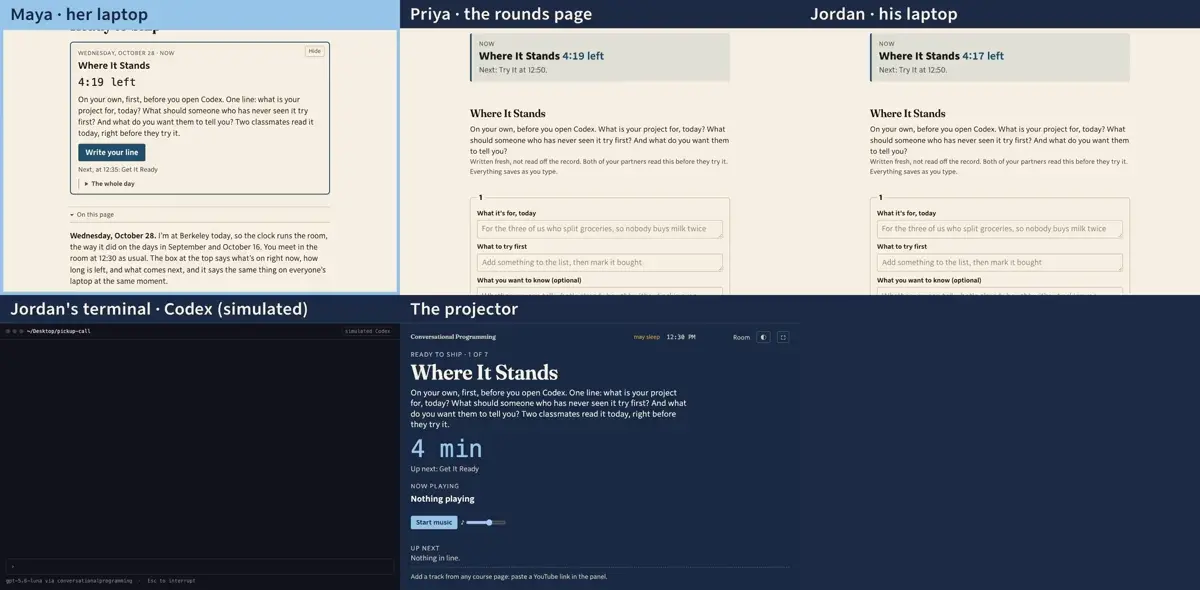
First, on your own, before you open Codex: one line about your project. What it's for today, what someone who has never seen it should try first, and what you want them to tell you.
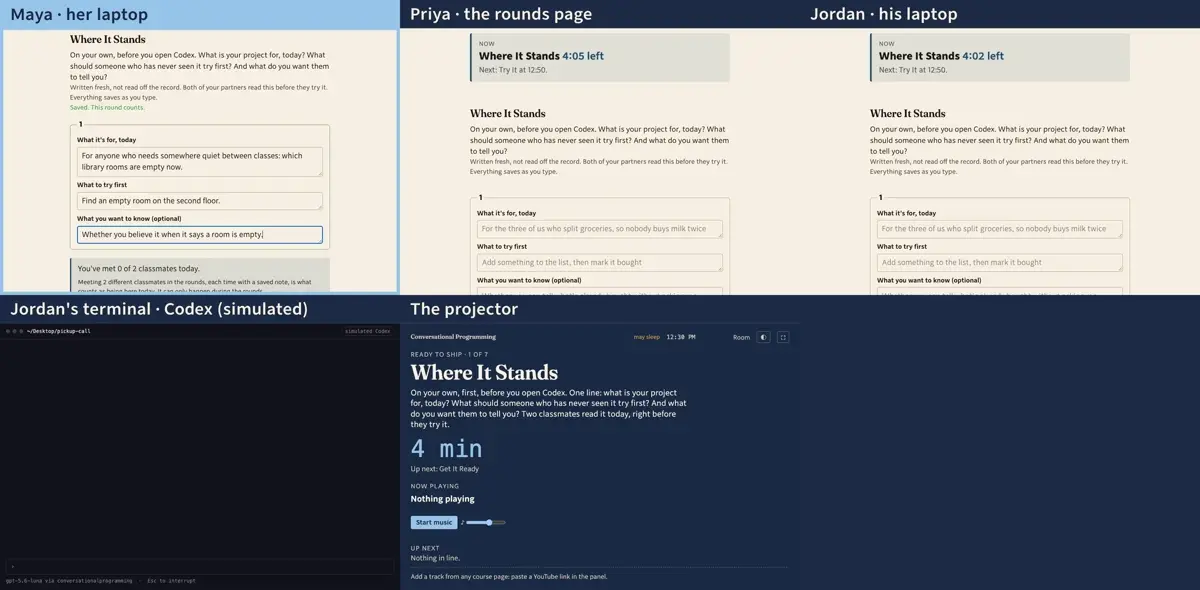
Everyone writes theirs. Two classmates read it today, right before they sit down at your laptop. The projector says what's on, and that pairs come later: there are none yet, on purpose.
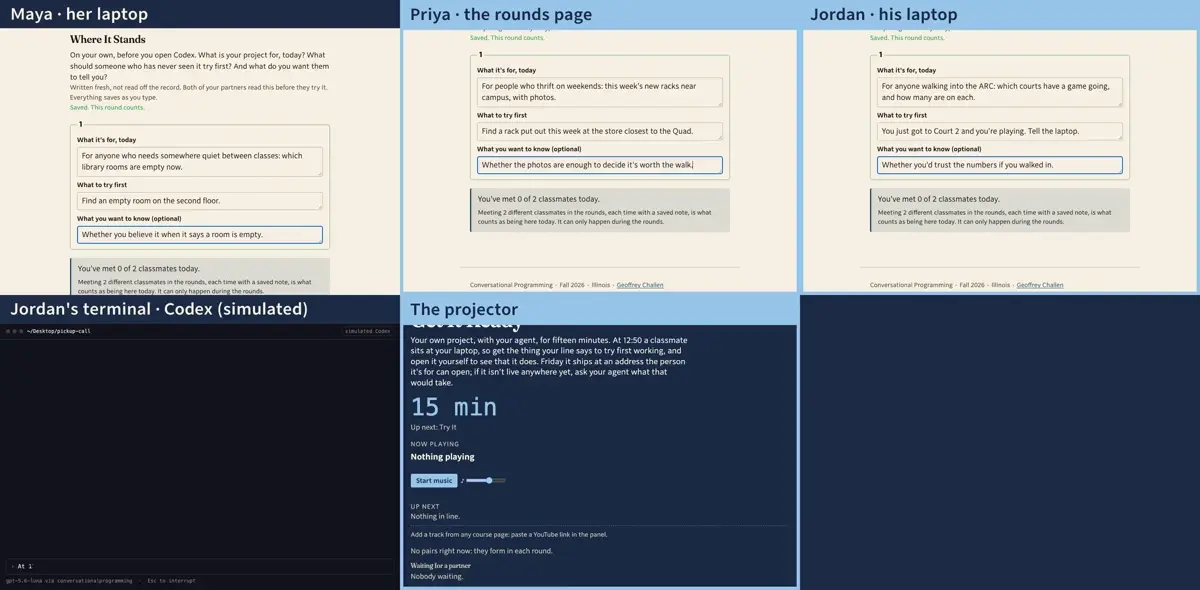
12:35, Get It Ready: fifteen minutes with your agent. At 12:50 a classmate sits at your laptop, so the thing your line says to try first is what has to work. Jordan tells his agent so, in those words.
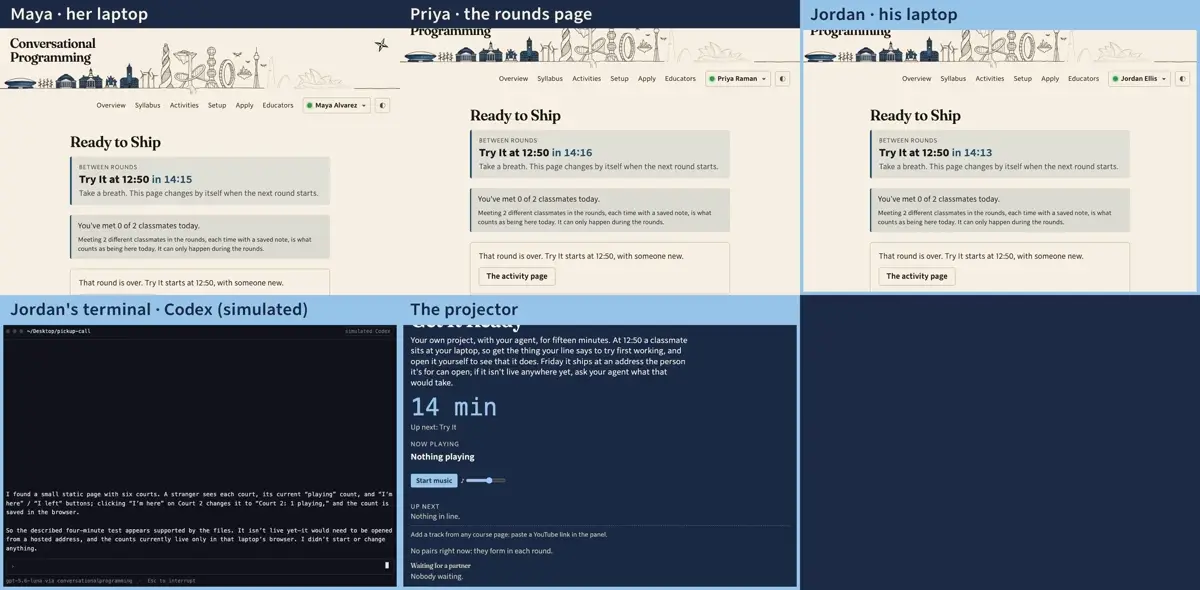
It reads his two files and says the first thing works, with the caveat that matters two days out: it isn't live at an address yet. That's the day's note at work: it ships Friday, a classmate tries it twice this hour, and the first thing someone tries counts for more than anything new.
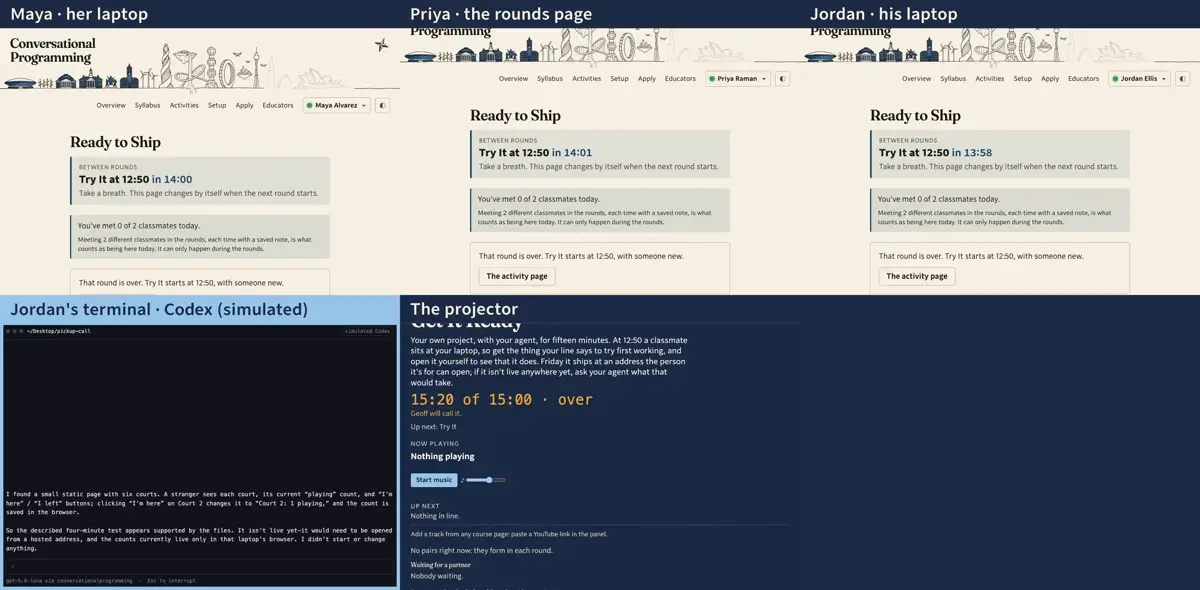
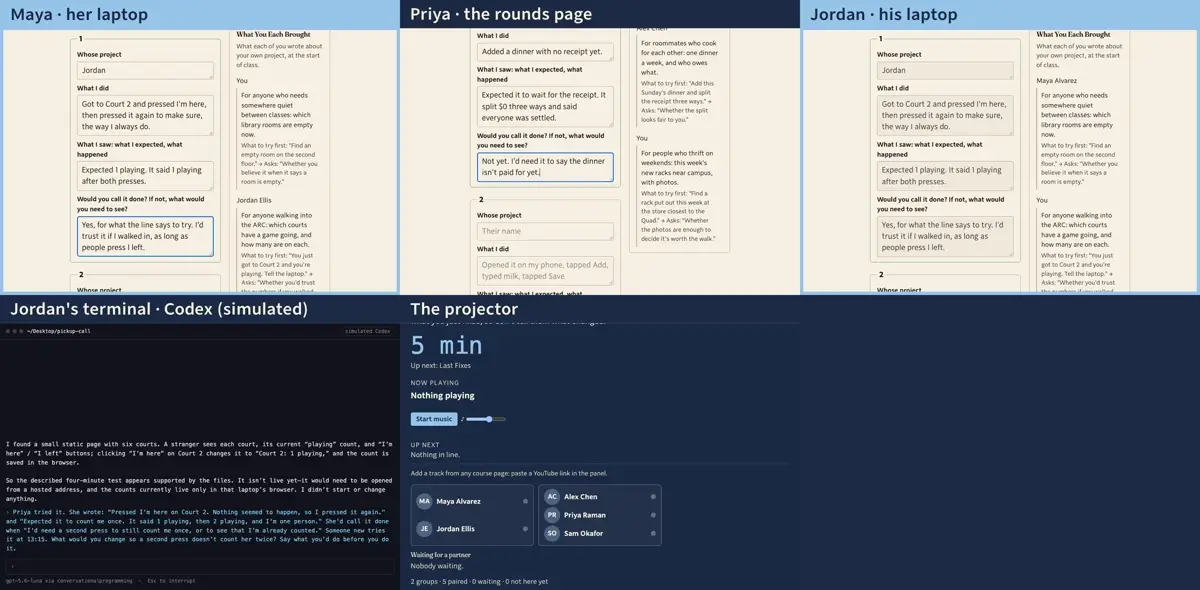
12:50, Try It. Every page changes by itself. Find someone near you and type their code. Priya types Jordan's, so she has the pen: she's trying his first.
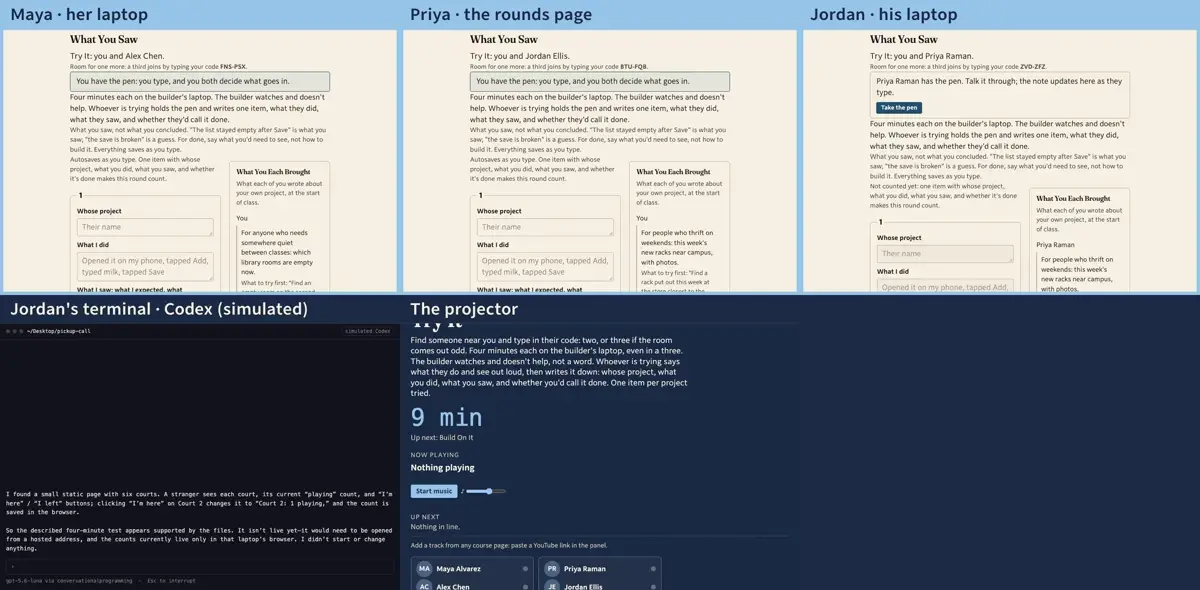
Beside the record is what each of them wrote at 12:30. Priya reads Jordan's line before she touches anything: what it's for, what to try first, and what he wants to know.
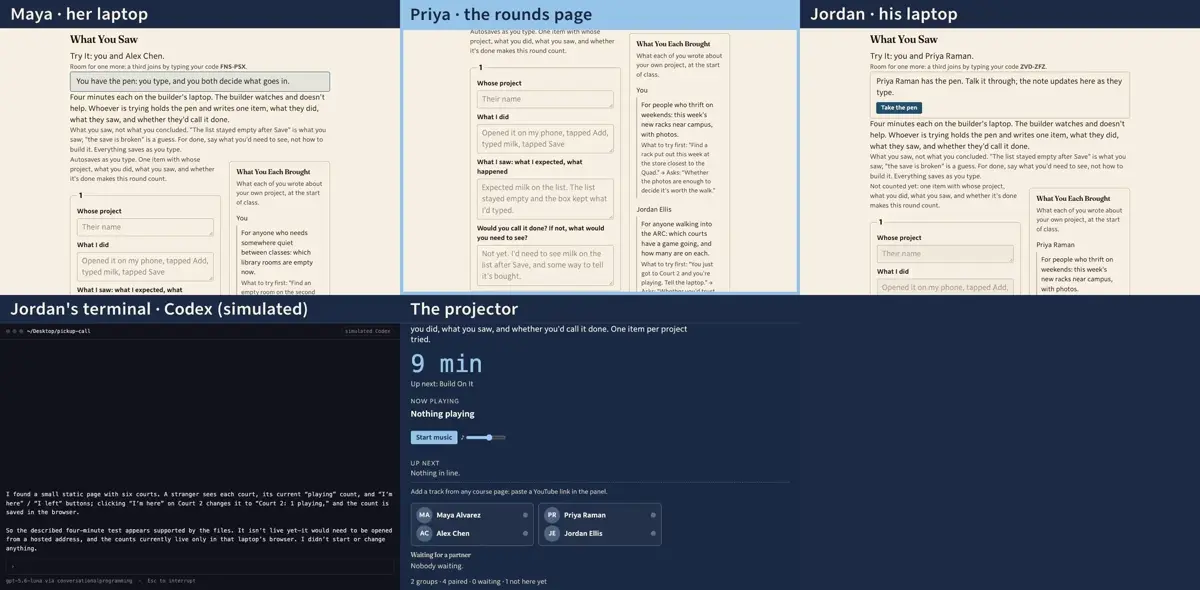
The projector shows the pairs, a face for each person, so people can find each other.
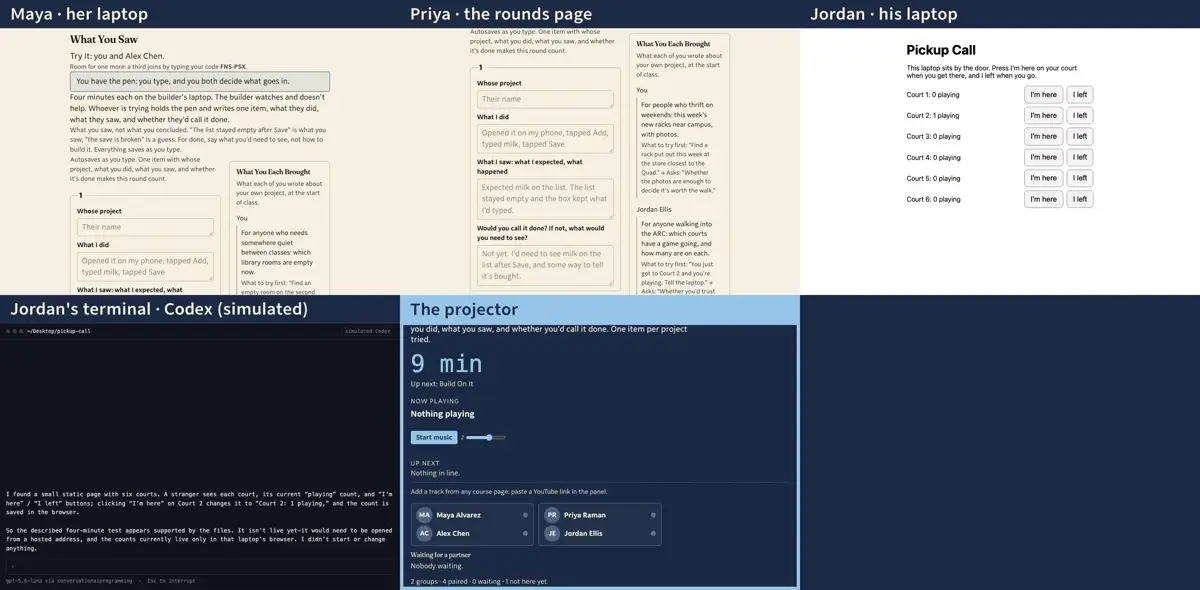
Four minutes on Jordan's laptop, and he says nothing. Priya says out loud what she does: she just got to Court 2. She presses I'm here, isn't sure it took, and presses it again.
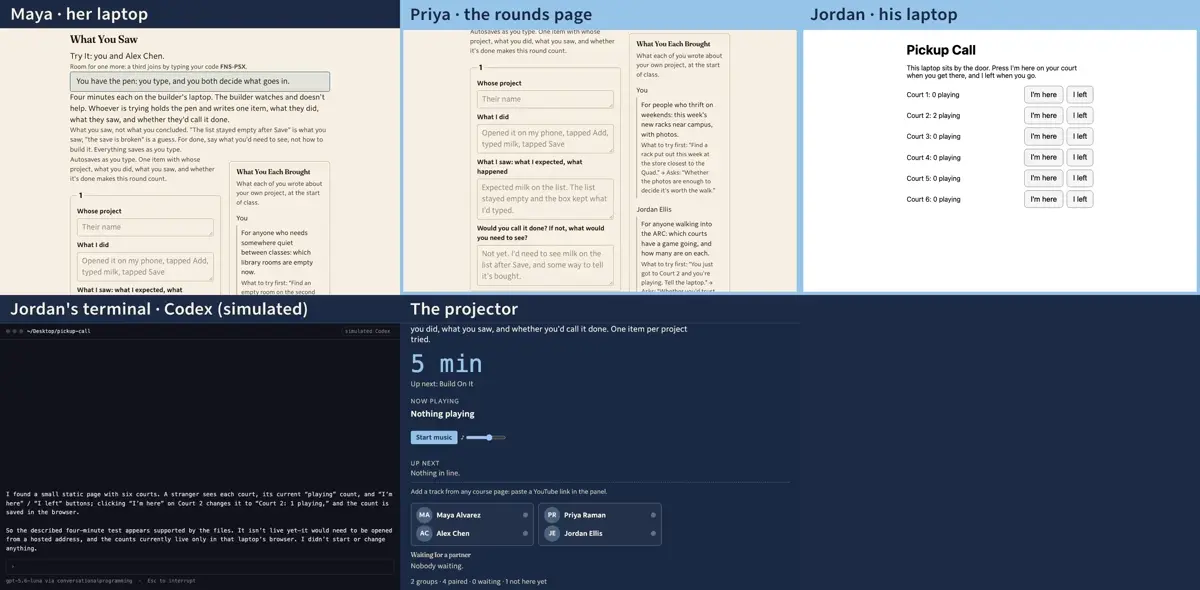
Four minutes up. She writes what she did, what she saw, and whether she'd call it done, and if not, what she'd need to see. What she saw, not what she thinks is broken.
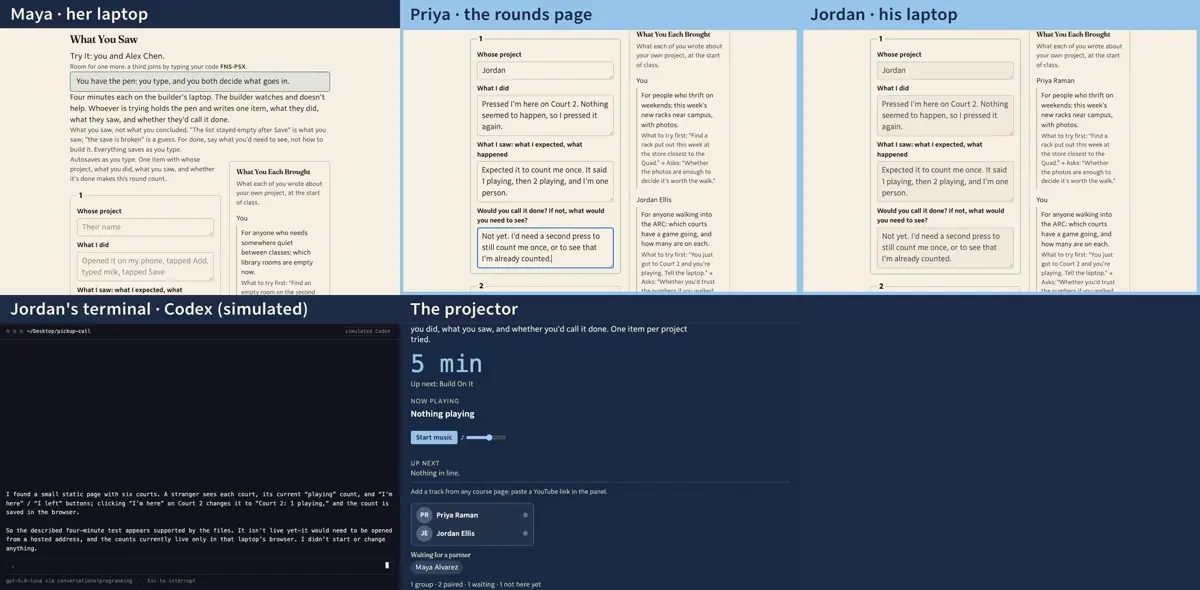
Then they swap: Jordan takes the pen and tries hers, and writes his own item under it. One record for the pair, one item per project tried.
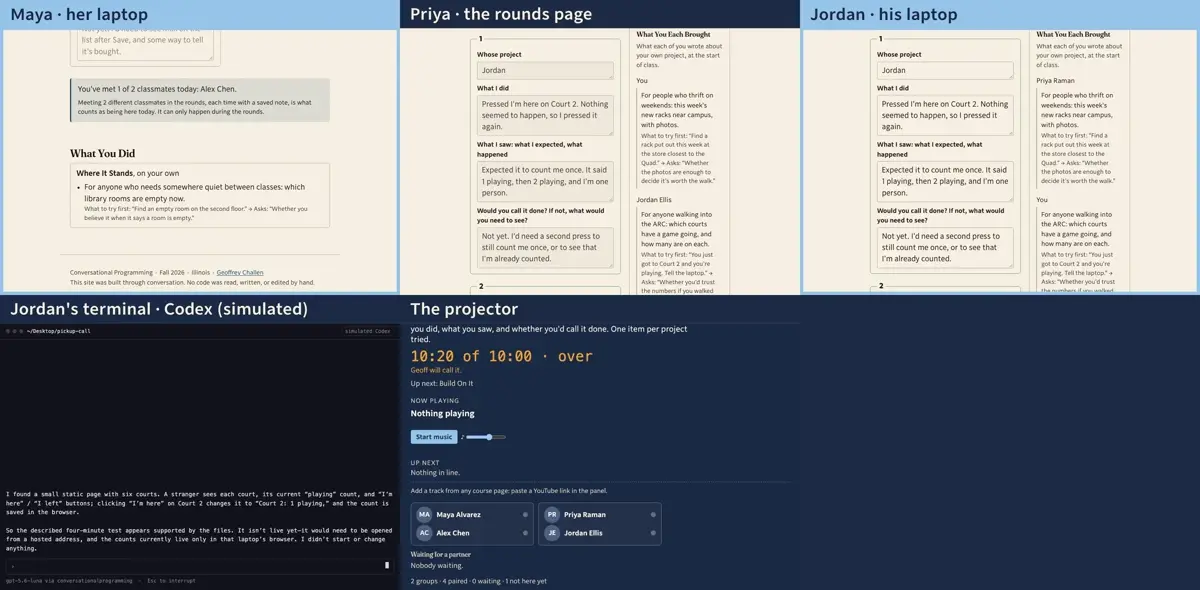
13:00, Build On It. The round is over, and the projector says so: no pairs right now, they form in each round.
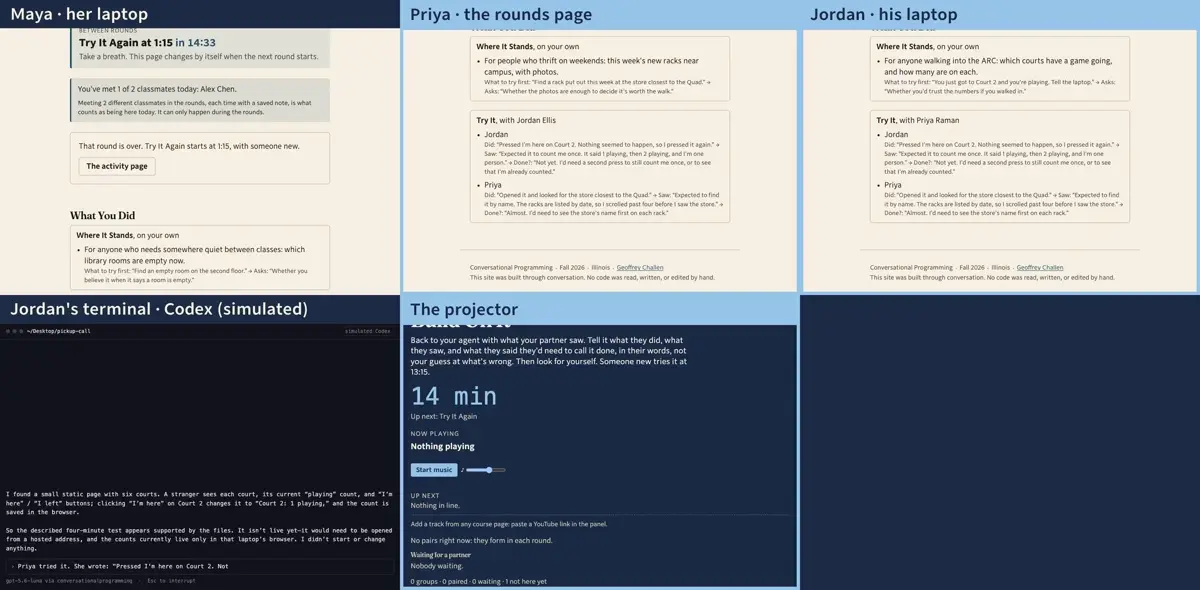
Back to the agent with what his partner saw, in her words, not his guess at what's wrong. From 12:50 the course's note to every agent changes too: classmates are trying it this hour, and what they did and saw is the brief now. The note is on the activity page word for word.
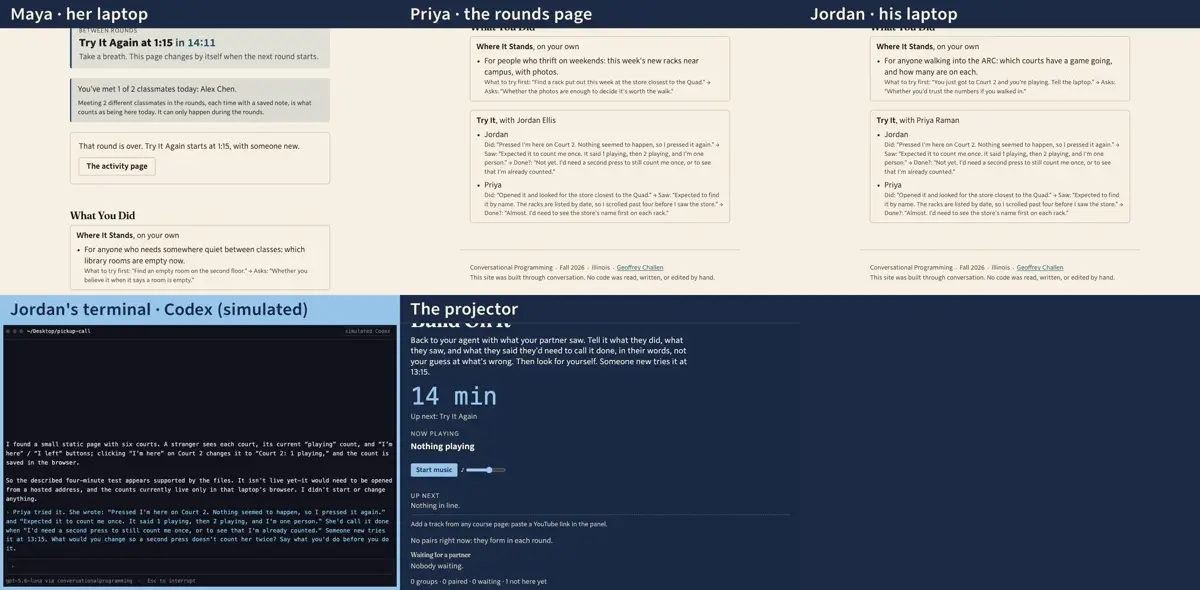
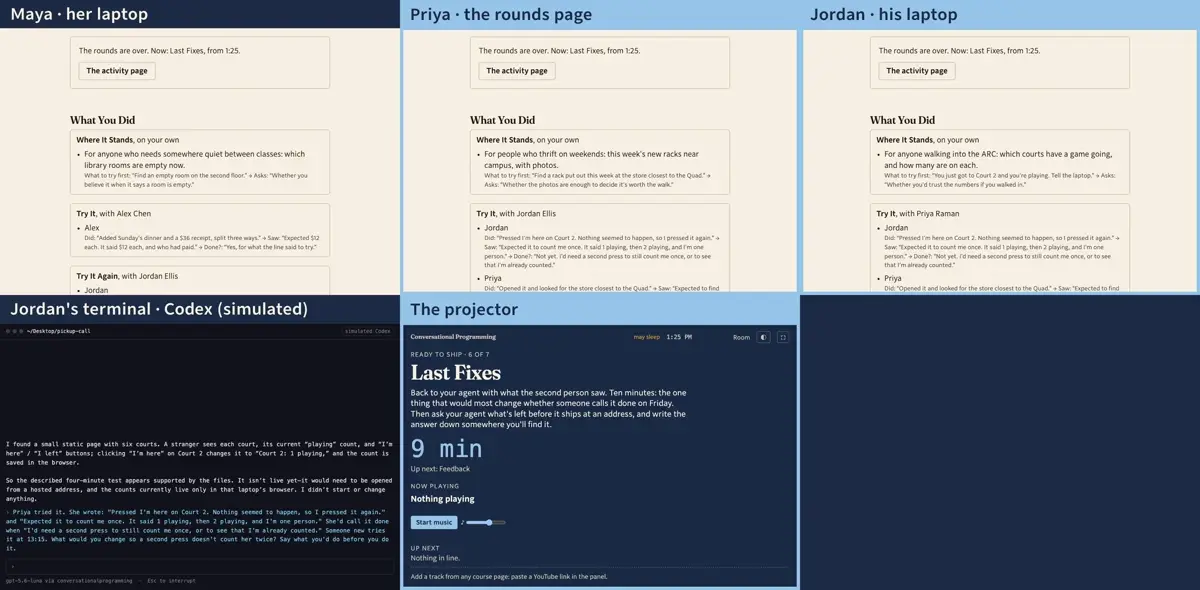
13:15, Try It Again, with someone you haven't paired with today. Maya types Jordan's code. What comes with each of them is still their own line from 12:30, not the record from the last round, which was about other people's projects.
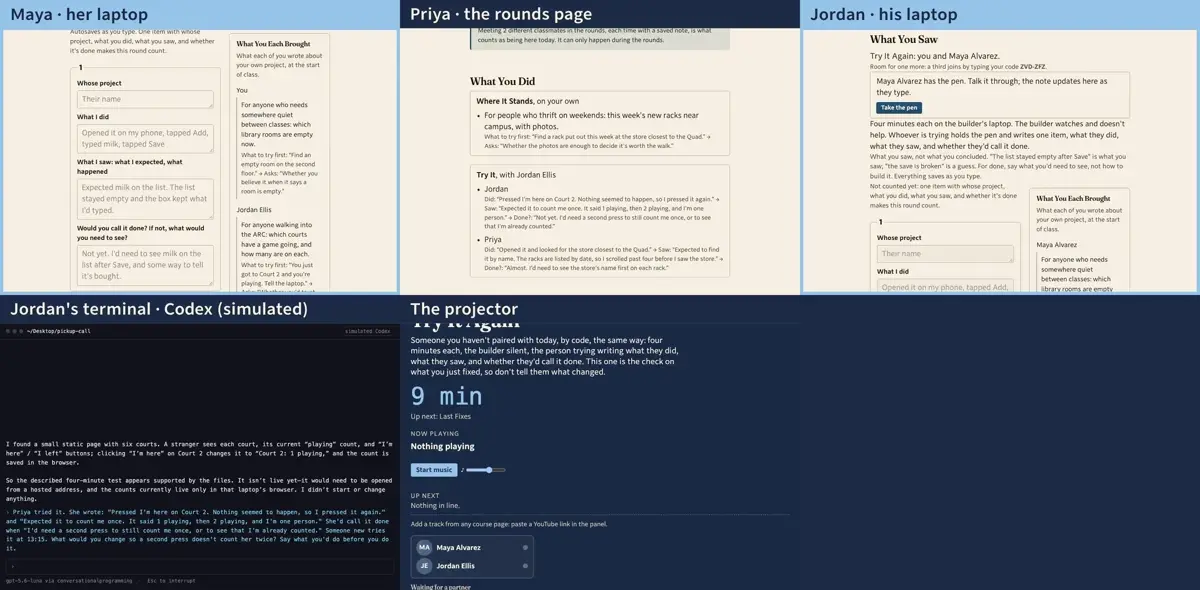
Priya pairs with Alex. Sam missed the first round, so he joins them as a three: four minutes each still, and meeting two people in one round counts for the day.
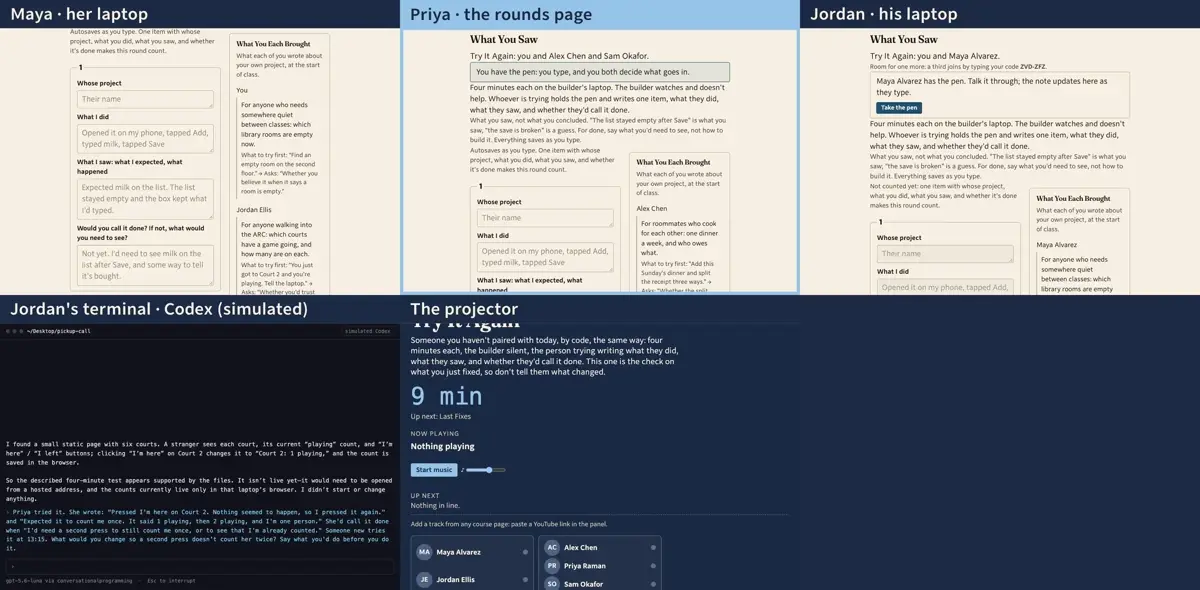
On the projector, a pair and a three.
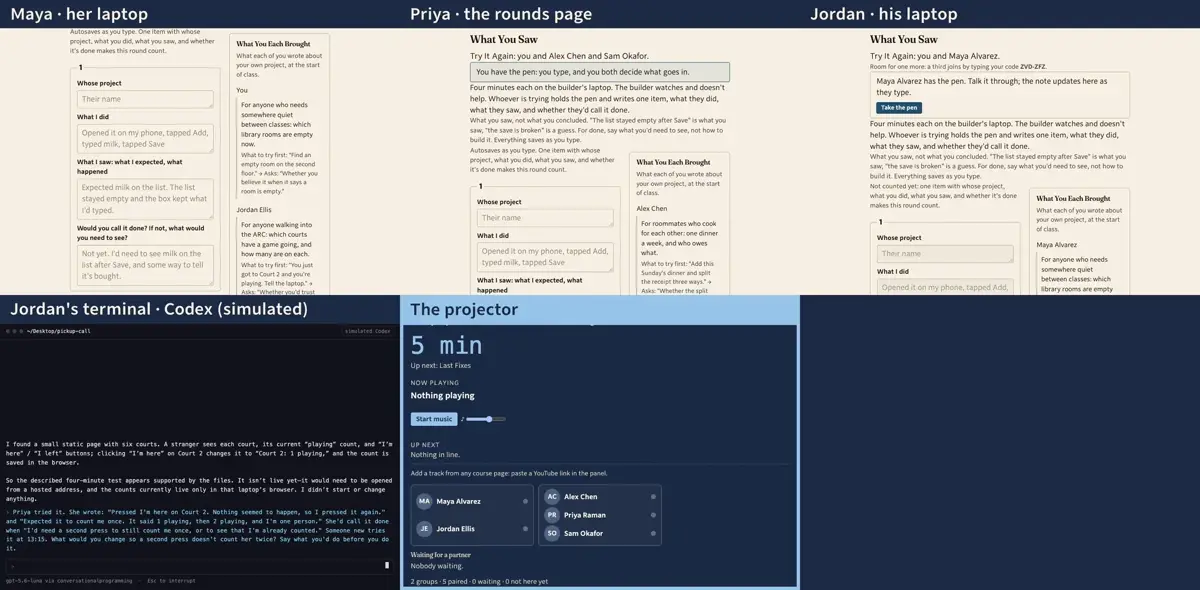
Maya tries Jordan's the way his line says: she just got to Court 2. Nobody told her what changed since the first round. That's the point: the second person is the check on the fix.
Two classmates each, each with a saved record: that's what being here means today, and it can only happen in the rounds.
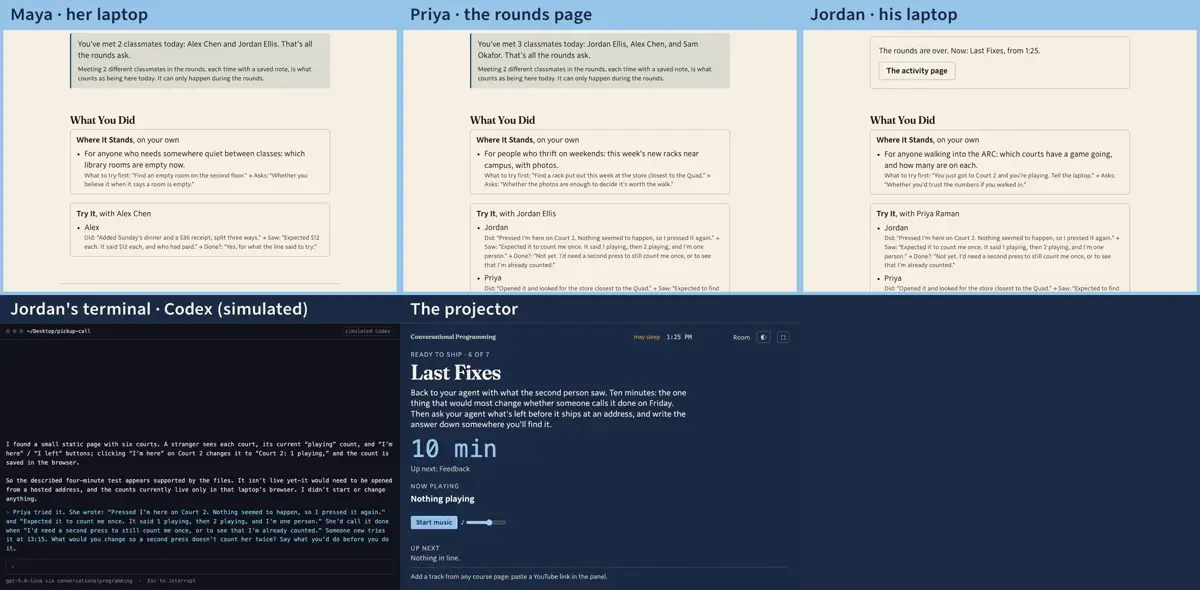
13:25, Last Fixes: back to the agent with what the second person saw, ten minutes on the one thing that would most change whether someone calls it done on Friday.
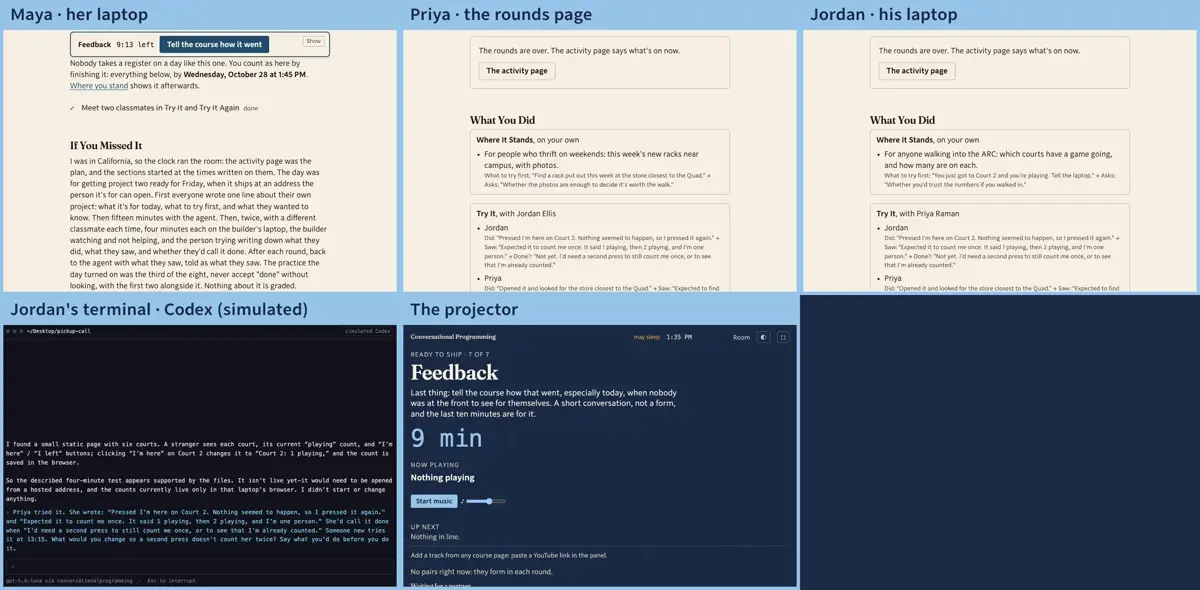
13:35, Feedback: the last ten minutes, and the box on the activity page links to it. The projector says the same.
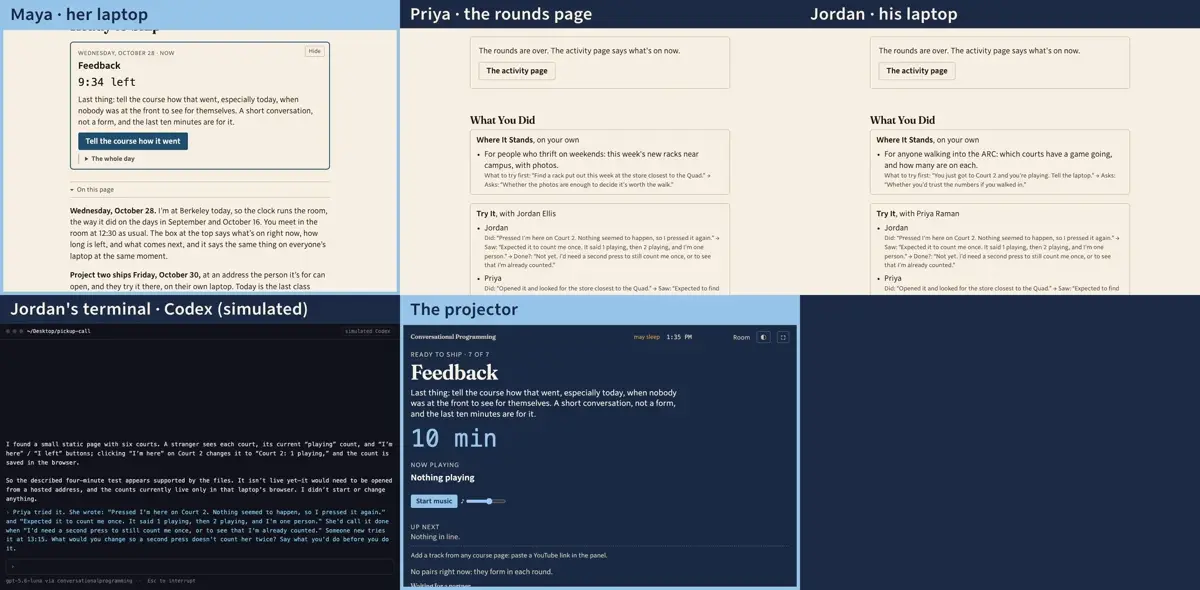
Further down the same page is Maya's own checklist for the day. Nobody takes a register: meeting two classmates in the rounds is being here, and hers says done.
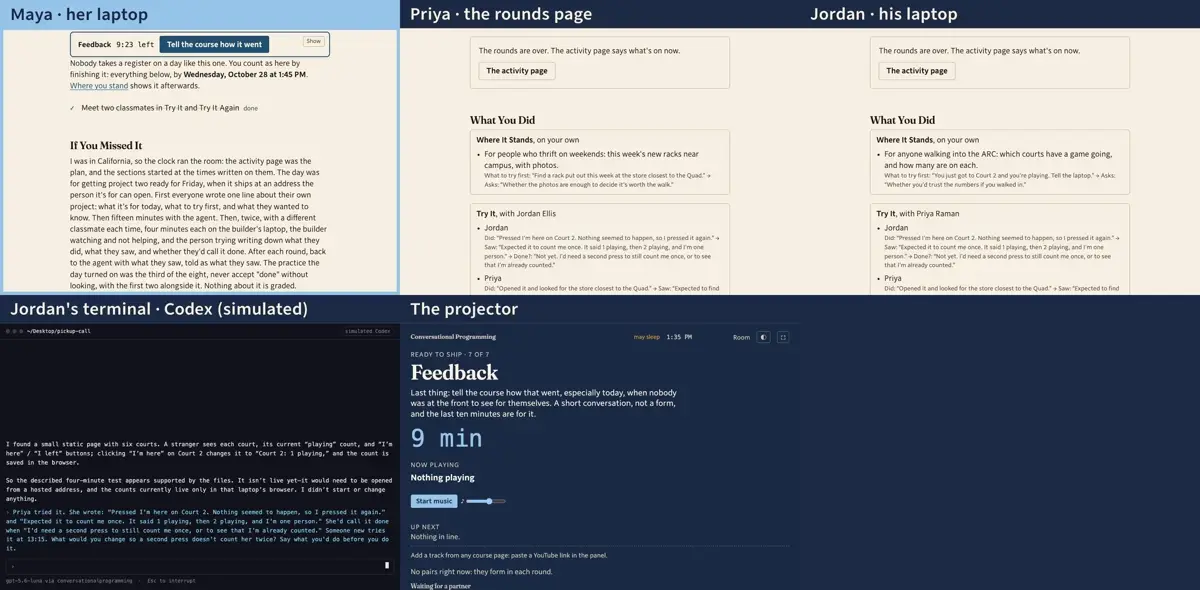
Friday it ships at an address the person it's for can open. Today was for finding out, from two people who'd never seen it, what they do first, and whether they'd call it done.
Recorded October 24, 2026.