


Ready
The first try of project two by the people it's for, nine days before it ships on Friday 10-30: each builder gets the first thing a stranger should try working with their agent, then the room seats each builder with someone who proposed the idea they built, that person tries it for four minutes while the builder says nothing, and presses one of two buttons, it worked or I hit something. The projector counts the hits, and the builders take what the people ran into back to their agents. The ideas, the projects, and the students are invented for the rehearsal.
What You're Looking At
This is a rehearsal, not a class. The students are invented: they're the personas we use to test this course on itself. Wherever an agent or a companion speaks, its words were generated by gpt-5.6-luna, the model the course ran on until September 24, recorded once and replayed since so the run comes out the same every time. Everything else is the software students use: the real pages, the real proxy, the real timer, the real companion. The one thing standing in for itself is the terminal, because students work in Codex and a browser can't record a terminal; that pane shows what genuinely passed through the course's proxy, and never invents output for a command that wasn't run.
Three kinds of substitution are made for publication, and only these three. Where a screen would show the rehearsal rig's own 127.0.0.1 address or its scratch folder, it reads as the real one instead. A setup token is shortened, because a token should never be shown whole even when it's a throwaway from a test database. And where a film needs a website that isn't anybody's, a student's own site or one a student went and found, it is an invented page served by the rig, shown under an address ending in .example. Nothing else on any screen is altered.
The brief the students actually read is the activity page.
Step by Step
Wednesday, 12:30. Two weeks ago everyone picked an idea someone else in the room proposed, and has been building it since. Today the people who proposed them try it for the first time. Project two isn't over: it ships Friday 10-30, and next Wednesday is for finishing it. Jordan reads why on the activity page.
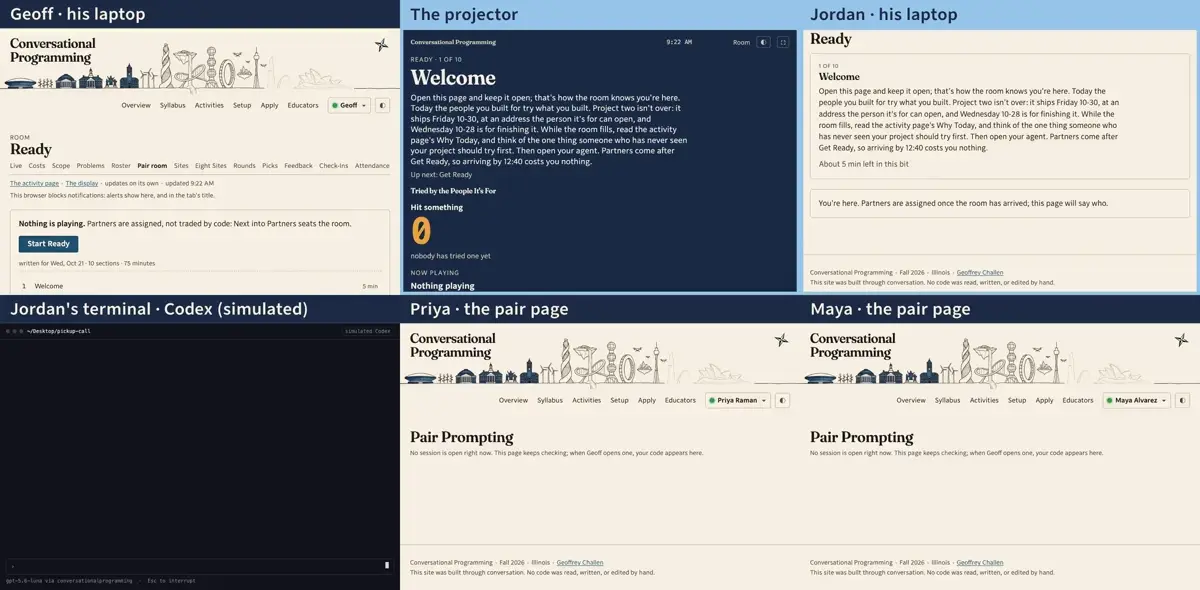
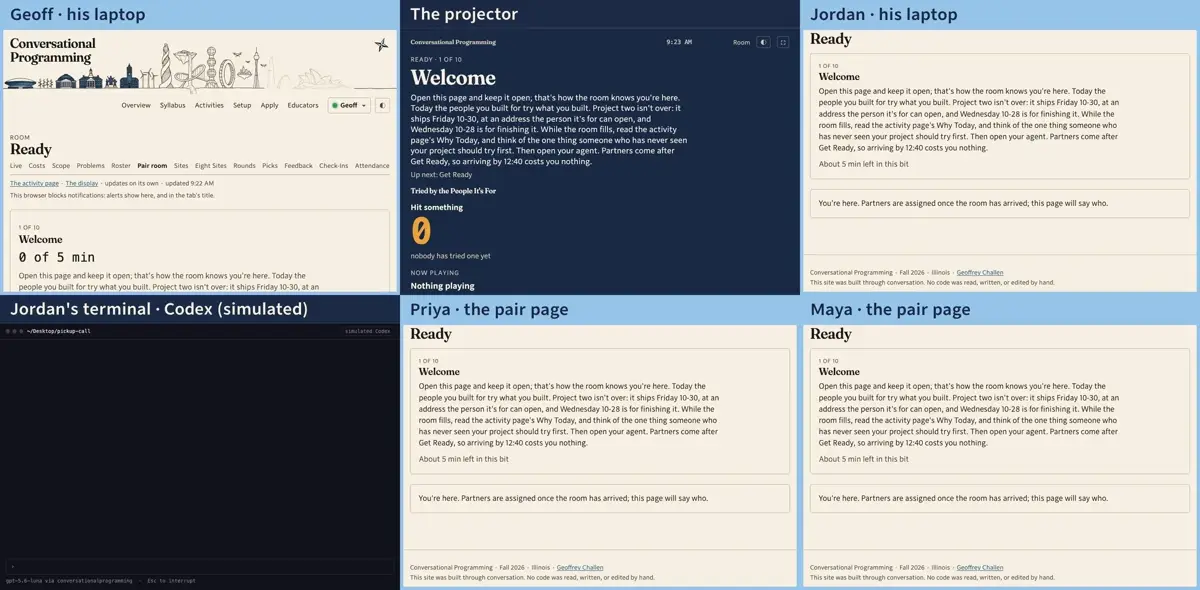
I press Start. Welcome is mine to say: the people you built for are here, and project two ships Friday 10-30. Everyone opens the pair page; partners come after Get Ready.
The room page leads with the students: who is here, who they are with, and what their agents are doing. Sam is away today.
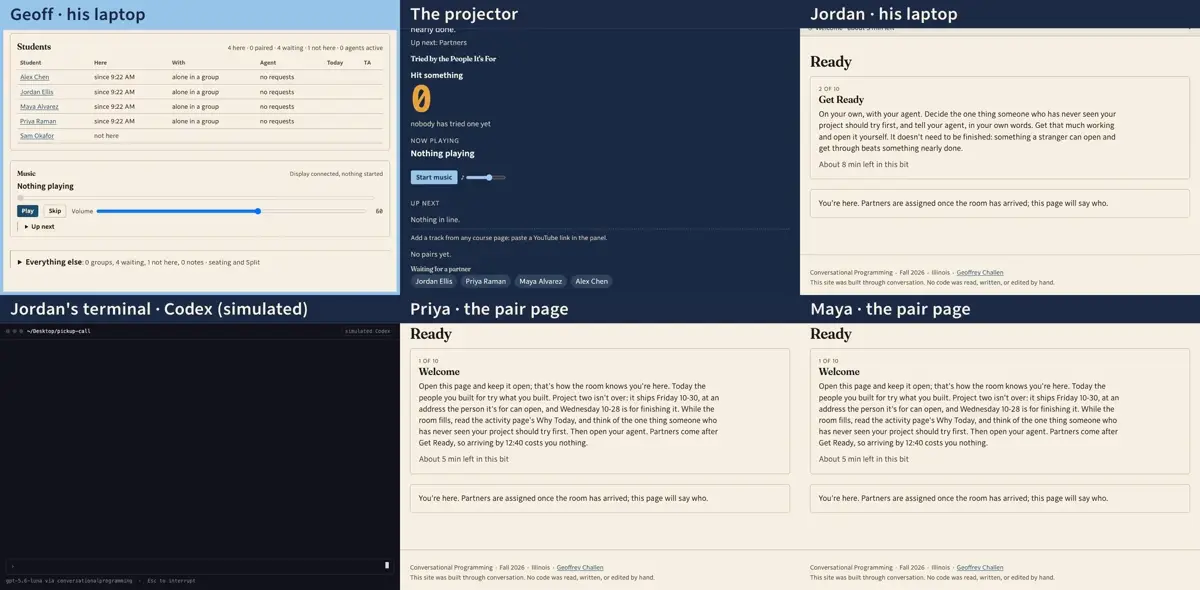
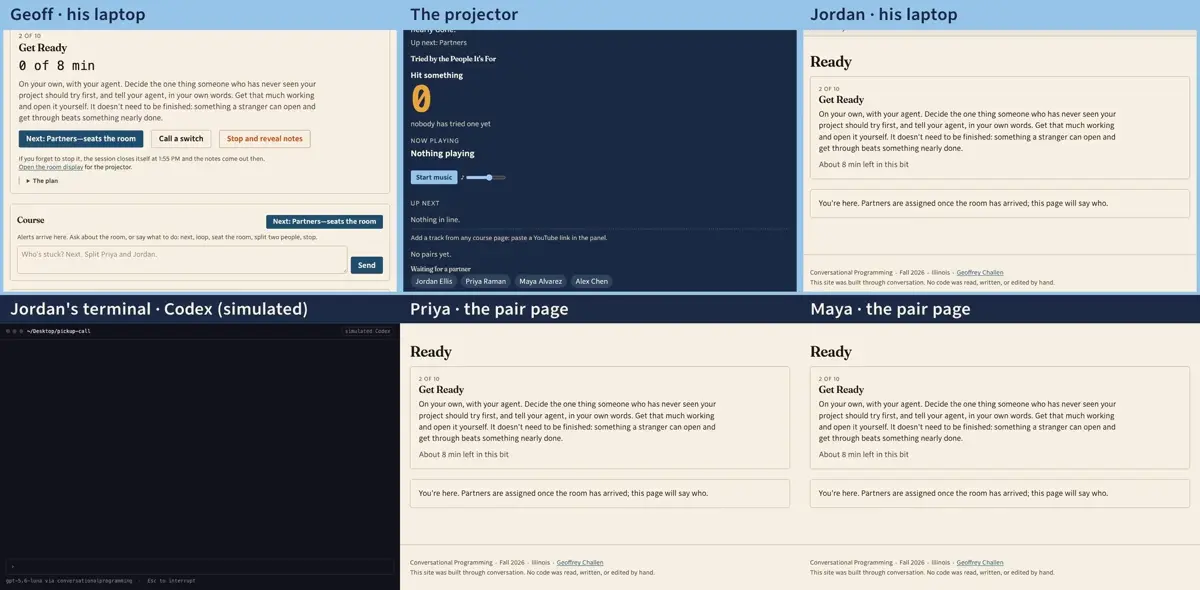
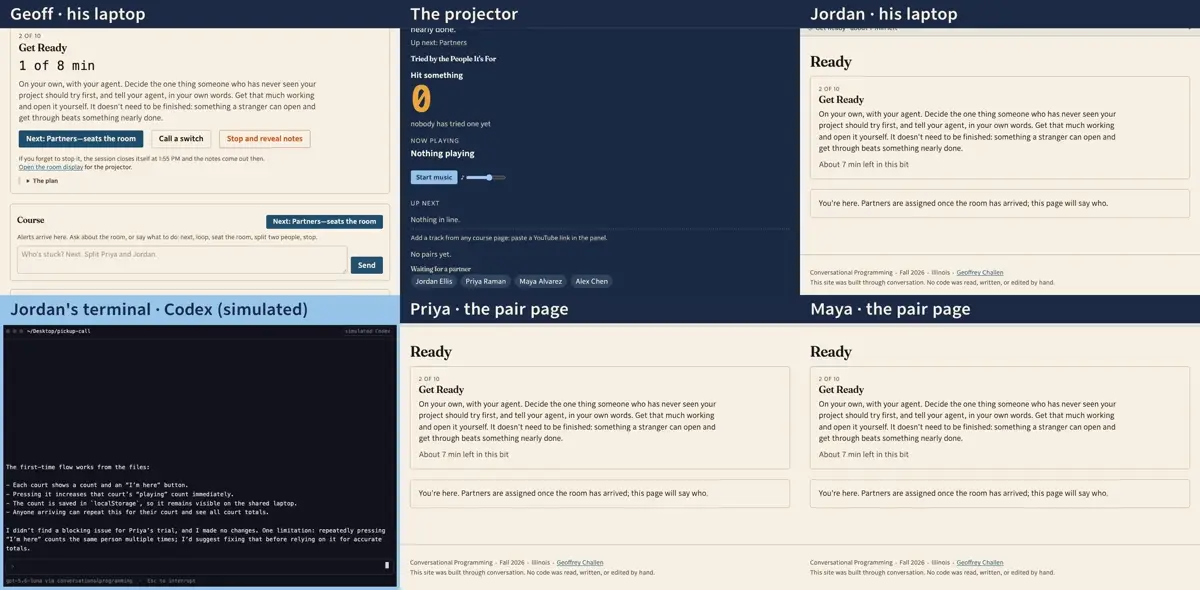
Next, Get Ready: eight minutes alone with your agent. Decide the one thing someone who has never seen your project should try first, and get that much working. The projector has one number for the whole room, and no names: how many tries hit something. Nobody has tried one yet.
Jordan tells his agent, in his own words, who is about to try Pickup Call, what it's for today, and the one thing someone new should try first. He asks it to make sure that much works, and to tell him before changing anything.
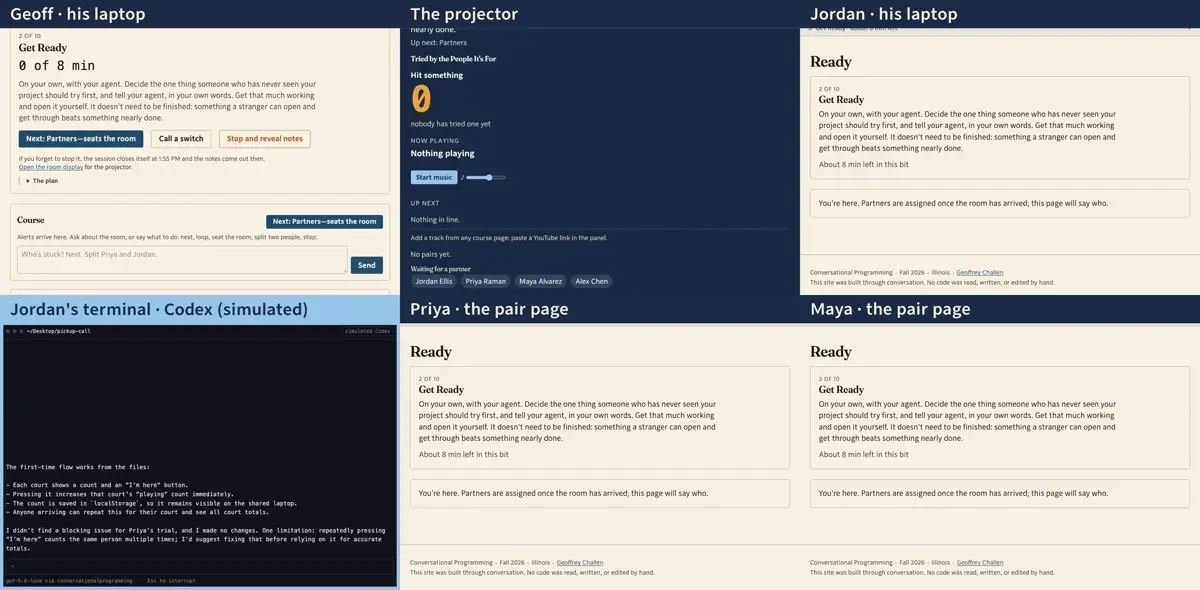
It reads his project, in front of him, and says the first thing works from the files, with one caveat: pressing twice counts a person twice. Nothing goes to the course: today nobody's agent is asked whether it's ready. That comes Friday, with checking what the agent says.
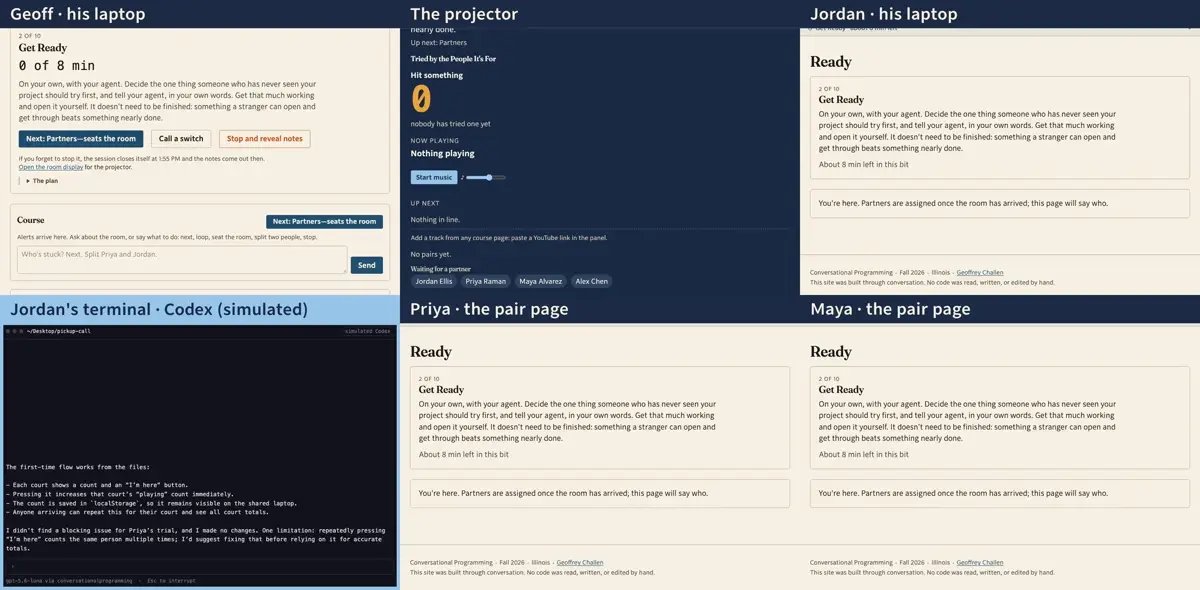
The request that reached his agent ended with the day's note: his pick by number and name, that the person it's for is about to try it, and that project two ships Friday 10-30, with Wednesday 10-28 for finishing it. Every word is on the activity page.
Next is Partners, and the room says what that press will do: seat these four, the ones on the pair page. Today's rule is the opposite of two weeks ago: each builder sits with someone who proposed the idea they built.
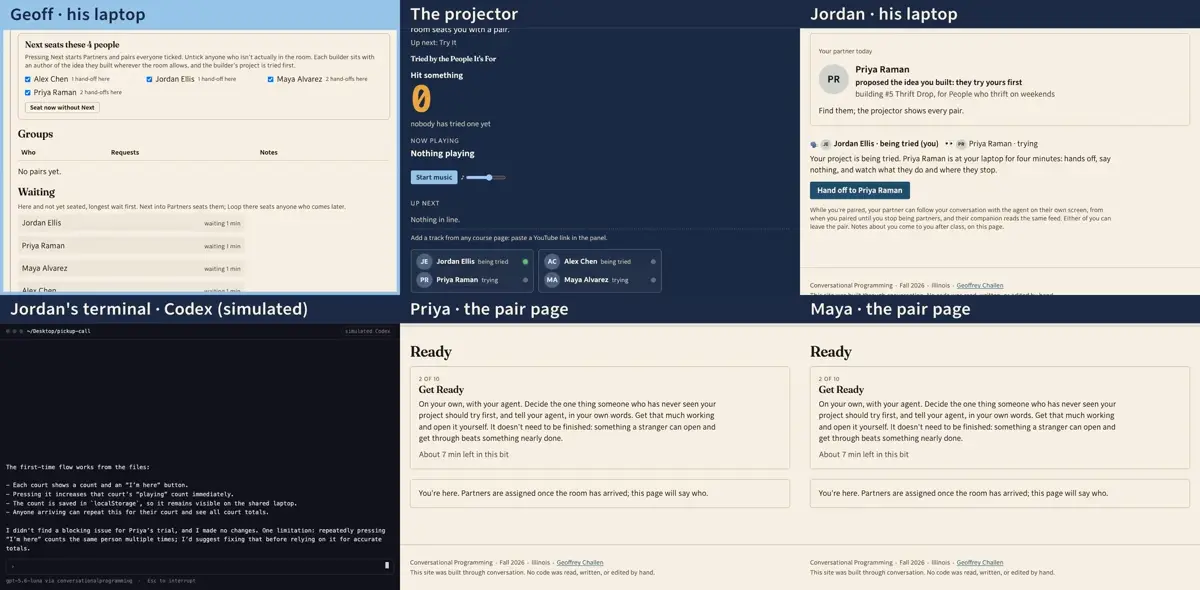
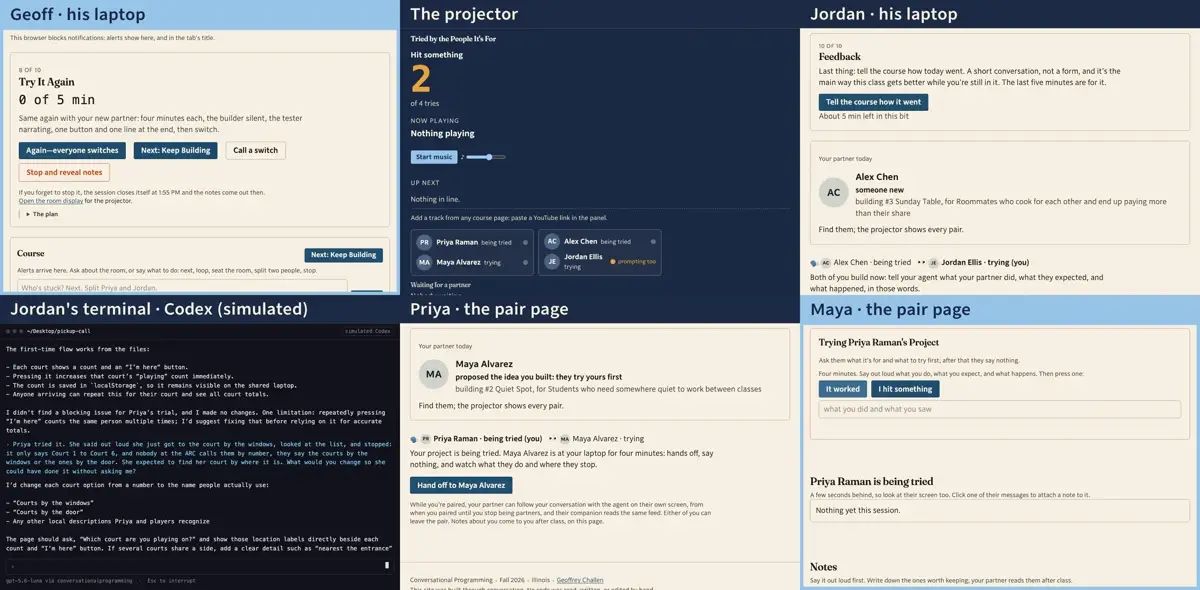
Next. Jordan built Pickup Call, which Priya proposed, so they sit together and she tries his first. Maya and Alex each built the other's idea. Each page says which way the hand-off goes.
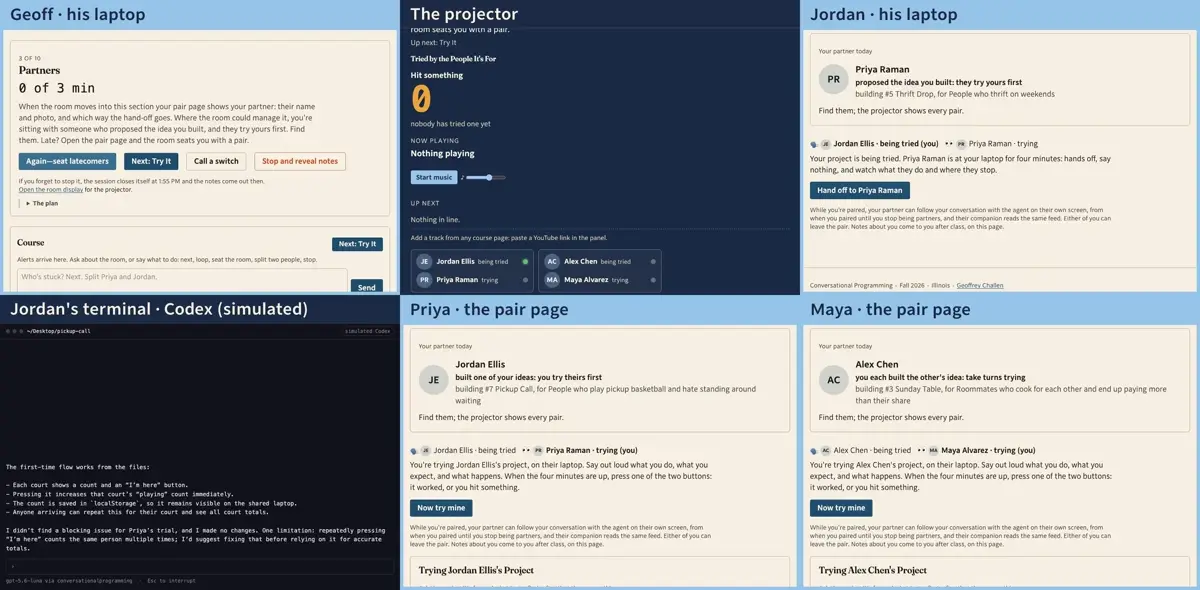
The projector shows both pairs, with a face for each person, so people can find each other, beside the count.
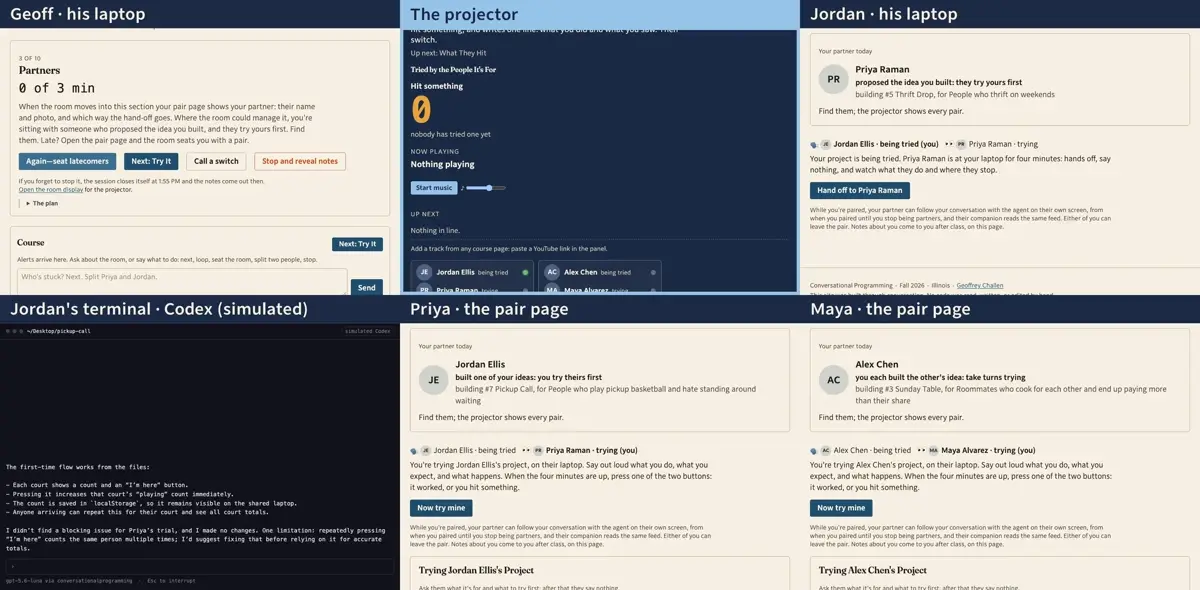
Next, Try It. Priya's page says to ask what it's for and what to try first, and gives her two buttons: It worked, or I hit something. Jordan tells her, and then says nothing for four minutes.
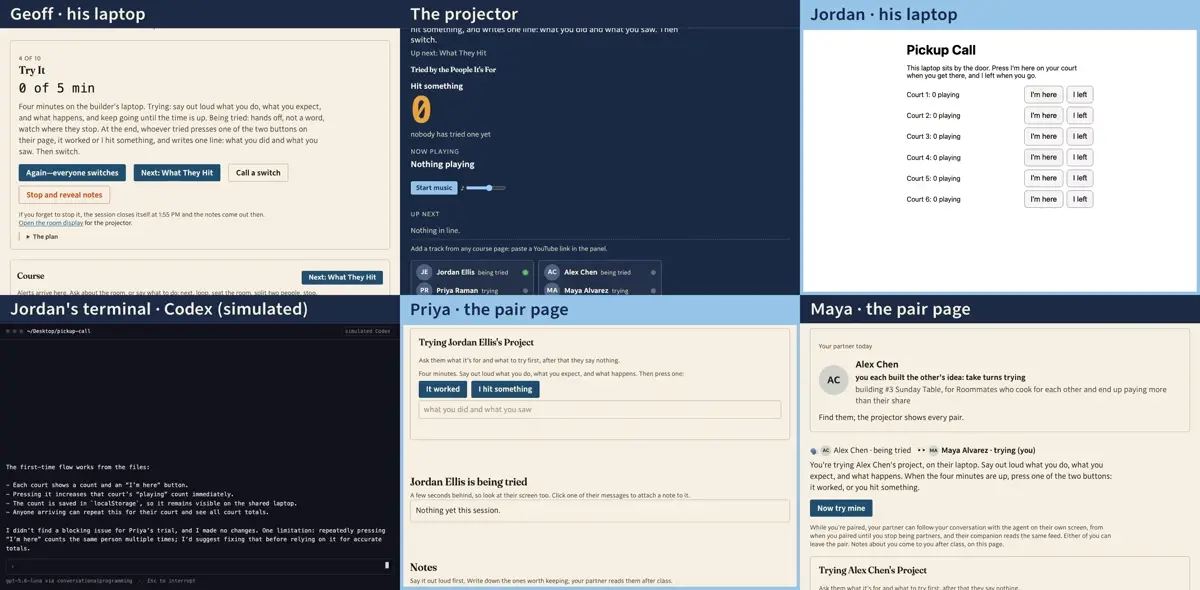
She does the first thing, out loud: she just got to a court and she's playing. The page lists Court 1 to Court 6. She plays on the court by the windows, and nothing says which number that is.
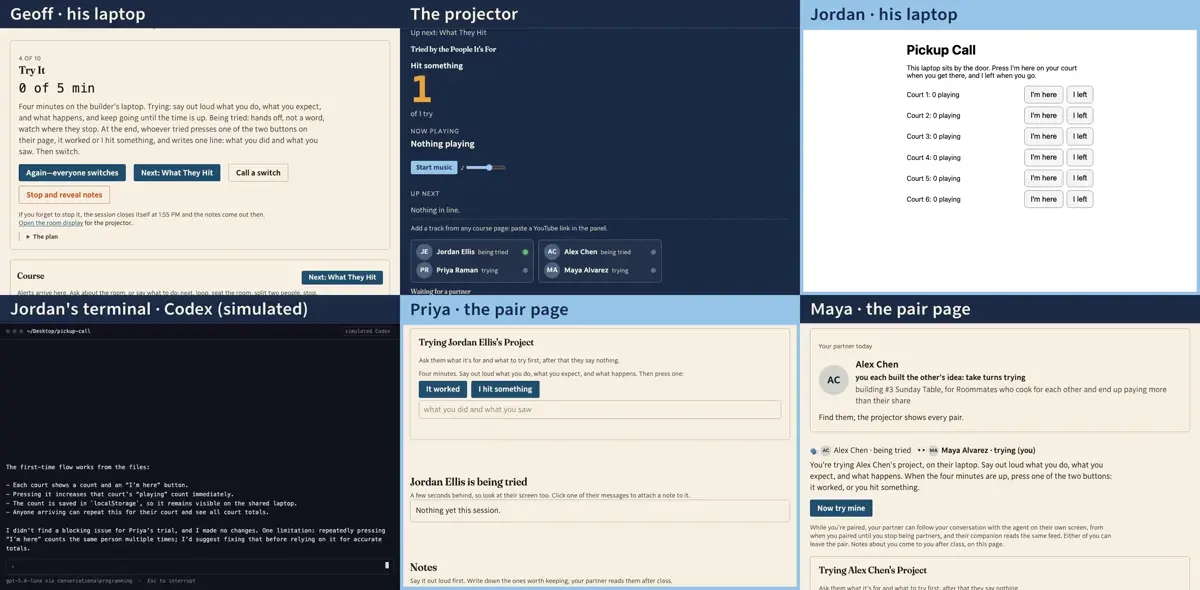
Four minutes up. She presses I hit something and writes one line: what she did and what she saw. The projector's number climbs.
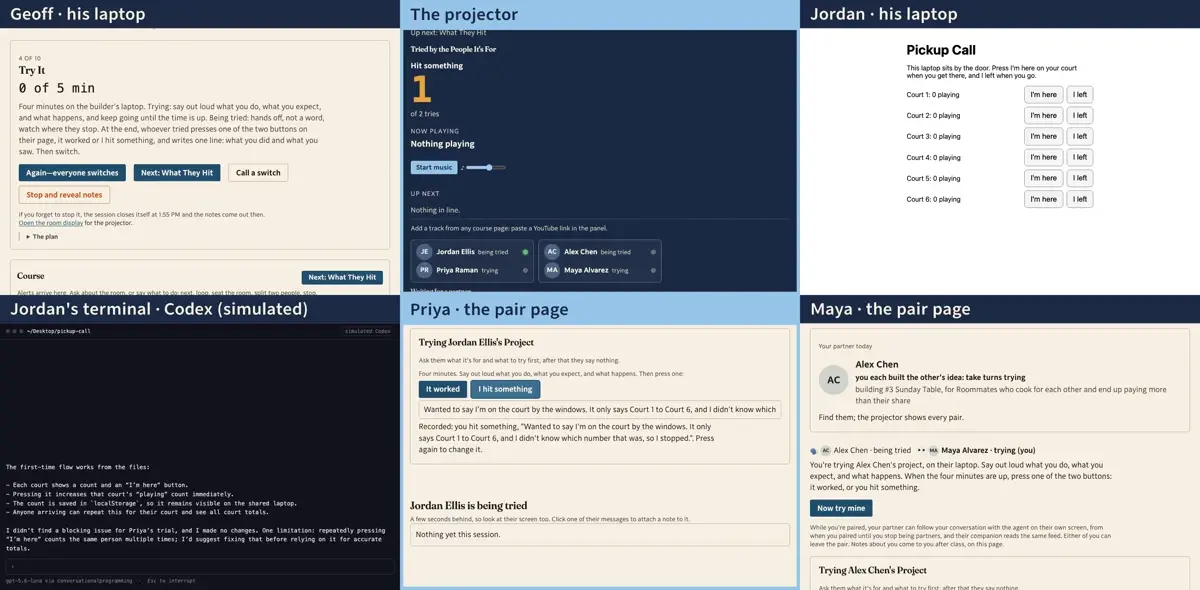
Maya tries Alex's at the next table, and it works the way she expected. She presses It worked.
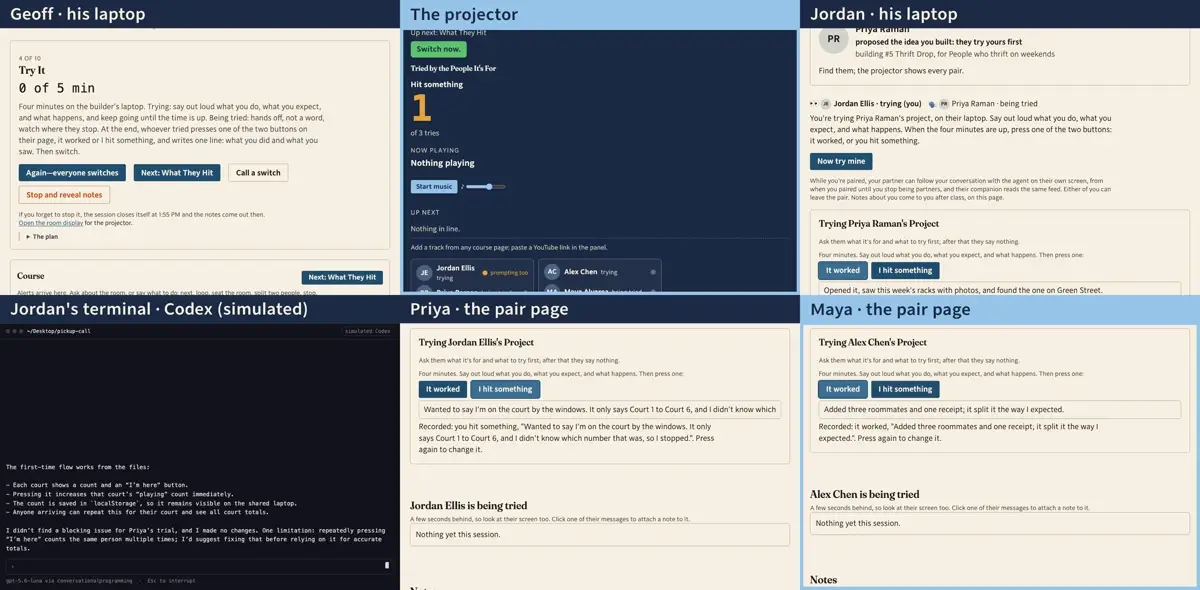
I press Loop and every pair switches. Jordan tries Priya's; Alex tries Maya's and hits something: her study rooms never say which ones are empty right now.
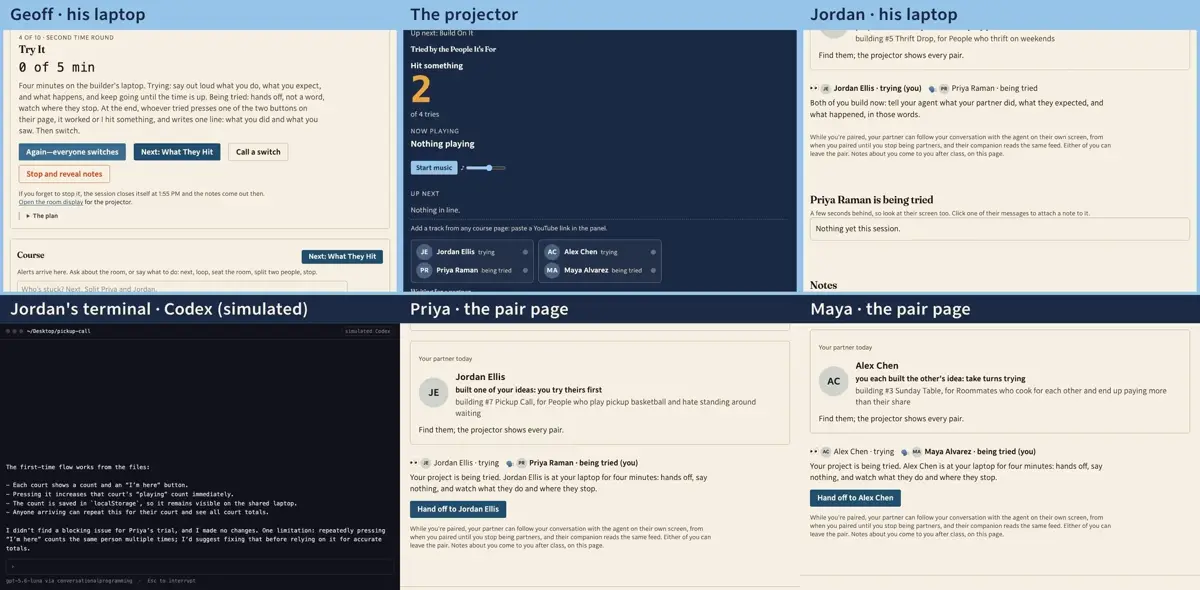
Next, What They Hit. Two of four tries hit something. The room page has each try beside the builder's name: Priya's on Jordan's row.
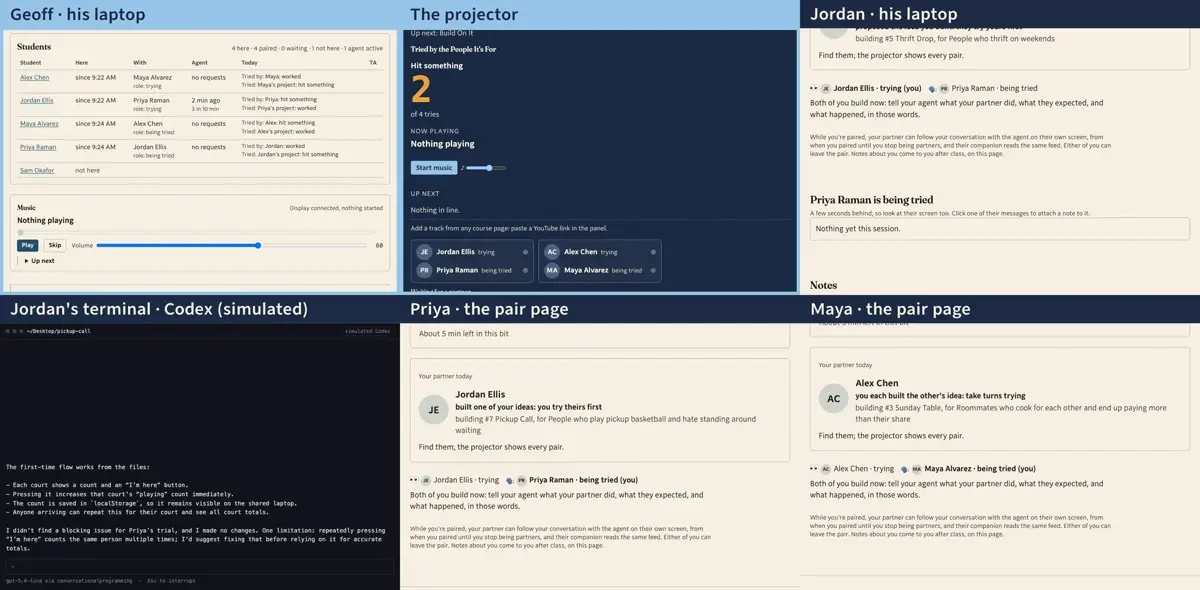
Five minutes of talk, thirty seconds a turn: what did people run into that the builder didn't expect? The person it's for knows what it was supposed to do; the builder only knew what they asked for.
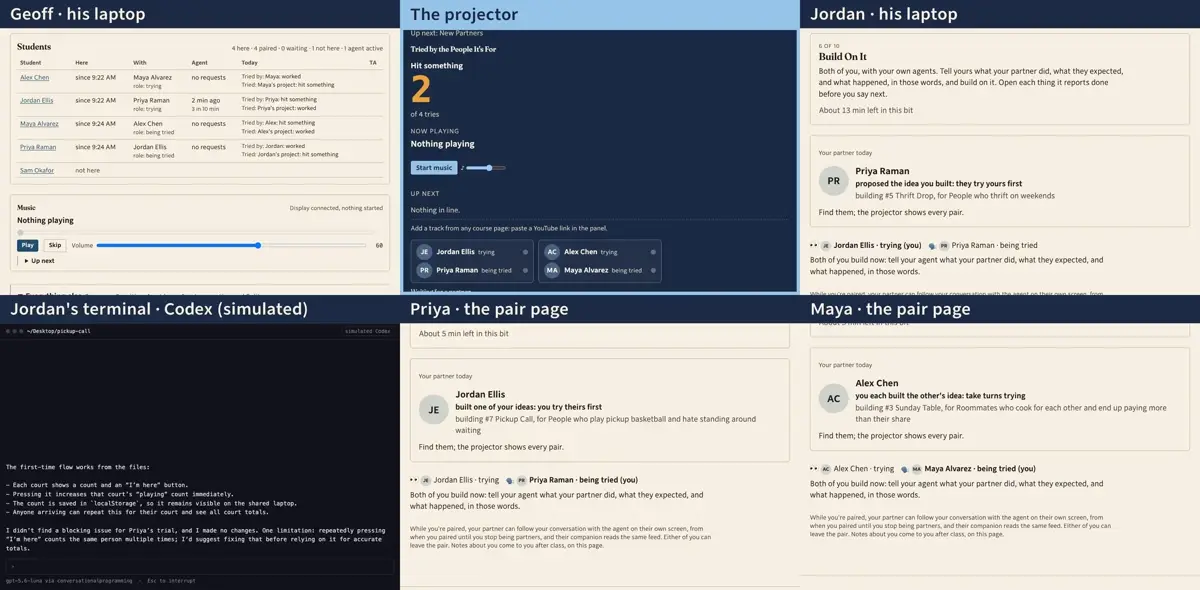
Next, Build On It. Jordan tells his agent what Priya did, what she expected, and what happened, in those words.
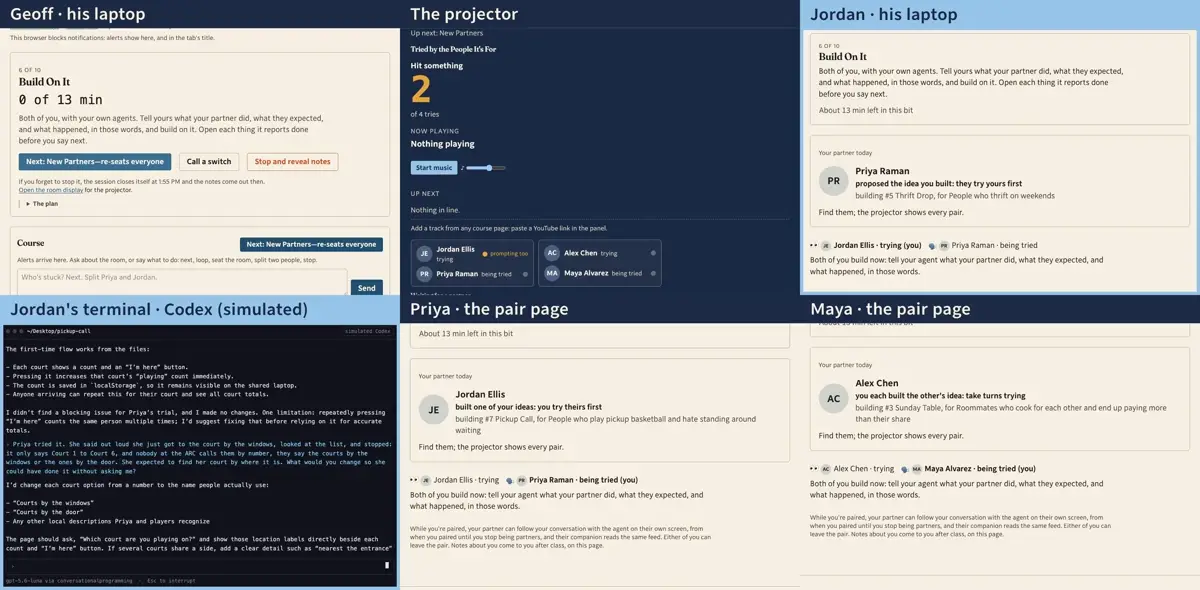
From Try It on, the note his agent gets says what the person did and saw is the brief now, and still that it ships Friday 10-30. It proposes naming the courts by where they are, and says to check the names with the people who play there before inventing any.
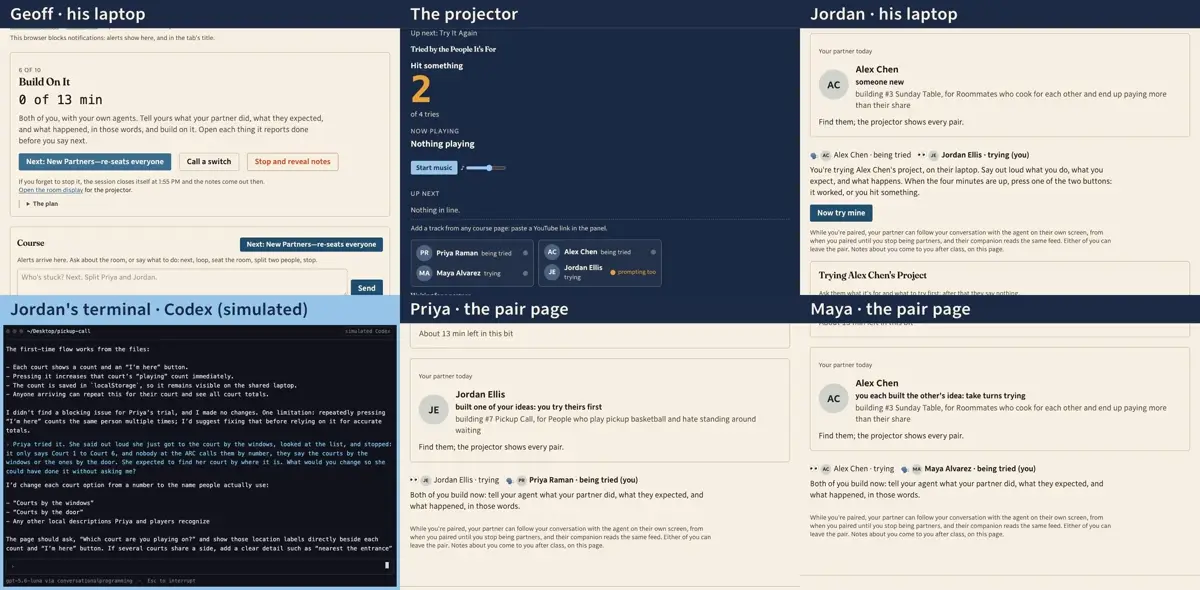
Next, New Partners, and the room seats everyone again. Nobody who proposed Priya's idea has tried it yet, and Maya did, so they sit together. Jordan's has been tried by its author: he gets someone new.
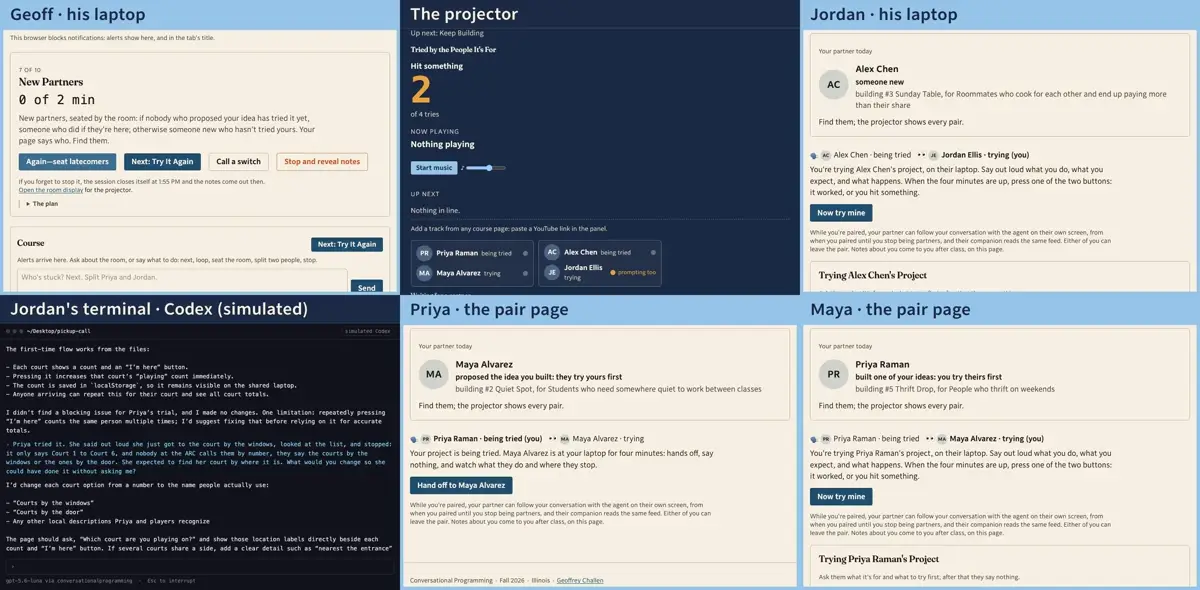
Next, Try It Again. Maya tries Thrift Drop, the idea she proposed; Priya tells her what it's for and what to try first. Four minutes each, then Keep Building until Feedback.
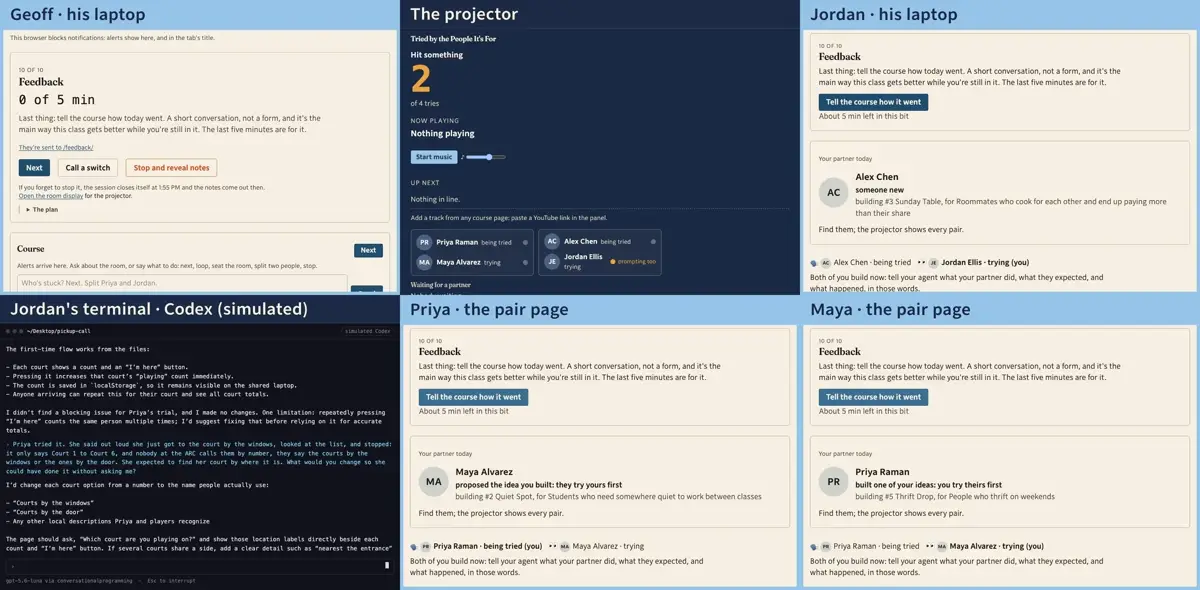
At 13:40, Feedback: the last five minutes, and every page links to it. Every try and what the person saw stays with the course, by name, for the review.
Recorded October 21, 2026.