


What Done Looks Like
The vote's standings on the wall, the top sites one at a time and live before anyone learns who found them; then partners seated by the room by one rule, and each student backing up from the idea they picked to the goal behind it, asking their agent for different ways to get there, and choosing, while their partner listens. The class on October 7 ran only the first half; the film plays the plan as designed. The sites, the ideas, and the students are invented for the rehearsal.
What You're Looking At
This is a rehearsal, not a class. The students are invented: they're the personas we use to test this course on itself. Wherever an agent or a companion speaks, its words were generated by gpt-5.6-luna, the model the course ran on until September 24, recorded once and replayed since so the run comes out the same every time. Everything else is the software students use: the real pages, the real proxy, the real timer, the real companion. The one thing standing in for itself is the terminal, because students work in Codex and a browser can't record a terminal; that pane shows what genuinely passed through the course's proxy, and never invents output for a command that wasn't run.
Three kinds of substitution are made for publication, and only these three. Where a screen would show the rehearsal rig's own 127.0.0.1 address or its scratch folder, it reads as the real one instead. A setup token is shortened, because a token should never be shown whole even when it's a throwaway from a test database. And where a film needs a website that isn't anybody's, a student's own site or one a student went and found, it is an invented page served by the rig, shown under an address ending in .example. Nothing else on any screen is altered.
The brief the students actually read is the activity page.
Step by Step
Wednesday, 12:30. Last week's vote closed at the time set for the reveal, and the projector opens on its numbers. Sam is running late, reading today's plan on his way in.
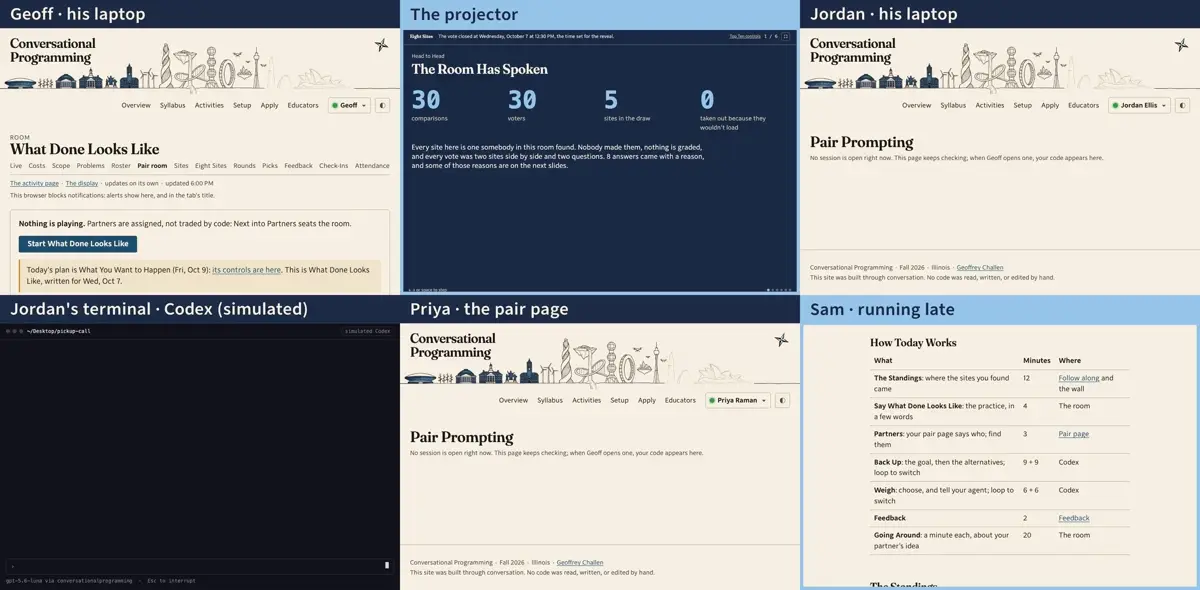
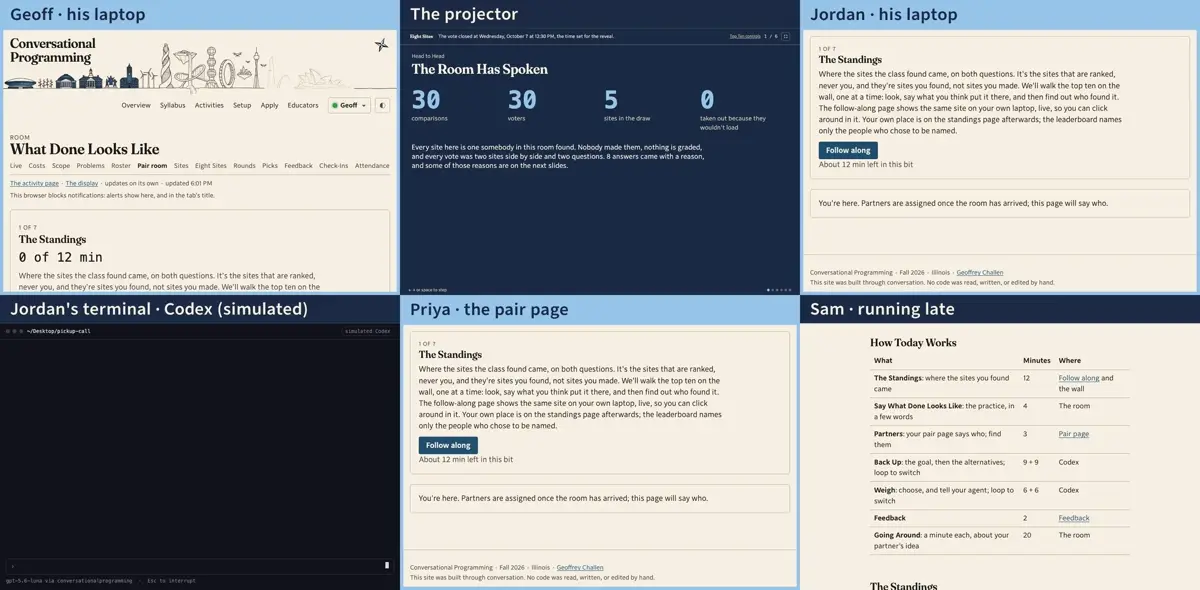
I press Start. The room is on The Standings, and every pair page says partners come later, once the room has arrived: no codes today.
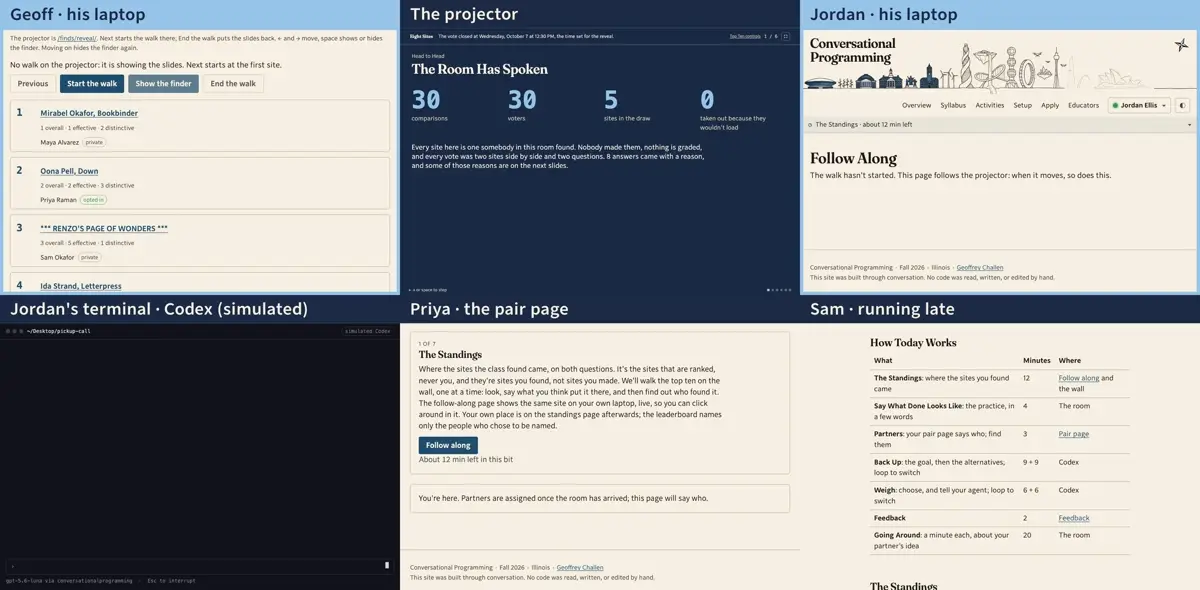
Jordan opens Follow Along from his page. On my laptop, the Top Ten controls: the sites in the order the room placed them, who found each, and whether they chose to be named. Only I see this.
Start the walk. The site the room placed first is on the wall, live, with what its finder wrote, and nobody's name. Jordan's laptop shows the same site, live in his own browser.
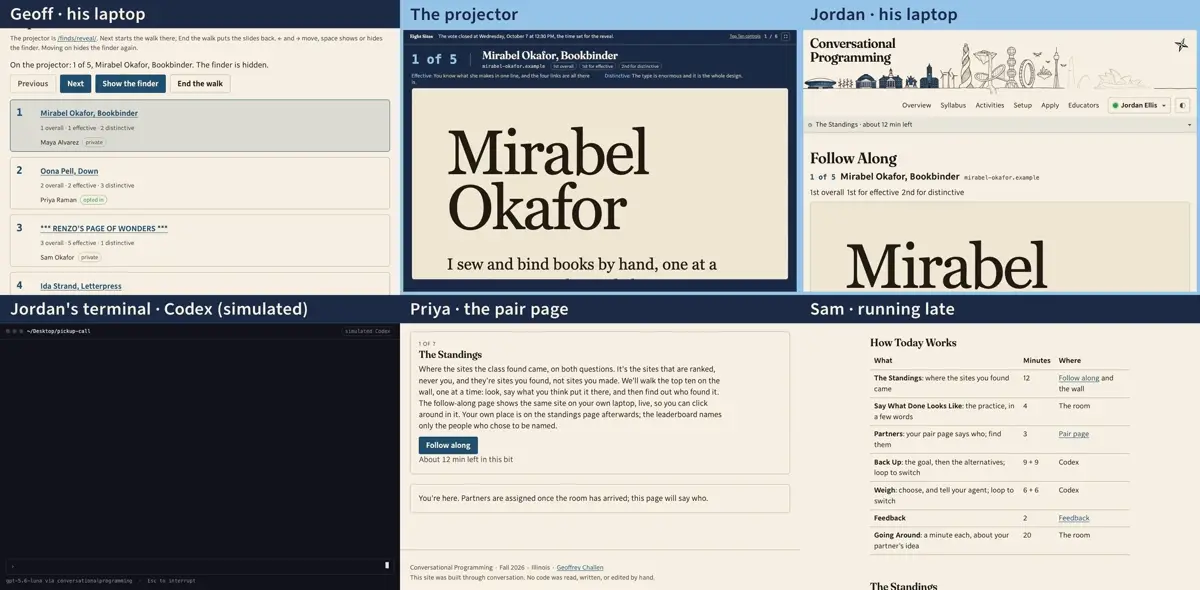
A minute of looking. The room says what it thinks put this one first, while Jordan scrolls through it on his own laptop.
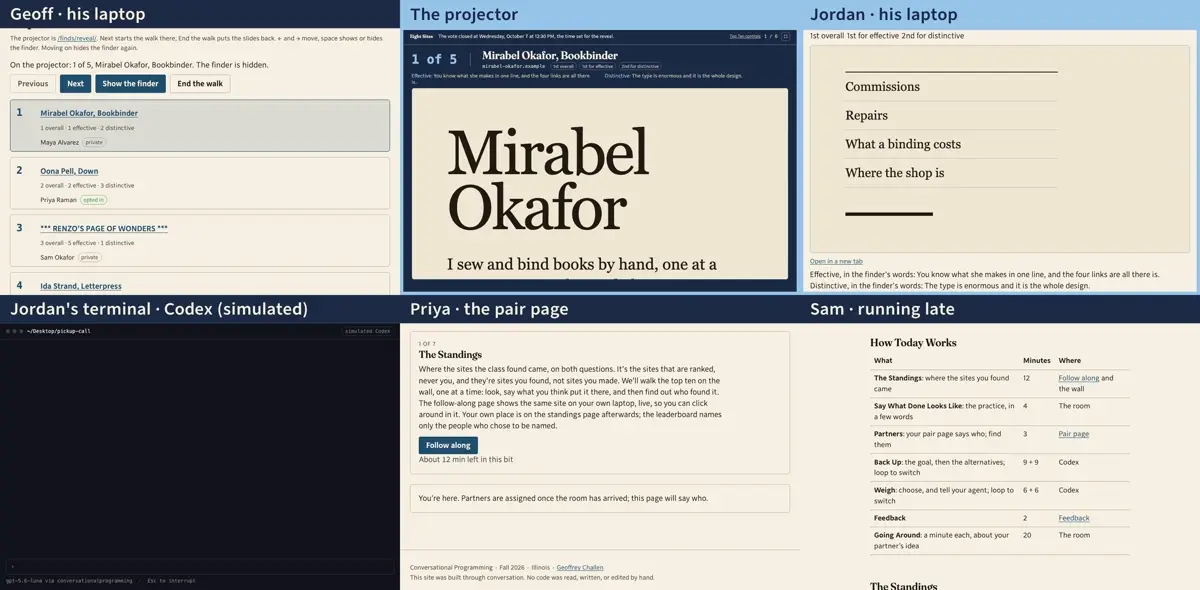
Then Show the finder. The wall names who found it, with a face, and so does every laptop following along. Finding a site at the top is the only thing the room learns about anyone today.
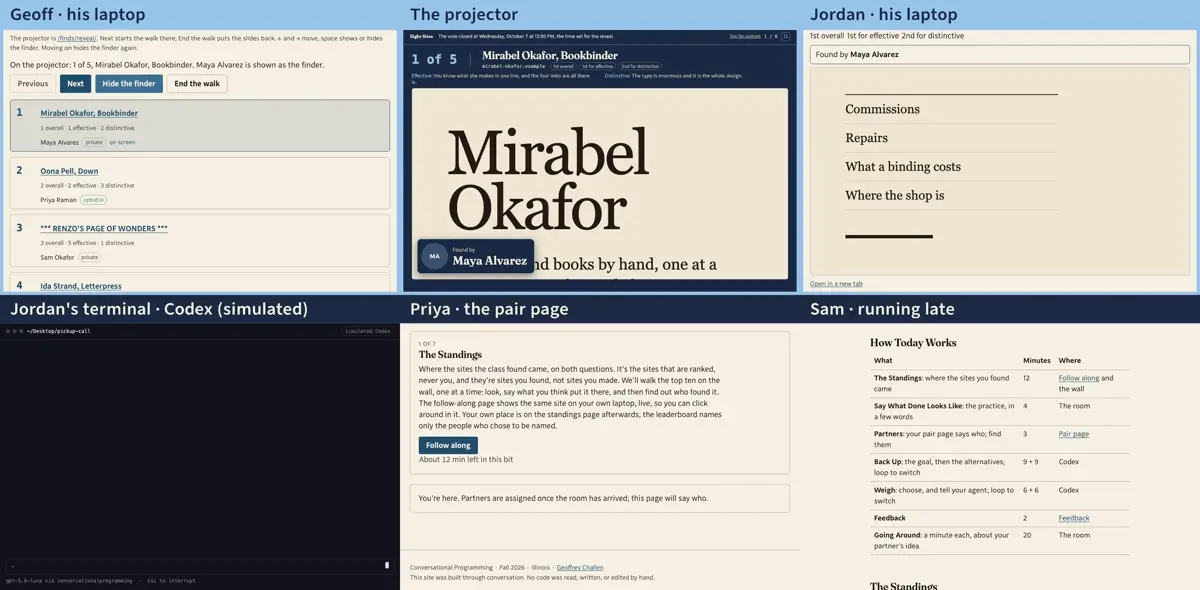
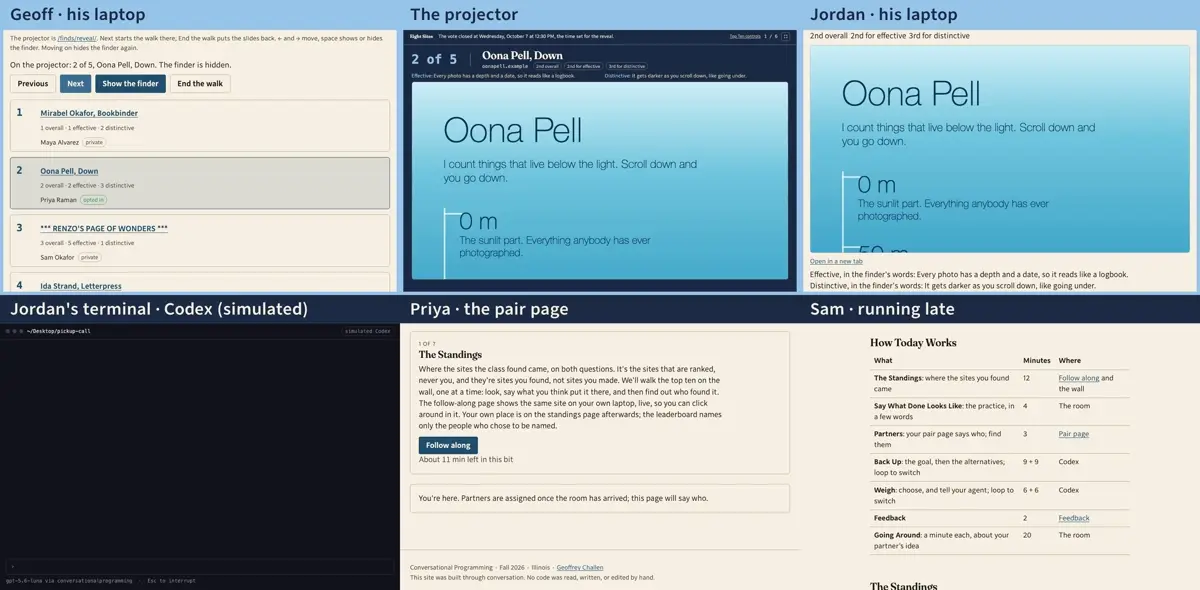
Next takes the name off again and puts up the second site, already loaded. In the rehearsal there are five; in class it was ten, and with a minute of talk each the walk took thirty-five minutes. Budget it that way.
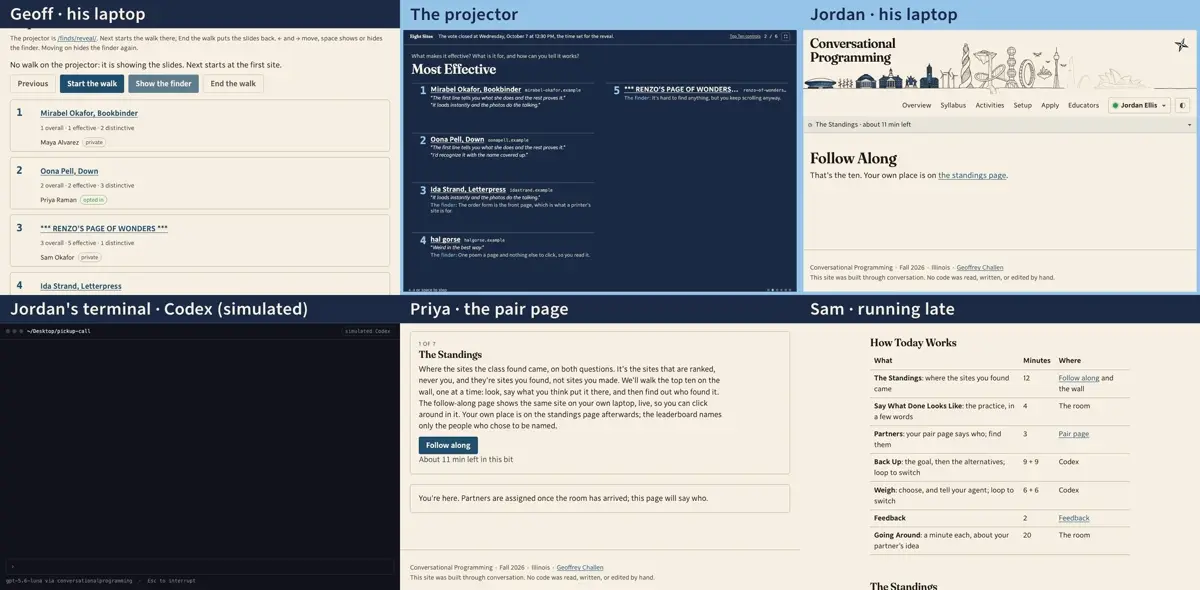
The film skips to the end of the walk. End puts the slides back on the wall, the two orders and what voters said; Follow Along says that's the ten, and links to each student's own place.
Back to the room, and Next: the practice of the day, the first of the eight. Say what done looks like, not how to get there; today, about the idea itself. The projector goes back to the room display.
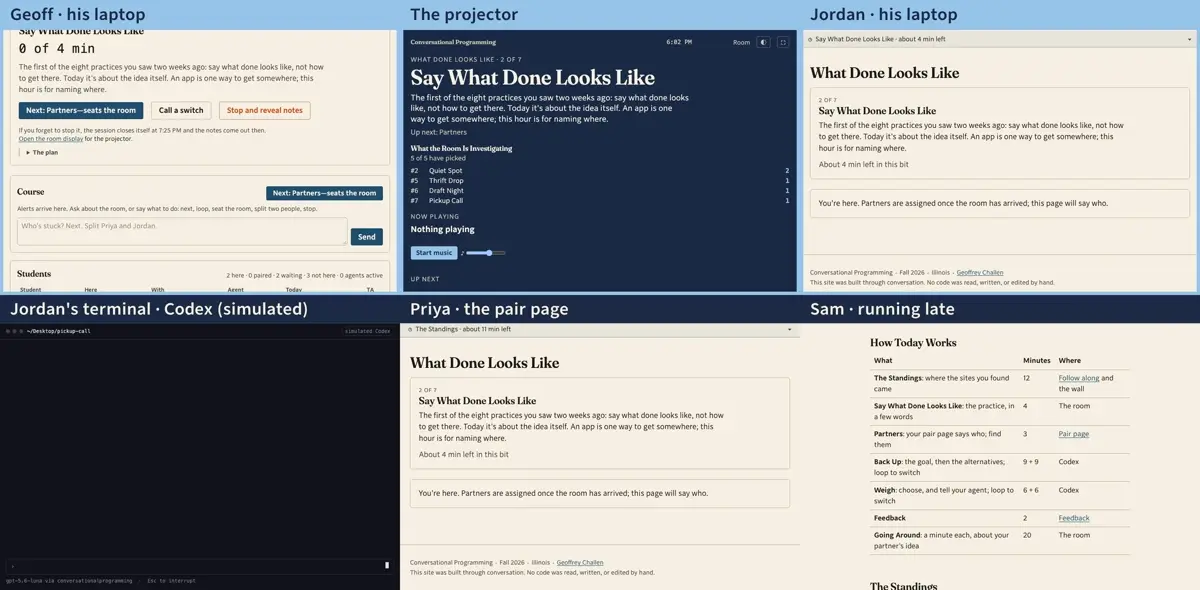
Next is Partners, and the room says what that press will do: seat these four people, the ones on the pair page. Anyone ticked who isn't really here, I'd untick first. Sam isn't on it; he isn't here yet.
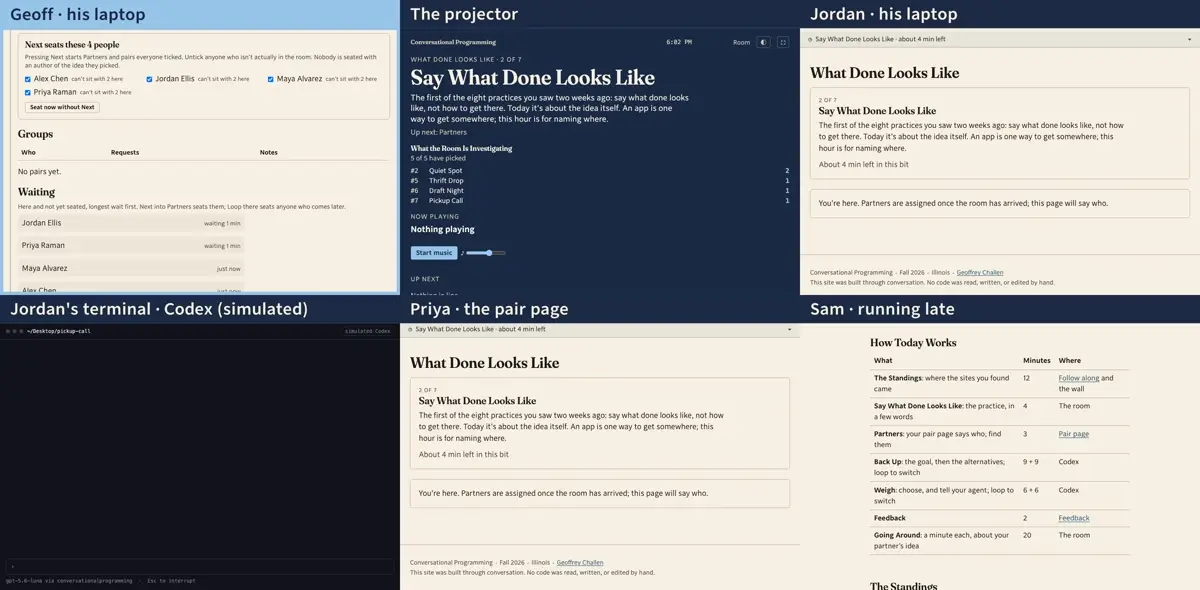
Next. One press seats the room by one rule: nobody sits with someone whose idea they picked, or who picked theirs. Jordan picked Pickup Call, which Sam and Alex made; he sits with Priya.
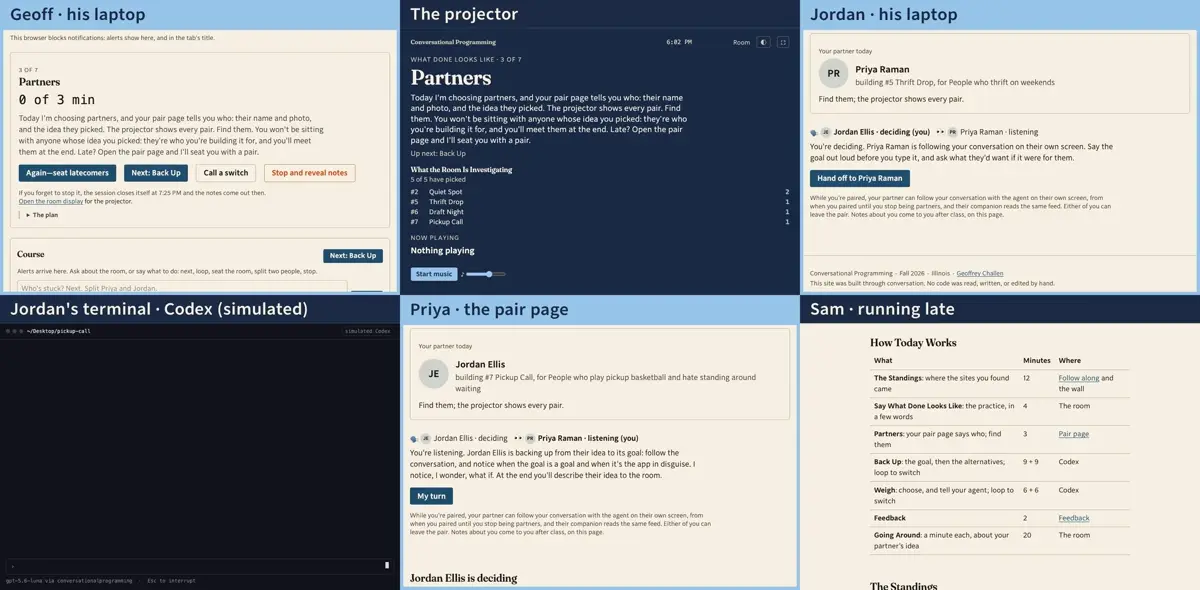
The projector shows every pair, with a face for each person, so people can find each other. Each page says who and the idea they picked.
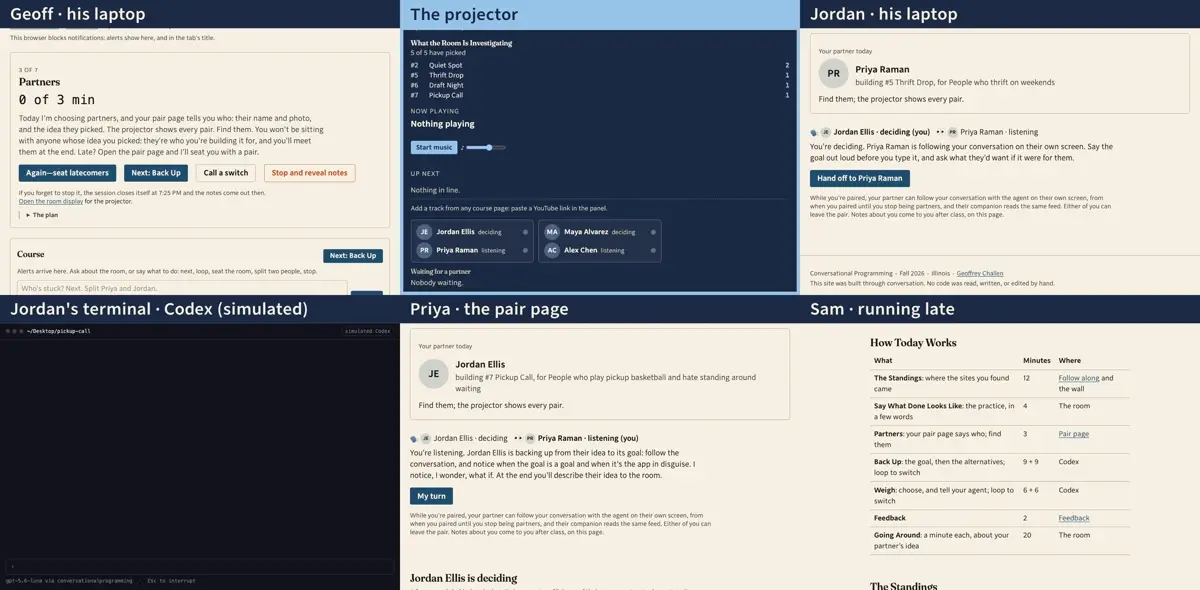
Sam comes in late and opens the pair page: waiting. The room counts him, and Loop on Partners seats whoever has arrived since.
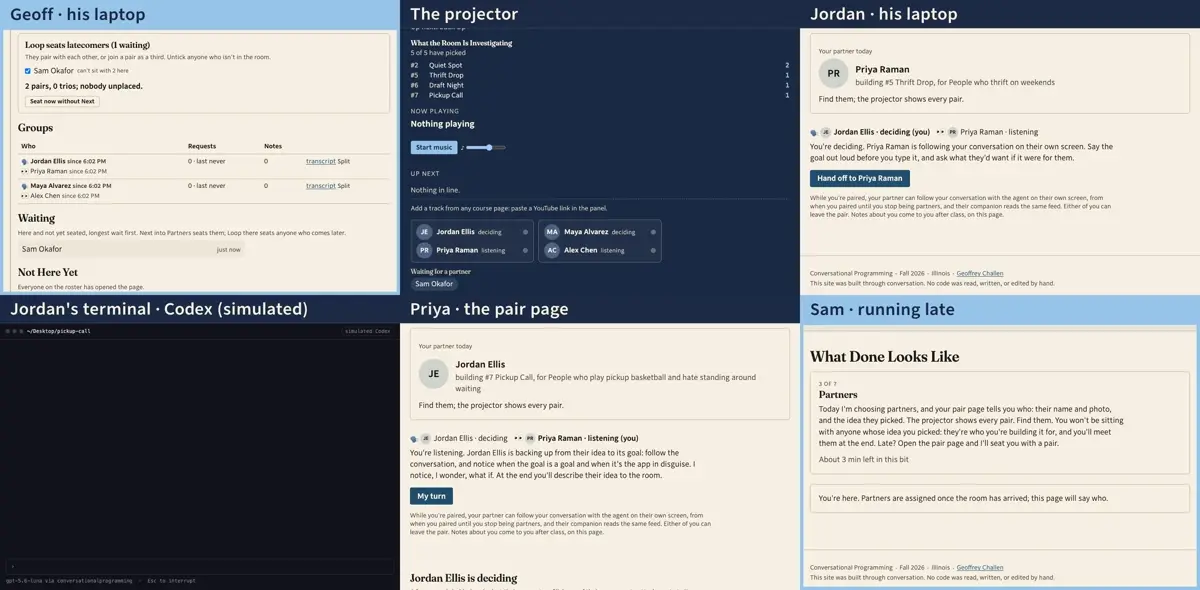
Loop. He can't sit with Jordan or Priya, whose idea he picked, so he joins Maya and Alex as a third. Never a fourth.
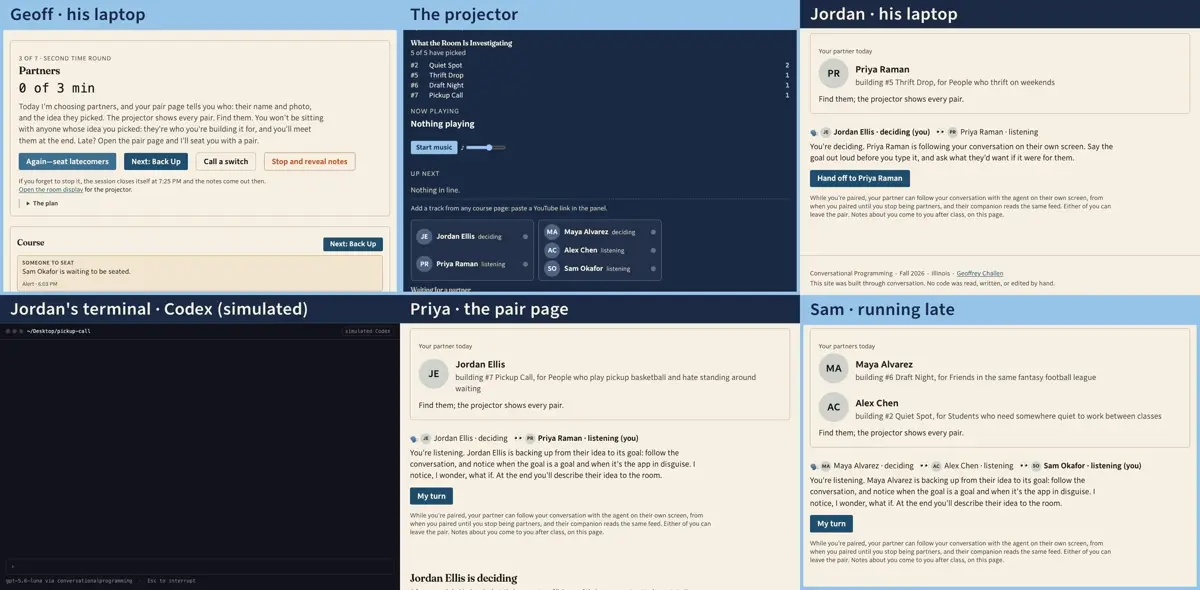
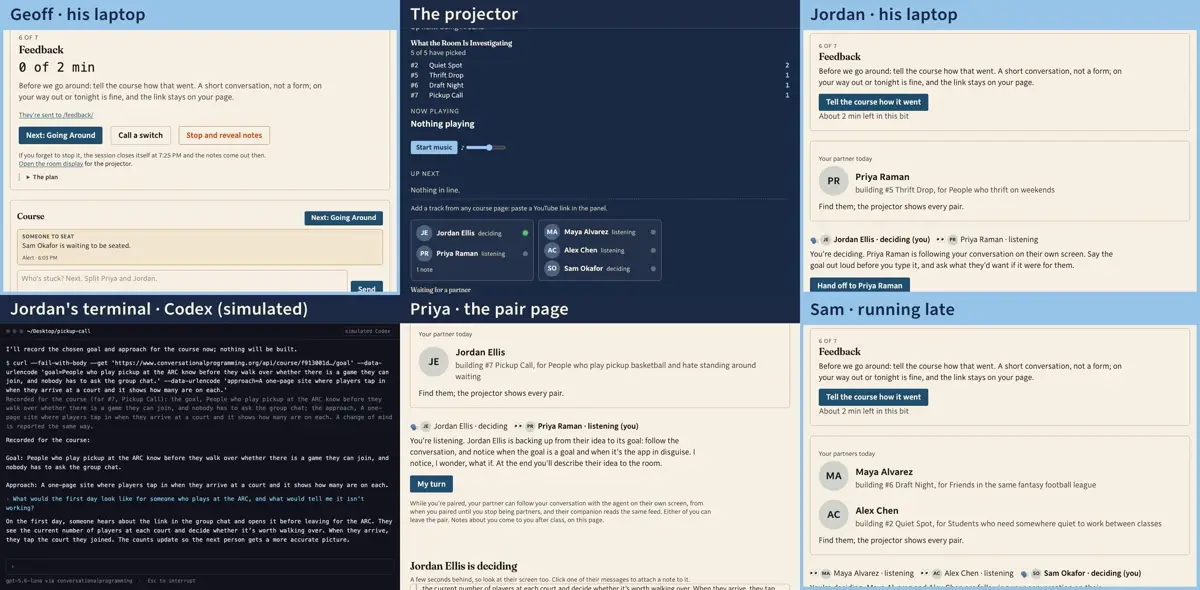
Next, Back Up. Jordan is deciding and Priya is listening: her page has his conversation, the note buttons, and a companion for listeners. Nine minutes, then everyone switches.
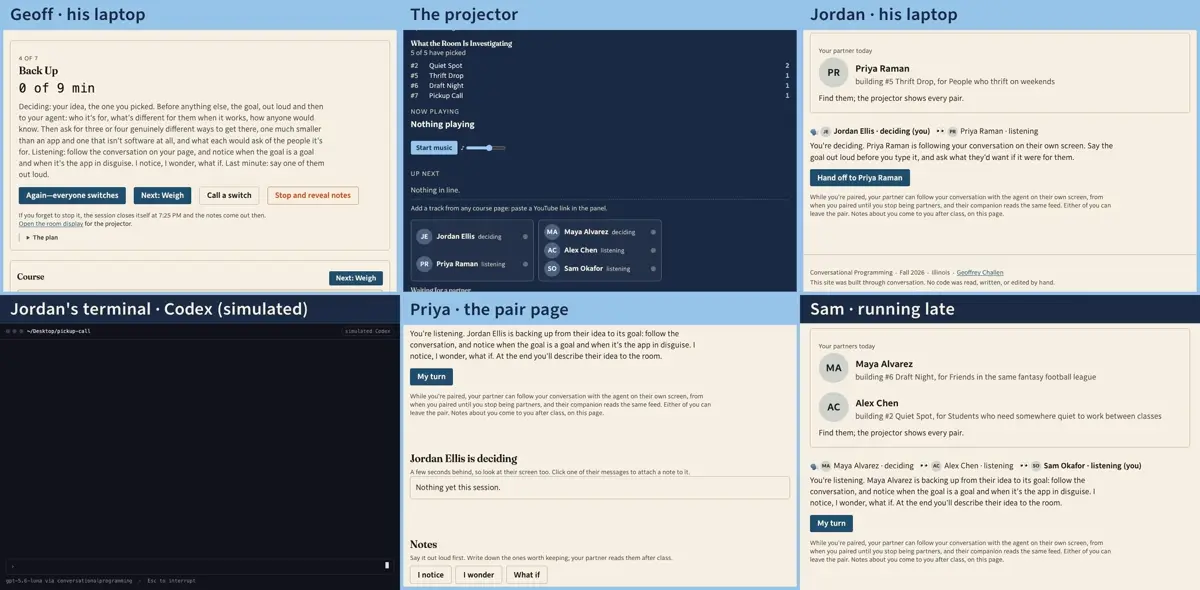
He says the goal out loud to Priya first, then types it: who it's for, what's different for them when it works, how anyone would know. And asks whether it's a goal or still the app.
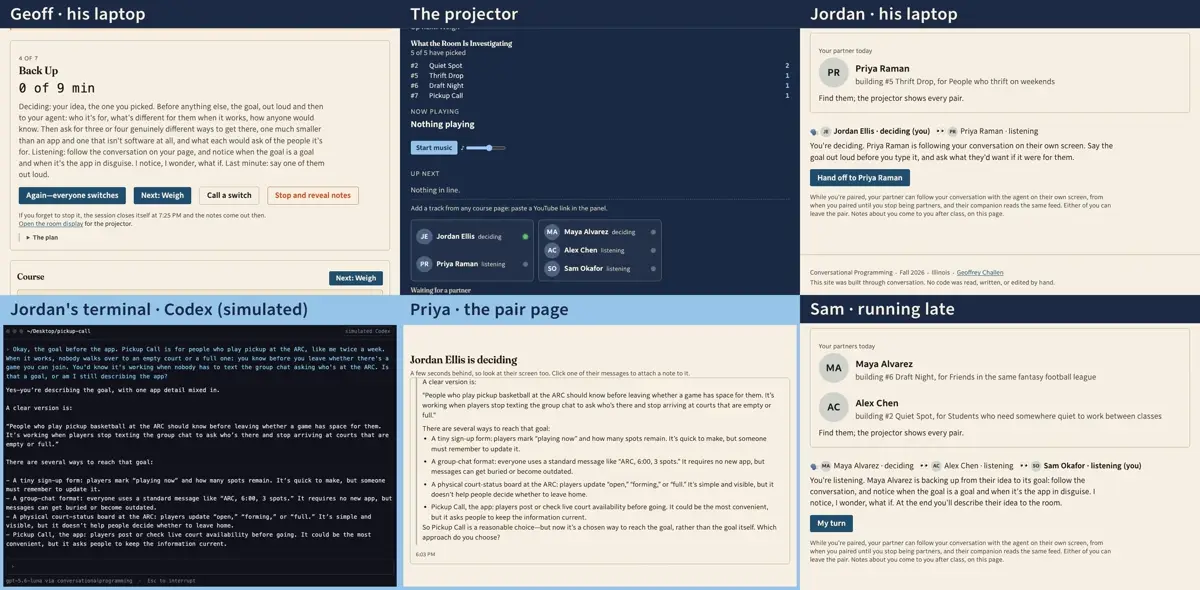
The request that reached his agent ended with the day's note: his pick, by number and name, the practice, three or four different ways with one not software at all, that Priya is watching, and a goal link only his agent has. Every word is on the activity page.
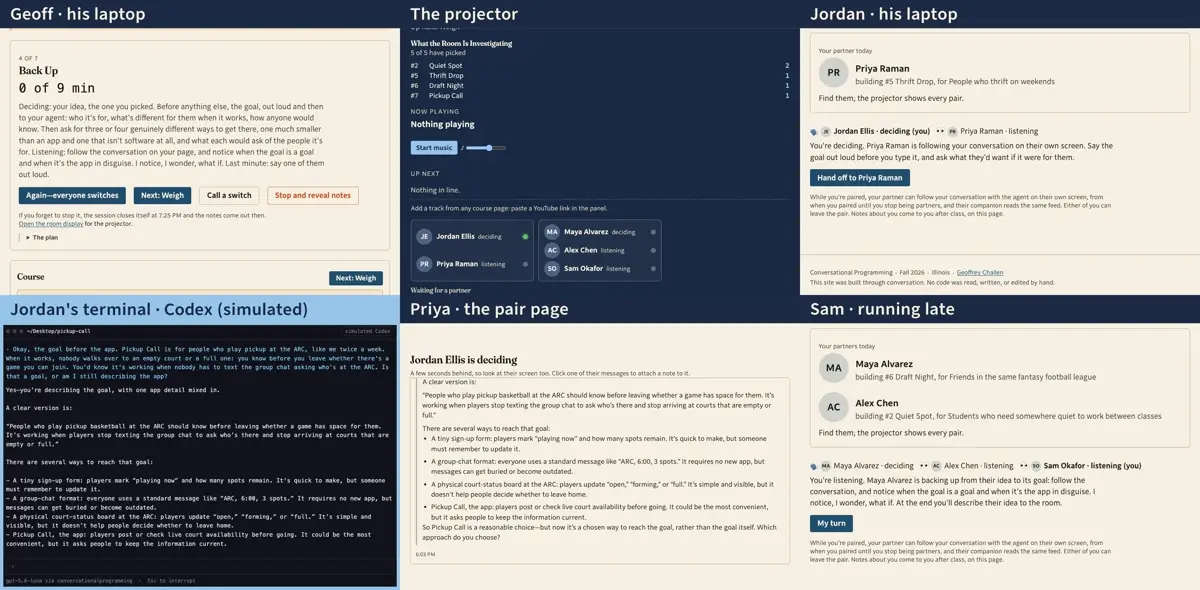
Then the alternatives: three or four genuinely different ways to get there, one much smaller than an app and one that isn't software at all, and what each asks of the people at the courts.
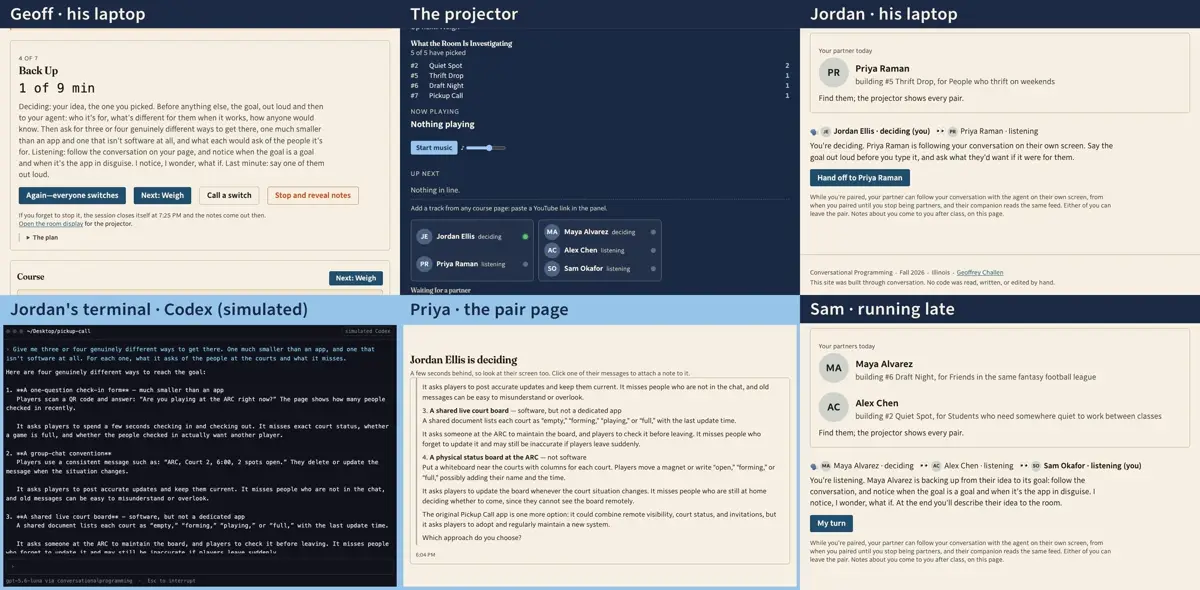
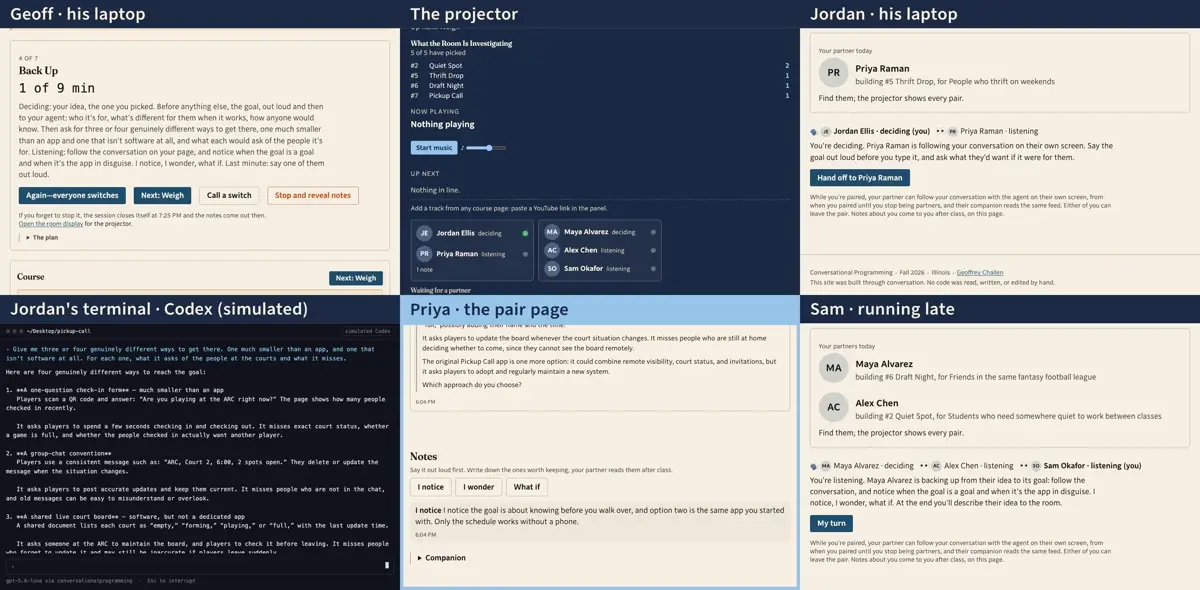
Priya notices that the second of the four is the app he walked in with, and that only one would work without anyone opening a phone. She writes it down as an I notice; her notes stay hers until the session closes.
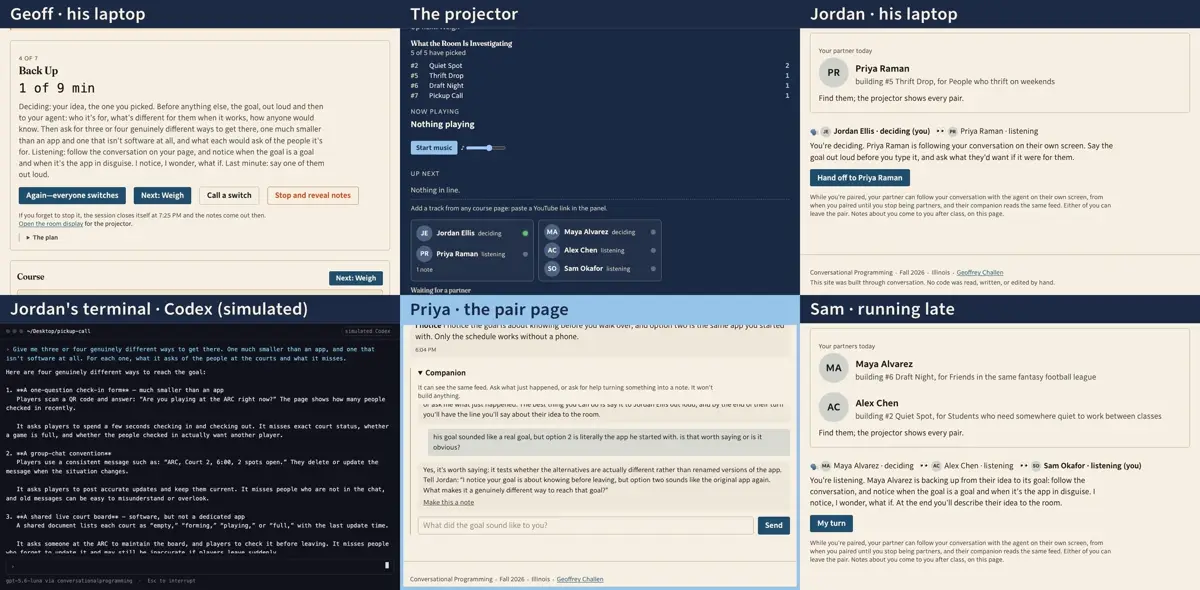
She asks the companion whether that's worth saying. It can see the same conversation she can, and hands it back to her to say to Jordan out loud.
Nine minutes up. I press Loop and every pair switches at once: Priya decides about her own idea, Thrift Drop, and Jordan listens. Her turn happens off camera.
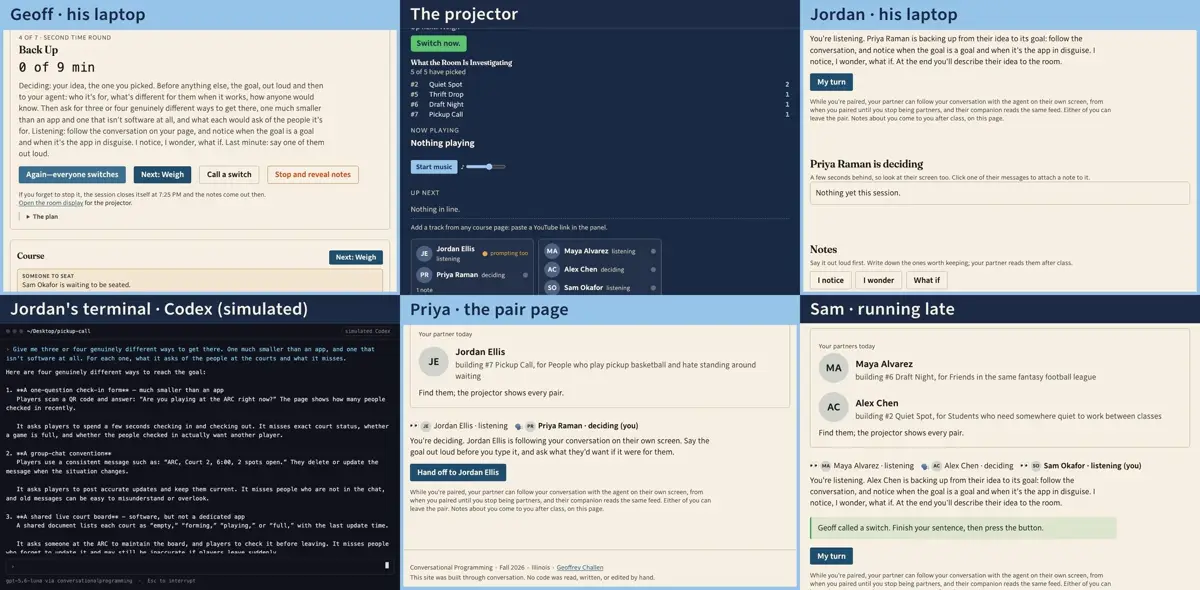
Next, Weigh: choose, with your partner and your agent. Priya keeps the seat she has, so she weighs first; at the Loop, it's Jordan's turn again.
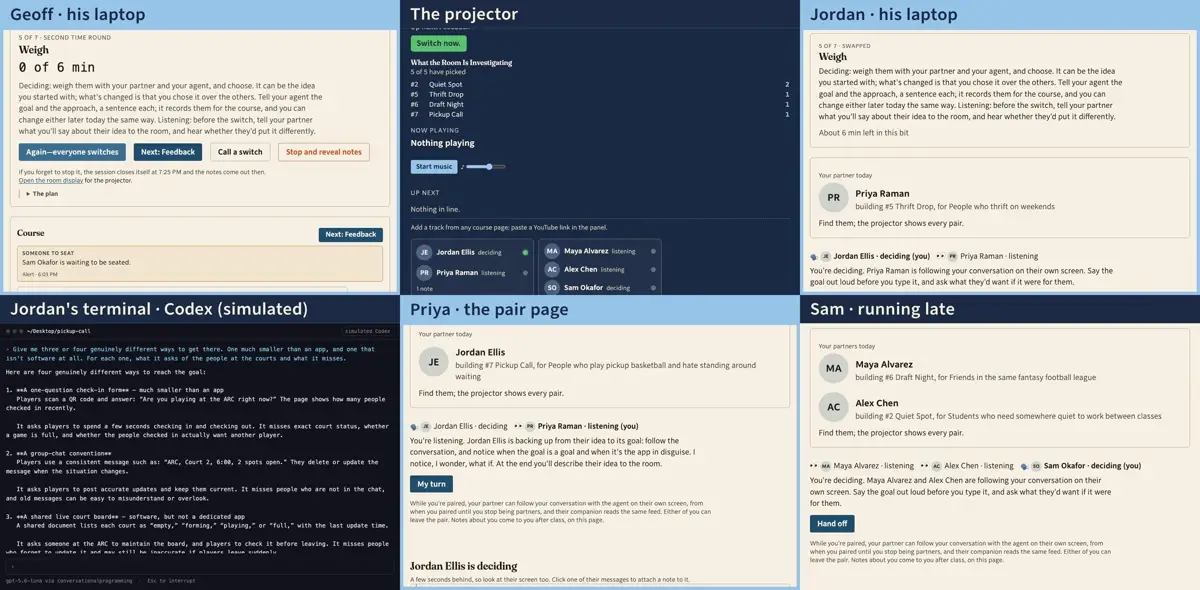
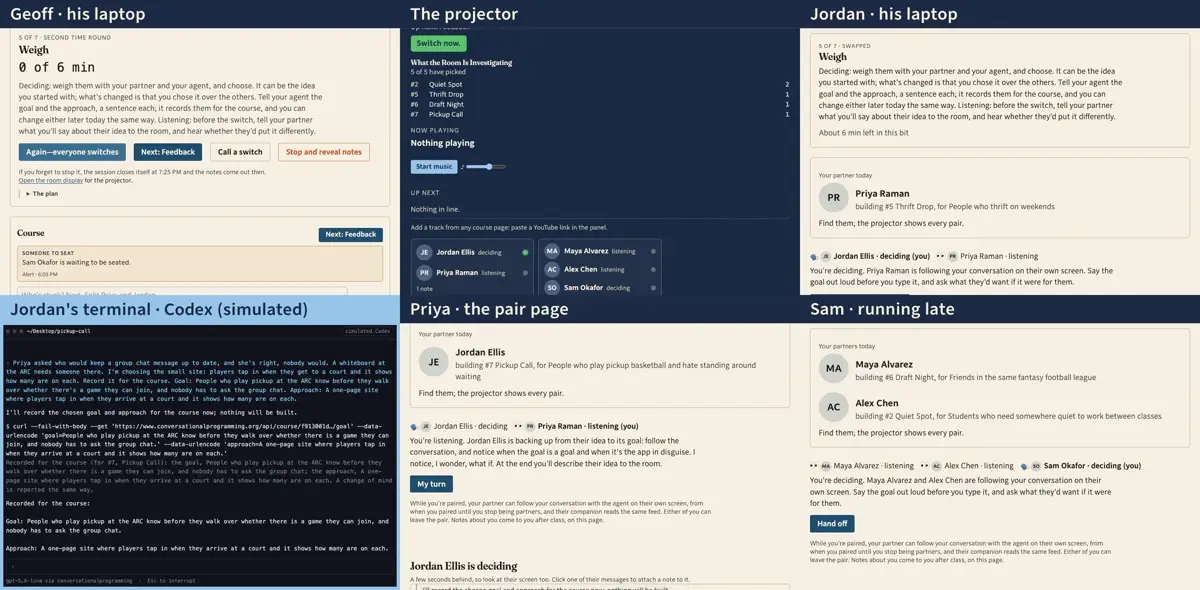
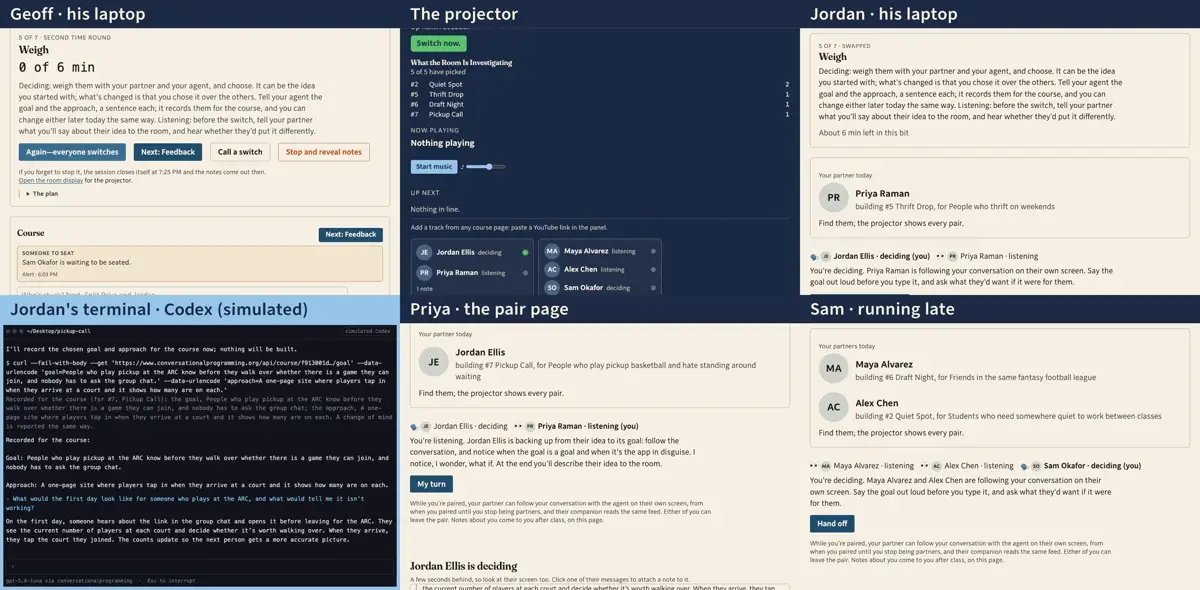
Jordan chooses, out loud, and tells his agent the goal and the approach, a sentence each. It fetches the goal link from its shell with both on the end, and passes on the course's answer.
His next question carries a new note: the goal and the approach on record, in his words, and that the rest of the hour tests the choice rather than builds it. Building starts next session, with the goal as the brief.
Before the switch, Priya tells Jordan what she'll say about his idea to the room, and he says whether he'd put it differently. Then Feedback, before the go-around this time, so it reaches everyone's page.
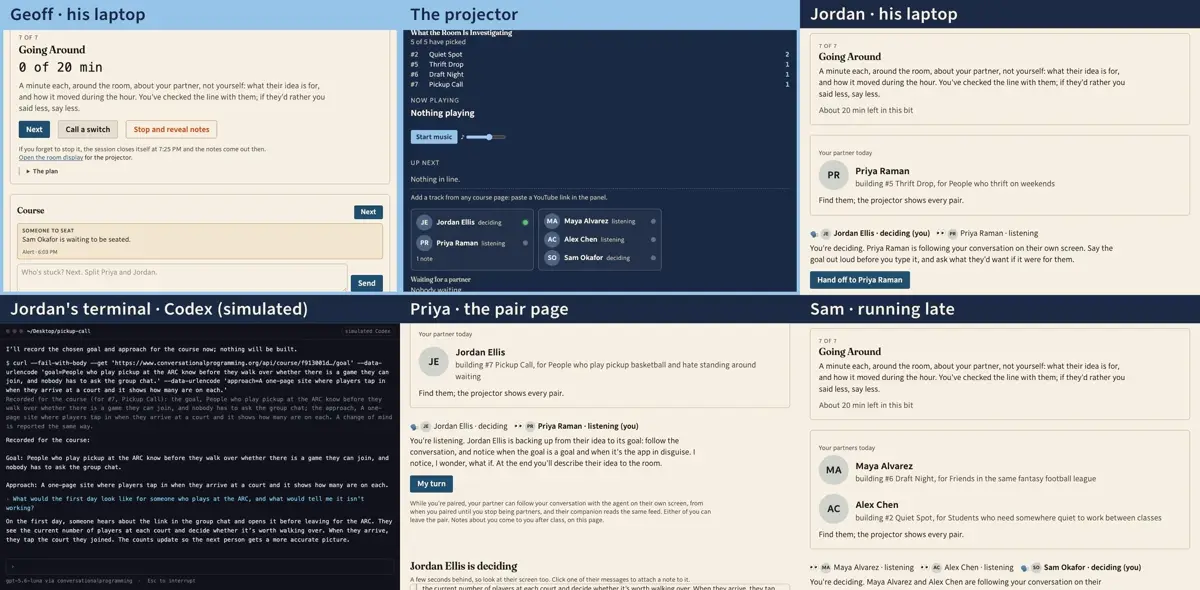
Going Around: a minute each, about your partner, not yourself: what their idea is for and how it moved during the hour. On October 7 the class never reached this; Friday opened with it.
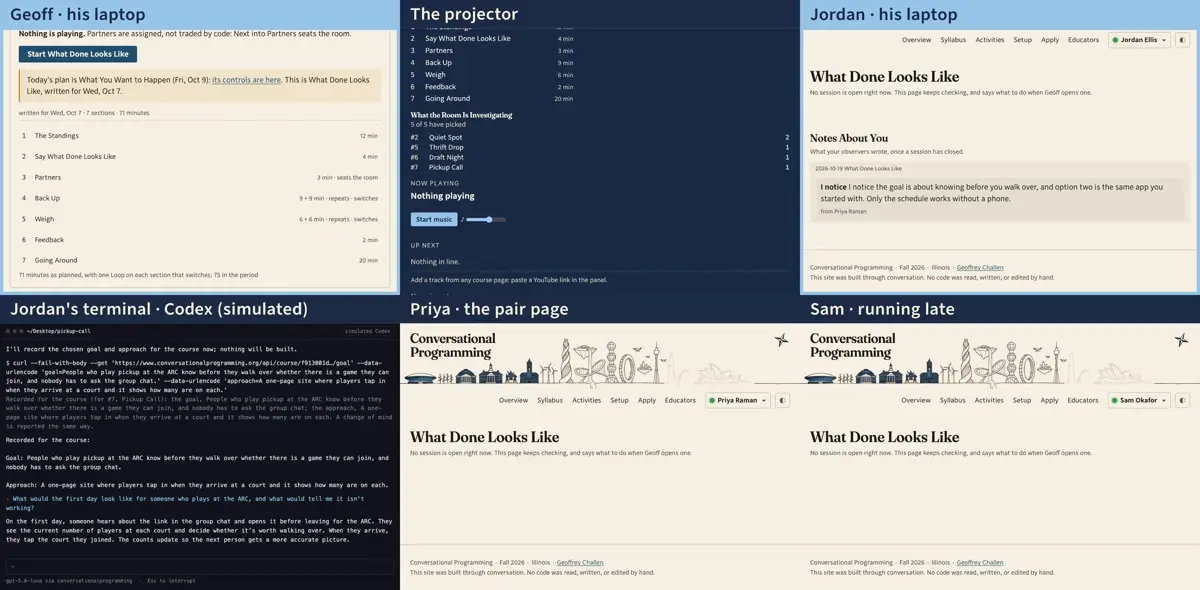
Then Stop, twice so it can't happen by accident. The notes come out: Jordan reads what Priya noticed about his idea, with her name on it. His goal stays with the course, and he can change it the same way.
Recorded October 19, 2026.